
Review · GERMANY
Freiburg: Acting tour “Witches, Torture, Stake” with Historix-Tours
Freiburg’s Witches, Torture, Stake tour turns a pleasant old-town walk into a grim lesson about witch hunts in the early modern period. You follow the case of Catharina Stadellmenin, accused in 1599, then connect her story with two other women caught in the same cruel system. I like the costumed actor, the lantern, and the way the story moves through real city streets. I also like that the tour corrects a common mistake: witch hunts were not mainly a medieval problem, but continued in Breisgau into 1751.
The drawback is that this is an outdoor storytelling walk, not a museum visit. You do not enter historic interiors, and some of the locations may require imagination to picture as dungeons, courtrooms, or execution grounds. The subject is also harsh, so this is not a light ghost walk for young children.
Key points to know before you go
- Catharina Stadellmenin’s 1599 case gives the tour a personal center rather than treating witch hunts as a list of dates.
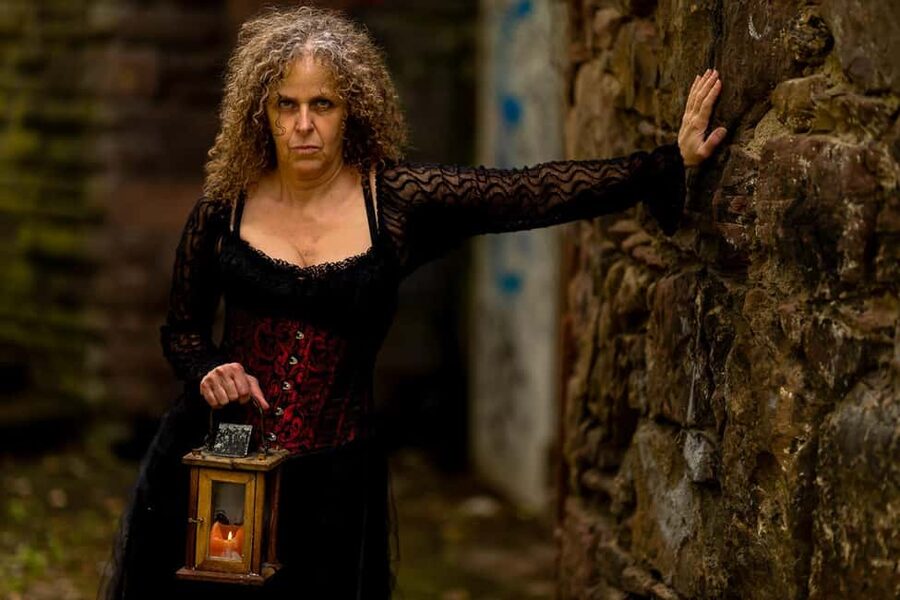
- A professional actor leads the walk in costume with a lantern, creating a theatrical mood in Freiburg’s pedestrian streets.
- The route links eight old-town locations, from Rathausplatz to Holzmarkt, with stops near the Gerichtslaube, Münsterplatz, and Martin’s Gate.
- The tour is in German, and some material is presented in its original language.
- The focus is historical persecution, including accusations, torture, interrogation, and execution.
- At about $17 per person, it offers a fairly inexpensive 90-minute introduction, especially if you value live performance.
Freiburg’s witch hunts were closer to modern times than you think
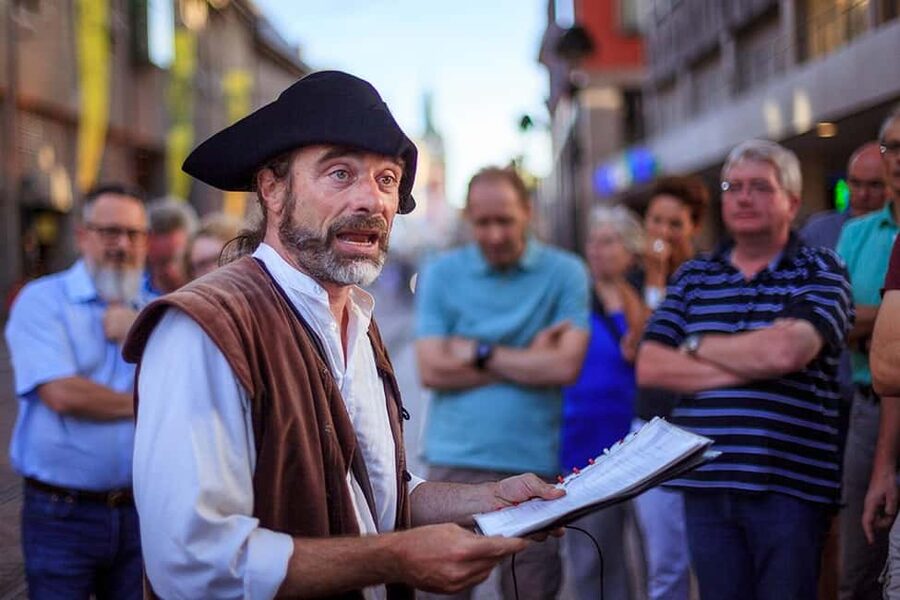
The strongest idea here arrives before the first dramatic accusation: witch hunts were not simply a medieval custom. In Breisgau, they continued from the 16th century until 1751, placing them much closer to the modern era than many people expect.
That time frame matters. It prevents you from filing the story away as a distant fairy tale and asks you to look at the legal, religious, and social fears of early modern Europe. The tour uses three women’s stories to put faces to that history, with Catharina Stadellmenin at the center.
Catharina lived peacefully in Freiburg in 1599 until she was accused of witchcraft. From there, the machinery of suspicion moved quickly. She was taken to a dark prison, questioned, and tortured. The accusations included familiar claims of the period: contact with the devil and attendance at a witches’ sabbath.
I find this personal approach more effective than a general lecture about superstition. You are not only hearing that witchcraft was punishable by death. You are asked to consider how an ordinary woman could be turned into a criminal through accusation, interrogation, and forced confession.
The tour also raises a difficult question: if someone confesses after repeated torture, what does that confession prove? That question gives the performance some weight. The story is not just about strange beliefs. It is about power, fear, and a legal system willing to treat pain as a path to truth.
More Witch Tours in Germany
- Munich: Witches and Executioners Guided Tour
★ 4.7 · 353 reviews - Witch Trials in Bamberg
★ 4.4 · 187 reviews - Oldenburg: “Executioners, witches & scoundrels” (crime thriller tour)
★ 4.6 · 50 reviews
Starting at Rathausplatz beside St. Martin’s Church
Meet in front of the main entrance to St. Martin’s Church on Rathausplatz, opposite the tourist information office. The guide is identified by a costume and lantern, so finding the group should be straightforward.
Rathausplatz is a useful starting point because it places you in Freiburg’s historic center right away. You do not need a taxi or a complicated transfer. If you are already sightseeing in the old town, the meeting point fits neatly into your day.
The opening scene sets the tone. This is not a standard city walk in which you hear a list of architectural dates. The actor begins with the human story and uses the setting around you as a stage.
The 90-minute length is well judged for the material. It gives enough time for a real narrative but does not consume half your day. Still, the pace may feel brisk if you want to stop for photographs at every location. I would keep your camera ready but avoid treating the walk like a conventional photo tour.
Gerichtslaube and the machinery of accusation

The stop at the Gerichtslaube connects the story to Freiburg’s legal past. The name itself points toward the old justice system, making this one of the most important places on the route for understanding how accusations became official proceedings.
Here, the actor can shift the focus from rumor to authority. Witchcraft charges did not remain only in private gossip. They could reach courts, interrogators, and officials who gave the accusations the force of law.
The power of this stop depends on the performance. You are looking at the exterior of a historic building, not entering a preserved courtroom. That limitation is worth knowing before you book. The setting supplies atmosphere, while the actor supplies the missing context.
You will get more from this part if you listen for the process rather than waiting for a physical spectacle. The central issue is not what the room looks like today. It is how a legal system handled people accused of an offense that could not be proved in any ordinary way.
Am Predigertor and the old city boundary
The route continues to Am Predigertor, another point where Freiburg’s historic structure helps frame the story. Gates and edges matter in a tale about punishment because early cities were organized around clear boundaries: inside and outside, protected and exposed, citizen and outcast.
The tour does not promise a reconstructed torture chamber or a staged execution. Instead, the actor uses the street and surviving urban layout to guide your imagination. That can work well if you enjoy historical interpretation, but it can feel thin if you need rooms, objects, and displays to make the past feel real.
I would treat this stop as part of the larger movement of the story. The tour takes you from accusation and confinement toward public judgment and punishment. Each location adds another piece to that progression.
Same old streets, another story to hear:
- Munich Ghosts and Spirits Evening Walking Tour
★ 5.0 · 1,900 reviews - Gruseltour Leipzig: A Haunted Guided Tour
★ 4.5 · 1,385 reviews - Munich: Spooky Tour of Old Town in German
★ 4.6 · 1,112 reviews - Stuttgart: Guided Ghost Walking Tour
★ 4.5 · 867 reviews
Schiffstraße 14 and the homes behind the accusations
At Schiffstraße 14, the walk brings attention back to domestic life. The women at the center of the tour were not abstract symbols. They lived in Freiburg, had homes, and belonged to the city before the accusations changed how others saw them.
That shift is important. The route is designed to take you to places associated with the women, their lives, and their punishment. You are encouraged to picture the difference between a normal day in the city and the sudden arrival of suspicion.
The site itself may not reveal much without the narration. One negative reaction to the tour focused on the locations being hard to picture and not always ideal for storytelling. That is a fair warning, especially for anyone expecting a clear archaeological display.
Still, the lack of visible remains can make the spoken account more direct. You have to listen closely instead of wandering through exhibits at your own pace. I would not choose this experience if your main goal is to see preserved torture equipment or enter historic interiors. I would choose it if you want a performed account tied to the city streets.
Münsterplatz brings the story into public view
Münsterplatz is one of Freiburg’s most recognizable squares, and its size and public character suit the next stage of the story. Witchcraft accusations did not remain private matters. They could become public warnings, public judgments, and public punishment.
The contrast is unsettling. Today, a central square may feel like a place for sightseeing and everyday city life. The tour asks you to picture a different use of public space, one shaped by fear and spectacle.
This is also one of the stops where the group may need to share the space with ordinary city activity. You should expect an atmospheric setting, not silence. The actor’s voice and timing matter, and recent performances have been praised for clear, lively delivery.
Julia M. is one guide who has received especially strong praise for her acting and friendly manner. That detail is useful because this tour depends heavily on the person leading it. A good actor can make a street corner feel connected to the case. A weaker performance would leave you staring at a square and filling in too many gaps yourself.
Martin’s Gate and the road toward punishment
Martin’s Gate helps mark the transition from the central city toward the final part of the story. Gates are natural points for a walking narrative because they suggest movement, exclusion, and departure.
By this point, you have heard about the accusation, confinement, interrogation, and possible confession. The route now turns toward the question of what happened after judgment. Witchcraft could carry a death sentence, but the story of Catharina Stadellmenin is presented as a question rather than a simple foregone conclusion.
That storytelling choice keeps the tour from becoming predictable. You are encouraged to follow the evidence and the historical uncertainty instead of assuming every accused person met the same fate.
The walk remains in the pedestrian zone and is listed as wheelchair accessible. Since the route happens outdoors, wear shoes that are comfortable for about an hour and a half of city walking. The tour runs in all weather, so rain protection or warm clothing may matter depending on the season.
Fischerau 24 and the final movement through Freiburg
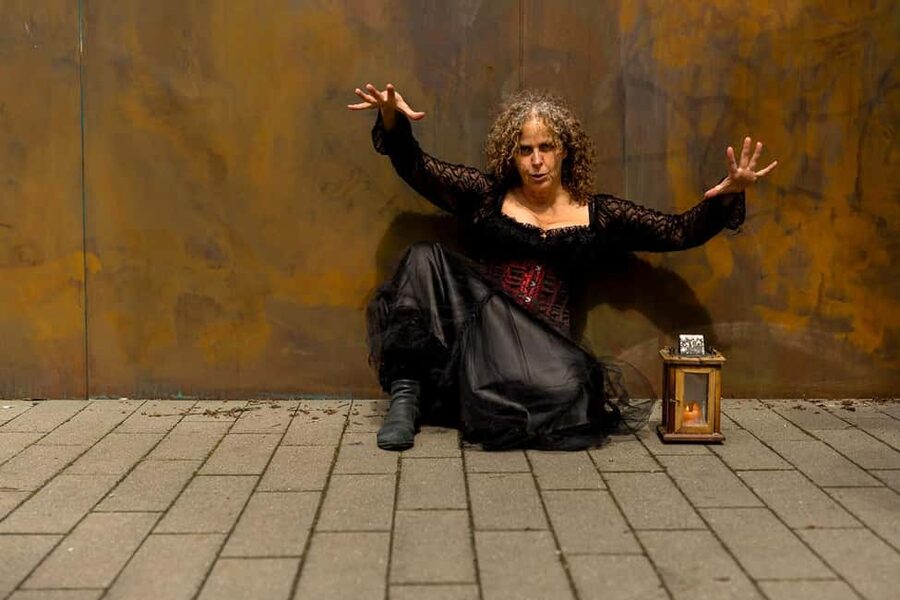
Fischerau 24 is another named stop where the actor develops the account of the women and the city around them. The route’s repeated return to specific addresses gives the stories a local scale. Freiburg is not just a backdrop. Its streets become the record of who lived here, who was accused, and how punishment was carried out.
This is where the tour’s theatrical method either works for you or does not. The actor may point to a building, street, or area and connect it to the past, but you will not tour the inside. One person may find that suggestive and atmospheric. Another may wish for signs, documents, or physical remains.
I like this kind of walk when I want history tied to place without spending several hours in a museum. You get a moving story, a look at Freiburg’s old center, and a reason to notice corners you might otherwise pass. You also need to accept that the visual evidence is limited.
Finishing at Holzmarkt outside the old city
The tour ends at Holzmarkt, in Freiburg im Breisgau. The finish marks the move toward the place of execution outside the gates of what was once the city.
That final location gives the narrative a clear direction. The route has not simply circled the old town. It has followed the accused from ordinary life toward imprisonment, judgment, and the edge of the city.
The ending is likely to stay with you because it joins geography and moral consequence. A punishment site outside the gates was not an accidental detail. It showed who belonged within the city and who had been cast out.
Do not expect a large memorial or an elaborate display at the finish. The value is in the explanation and the way the route has built toward it. If you prefer a tour with a strong final image and a complete story arc, this ending helps.
What the $17 price buys you
At about $17 per person, this is a reasonable use of your sightseeing budget. You receive a 90-minute guided walk, live acting, narrated city history, and a route through Freiburg’s atmospheric pedestrian center.
The price is strongest if you enjoy performance. You are paying for the actor’s delivery as much as for the locations. The tour has been part of Historix-Tours’ program since 1998, and that long run suggests a well-established concept, though the quality still depends on the individual performer.
You should not compare the cost with a museum ticket alone. This is a history lesson, a walking tour, and a small piece of theater. The value drops if you expect entry to historic buildings, exhibits, or a close look at torture devices. None of those interiors are included.
Free cancellation up to 24 hours before the start and the option to reserve now and pay later make it easier to fit into a changing Freiburg schedule. Those are practical advantages, but the main booking question is simpler: do you want a dark, acted history walk in German?
Who should book this Freiburg tour
I would recommend it most strongly to:
- Adults interested in witch hunts, legal history, and social history
- Teens over 12 who can handle frightening and disturbing subject matter
- People who enjoy actor-led tours more than formal lectures
- Visitors who want a short activity in Freiburg’s old town
- German speakers comfortable with historical language and some original wording
- Anyone curious about how early modern communities treated accused women
I would be cautious if you are traveling with young children. Children under 12 are not considered suitable for the tour, and the material includes torture, sexual accusations, forced confession, and execution.
I would also think twice if you need visual proof at every stop. The tour uses storytelling to fill in what is no longer visible. One performance may make that easy; another may leave you working hard to imagine the scene. The best approach is to expect interpretation, not a fully preserved crime scene.
Language, mood, and practical details
The tour is conducted in German. Some content is shown or presented in its original language, so you should have enough German to follow a sustained historical narrative. It is not presented as a multilingual tour.
The guide wears a costume and carries a lantern. That small detail helps separate the experience from a regular city walk and makes the guide easy to identify at Rathausplatz.
The tour operates in all weather. Check the forecast, but do not assume rain will cancel it. Comfortable footwear and suitable clothing are sensible because the route moves through outdoor pedestrian streets for 90 minutes.
The walk is wheelchair accessible according to the activity information. No interior visits are included, which also means you will not need to manage stairs inside old buildings as part of the advertised route.
The overall rating is 4.7 from 42 reviews, with especially strong praise for the acting, clear information, and lively storytelling. Julia M. has been singled out for a top-level performance and a friendly manner. That matches the tour’s basic strength: the human voice brings shape to places that may otherwise look ordinary.
Should you book Witches, Torture, Stake?
Book this tour if you want Freiburg history delivered as a live story, and if you are comfortable hearing about torture and the persecution of women. At $17, the combination of an actor, a focused subject, and a 90-minute old-town route is good value.
Skip it if you want interior access, museum displays, or a light supernatural tale. The tour is serious, in German, and dependent on your willingness to use imagination when the buildings and streets no longer show their former purpose.
For the right audience, it offers a memorable correction to the usual medieval witch-hunt story. These persecutions continued into the early modern period, and Freiburg’s streets give that fact a human scale.
FAQ
Where does the tour begin?
It begins in front of the main entrance to St. Martin’s Church on Rathausplatz, opposite the tourist information office.
How do I identify the guide?
The guide wears a costume and carries a lantern.
Where does the tour finish?
It finishes at Holzmarkt in Freiburg im Breisgau.
How long does the tour last?
The tour lasts 90 minutes.
What language is the tour in?
The live tour is conducted in German.
Is the tour suitable for children?
It is not suitable for children under 12. The subject includes witch hunts, torture, accusations, and execution.
Is the tour wheelchair accessible?
Yes, the activity is listed as wheelchair accessible.
Do I enter any historic buildings?
No. The tour includes city views from outside, but interior visits are not included.
Does the tour run in bad weather?
Yes. The tour takes place regardless of the weather.
Can I cancel for a full refund?
You can cancel up to 24 hours in advance for a full refund. You can also reserve now and pay later.
Freshly reviewed haunts around Germany
- Executioners, whores, witches with drama★ 5.0 · 7 reviews
- The Original Haunted Walk of Munich in English★ 4.5 · 13 reviews
- Cologne Haunted Quest: The Witch Self-Guided Tour★ 3.0 · 38 reviews
- Gruseltour Berlin Haunted Ghost Walk 90-minute at Berlin Mitte city center★ 5.0 · 75 reviews
- Osnabrück: Witch Mania & Superstition (Adventure Tour)★ 5.0 · 2 reviews
- Mannheim, guided costume tour: Hangmen, Witches, Huguenots★ 5.0 · 4 reviews
- Leipzig Old Cemetery: 75-Minute Dark History Tour★ 4.6 · 181 reviews
- Goslar: Witches – From delusion to myth★ 4.7 · 16 reviews
Germany Ghost Tours, compared.
Munich Ghosts and Spirits Evening Walking Tour
Read our review →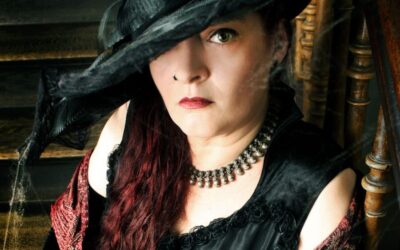
Görlitz: Ghosts and Spooky Historical Night Walking Tour
Read our review →
Leipzig Old Cemetery: 75-Minute Dark History Tour
Read our review →Browse the lists this tour appears in