
Review · GERMANY
Mannheim, guided costume tour: Hangmen, Witches, Huguenots
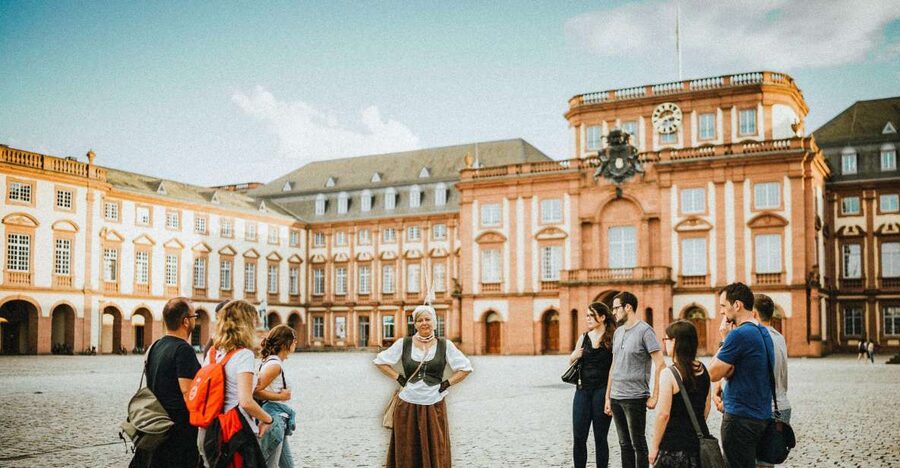
Mannheim’s darker past comes into focus on this 90-minute costume walk, led by a guide playing the executioner’s daughter. You’ll move through the lower town and former craftsmen’s quarter while asking unsettling questions: Was there really an executioner in Mannheim? Where did executions take place? What did blood judgment mean?
I like the unusual viewpoint and the strong local focus. The tour also connects crime and punishment with witchcraft, Huguenot life, war, epidemics, and the Mannheim Experiment, so it is more than a string of gruesome tales. The main drawback is practical: the tour is in German, and the subject matter is blunt enough that it may not suit young children or anyone uneasy with executions.
Key points at a glance
- Meet the executioner’s daughter: A costumed guide presents Mannheim’s past through a character tied to law, punishment, and social outsiders.
- Walk through the lower town: The route explores Mannheim’s former craftsmen’s quarter, adding a local setting to the crime stories.
- Hear about blood judgment: The tour explains old legal ideas and the risks involved in carrying out an execution.
- Go beyond crime: Witchcraft in the Electoral Palatinate, Huguenots, epidemics, wars, and the Mannheim Experiment broaden the story.
- Plan for German and outdoor weather: The live guide speaks German, and the tour runs in rain or shine.
- Good value for a short city walk: At $20 per person, you get a guided, costumed experience lasting an hour and a half.
Starting at Mannheim’s market square fountain
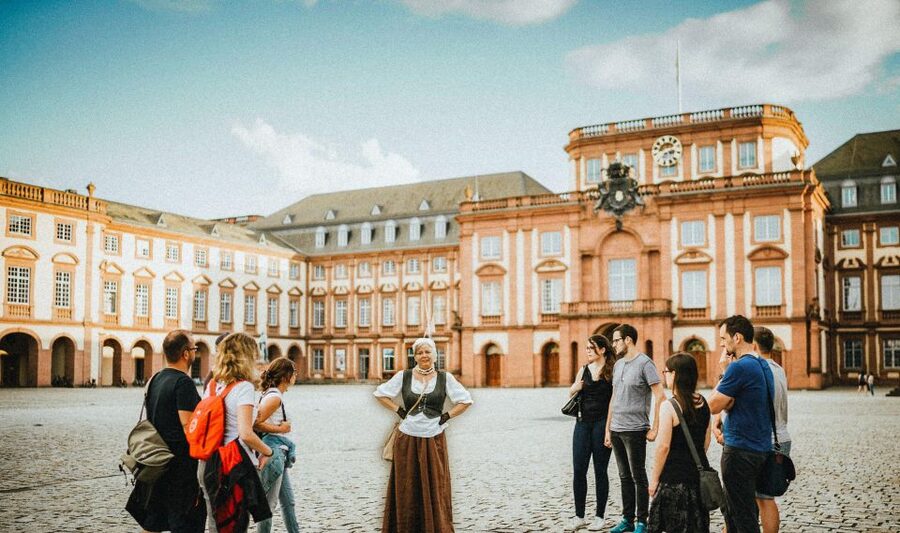
The meeting point is easy to identify: the fountain at Mannheim’s market square. That matters in a city tour, since you can arrive on foot and avoid hunting for a tour office or transport connection.
From there, the guide takes you into the lower town and the former craftsmen’s quarter. The route is not presented as a general introduction to Mannheim. Instead, you see the city through questions of law, punishment, fear, and survival.
That narrow focus is the tour’s strength. A standard city walk may point out grand buildings and civic landmarks. This one asks what happened to people who fell outside polite society, broke the law, faced accusations of witchcraft, or suffered through war and disease.
The costumed role gives the walk a clear voice. You are accompanied by the executioner’s daughter rather than by a neutral guide giving a textbook lecture. That character helps link the streets to the social world of the past, especially the uncomfortable place occupied by executioners and their families.
More Witch Tours in Germany
- Munich: Witches and Executioners Guided Tour
★ 4.7 · 353 reviews - Witch Trials in Bamberg
★ 4.4 · 187 reviews - Oldenburg: “Executioners, witches & scoundrels” (crime thriller tour)
★ 4.6 · 50 reviews
Following the executioner’s daughter into the lower town

The central question is simple: did Mannheim have an executioner? The tour uses that question to open up the city’s old legal system.
You will hear about the place of execution and the work attached to it. The subject is not treated as a quick shock tactic. The program asks what blood judgment meant and what could go wrong during an execution. Those details give you a better sense of how uncertain and physical justice could be before modern legal systems.
I like this approach because it puts human effort behind a word such as executioner. The role involved more than a public act of punishment. It placed a person and a family in a difficult social position, close to the law but often kept apart from respectable society.
The tour’s title also promises original Mannheim crime stories. Since the experience takes place in the old craftsmen’s quarter and lower town, the setting helps keep those stories tied to real streets rather than floating as distant regional history.
Expect the tone to be curious and sometimes grim. The guide may describe mistakes, failed procedures, or the risks of an execution. The supplied description plainly warns that this is not a tour for the faint of heart, so choose it for historical interest, not for a light comic stroll.
Crime stories with a local setting
Crime stories work best when they explain more than the crime itself. Here, the focus includes legal rules, punishment, and the public meaning of judgment.
That makes the tour useful if you want to understand how Mannheim functioned as a community. Crime was not only a private matter between an offender and a victim. It involved authorities, public order, religious beliefs, and the visible use of punishment.
You may find the most memorable details in the small questions: who was allowed to carry out a sentence, where punishment happened, what the law meant by blood judgment, and how an execution could go wrong. These details turn legal history into something easier to picture.
The experience also has a useful sense of place. The former craftsmen’s quarter suggests a part of the city connected with work and ordinary urban life, not only palaces or official buildings. That contrast helps you imagine how severe legal events affected the same town where people made goods, traded, and lived day to day.
Because the guide speaks German, you should be comfortable following a spoken German tour. No other tour language is listed. If your German is limited, the costume and route may still be enjoyable, but the value of the experience depends heavily on understanding the stories and explanations.
Witchcraft in the Electoral Palatinate

The route moves from ordinary crime into the frightening world of witchcraft accusations in the Electoral Palatinate. This gives the tour a wider historical frame without losing its focus on punishment and public fear.
Witchcraft cases show how legal systems can be shaped by beliefs, panic, and pressure. The topic fits naturally with the executioner’s role, since accusations could lead to formal investigation and harsh judgment.
You will not be getting a separate museum lecture on witchcraft. It is one part of a connected story about law, suspicion, and suffering. That makes the subject more useful than a collection of spooky legends.
I appreciate that the program places witchcraft beside other periods of hardship. It suggests that Mannheim’s past cannot be reduced to colorful crime tales. People also faced disease, warfare, displacement, and the uncertainty of changing political and social conditions.
The tone remains historical rather than playful. If you are looking for ghost stories or theatrical scares, this may feel too grounded in legal and social history. If you prefer a city walk that explains why people feared both criminals and authorities, this section should add real weight.
Same old streets, another story to hear:
- Munich Ghosts and Spirits Evening Walking Tour
★ 5.0 · 1,900 reviews - Gruseltour Leipzig: A Haunted Guided Tour
★ 4.5 · 1,385 reviews - Munich: Spooky Tour of Old Town in German
★ 4.6 · 1,112 reviews - Stuttgart: Guided Ghost Walking Tour
★ 4.5 · 867 reviews
Huguenots, wars, and epidemics
The tour also includes Huguenot history and the suffering caused by wars and epidemics. These subjects widen the route beyond punishment and show how Mannheim was shaped by forces that affected entire communities.
Huguenot history is especially useful in this setting because it brings migration, religious conflict, and community change into the discussion. The tour does not treat the old city as a fixed backdrop. It presents Mannheim as a place affected by people arriving, beliefs clashing, and crises disrupting normal life.
The war and epidemic material adds another layer. Execution and crime may be dramatic, but disease and warfare often caused broader suffering. Including them keeps the experience from suggesting that the city’s hardships came only from the criminal justice system.
You should expect these themes to be handled as part of the walking narrative. The available information does not give a detailed stop-by-stop list, so you should not book this expecting a fixed museum-style series of exhibits. The value comes from how the guide connects the streets and subjects during the walk.
The Mannheim Experiment in the wider story
The Mannheim Experiment is another unusual subject included on the route. Since the supplied details do not explain exactly how it is presented, you should expect an introduction within the broader historical story rather than a specialist seminar.
Its inclusion signals that this is not only a tour about death and punishment. The guide also looks at ideas and events that shaped Mannheim’s identity. Set beside crime, witchcraft, migration, war, and epidemics, the Mannheim Experiment helps show that the city’s past included attempts to respond to social problems as well as episodes of suffering.
This range is one of the best reasons to book the tour. You get a strong central theme, but the hour and a half is not spent repeating the same grim point. The subjects move from law to belief, from social change to disaster.
At the same time, the broad program means no single topic can receive unlimited attention. If you want a detailed academic treatment of witch trials or the Mannheim Experiment alone, a specialized lecture or museum visit would likely suit you better.
Why the costume matters
Costume tours can sometimes feel like history with a thin theatrical layer. Here, the executioner’s daughter is a sensible character choice because the family connection gives the guide a reason to discuss execution, legal punishment, and social boundaries.
The role can make difficult material easier to follow. Instead of hearing disconnected facts about old law, you have a recurring perspective that carries you from one subject to the next.
It also adds a human angle. The executioner’s family would have lived close to a feared public role, and the tour uses that position to explore Mannheim from the edge of respectable society. That is more interesting than simply listing dates and punishments.
Still, you should know what kind of performance to expect. The experience promises a professional guide in costume, but no specific guide name or theatrical format is provided. Book it as a guided historical walk with character presentation, not as a staged play.
Price, time, and practical comfort
At $20 per person, the tour offers a fair deal for 90 minutes of guided content in central Mannheim. The price includes the walking tour and a professional costumed guide. It does not include food, drinks, or transport to and from the market square.
For a short city experience, the value is strongest if you enjoy local stories and want something distinct from a general sightseeing walk. You are paying for interpretation and atmosphere, not for entry to a major monument or a meal.
Wear comfortable shoes. The tour takes place outdoors and runs in rain or shine, so weather-appropriate clothing is important. A wet day could make the walking less pleasant, even if the stories remain worthwhile.
The route is listed as wheelchair accessible, which is a useful point for anyone checking mobility needs. Dogs and other pets are not allowed on public tours. Keep that rule in mind before booking, since you cannot simply bring a dog along for the walk.
You can cancel up to 24 hours in advance for a full refund, and the reserve-now, pay-later option lets you hold a place without paying immediately. Those policies are helpful if your Mannheim plans may shift.
Who should book this Mannheim tour?
I would choose this tour if you like local history with an unusual point of view. It suits adults and older teenagers who can handle frank material about executions, witchcraft, crime, war, and epidemics.
It is also a good pick if you have already seen Mannheim’s main sights and want a more specific story. The lower town and former craftsmen’s quarter become the stage for subjects that are often left out of polished city introductions.
German speakers will get the full benefit, since the live tour is offered in German. The accessible route makes it practical for many participants with mobility needs, but the tour remains an outdoor walk, so weather and footwear still matter.
I would skip it if you want a relaxed food walk, a broad first-time overview of Mannheim, or an English-language experience. I would also think twice if execution details and witchcraft accusations are likely to upset you.
Should you book it?

Book this tour if you want a compact, reasonably priced walk that treats Mannheim as a real working city, with crime, fear, migration, disease, and punishment all part of the story. The strongest features are the executioner’s daughter character, the lower-town setting, and the unusual range of subjects.
Skip it if you need English, dislike grim history, or prefer indoor attractions. For German-speaking visitors interested in the city’s less polished past, $20 is a sensible price for a focused 90-minute experience. It earned a perfect 5 out of 5 from four bookings, including one local participant who found it interesting and entertaining and still learned many new things about Mannheim.
FAQ
Where does the tour meet?
The meeting point is at the fountain on Mannheim’s market square.
How long does the tour last?
The walking tour lasts 1.5 hours.
What language is the tour in?
The live tour guide speaks German.
Is the tour wheelchair accessible?
Yes, the activity is listed as wheelchair accessible.
Are dogs allowed?
No. Pets are not allowed on public tours.
What happens if it rains?
The tour takes place in rain or shine, so bring weather-appropriate clothing and wear comfortable shoes.
Freshly reviewed haunts around Germany
- Executioners, whores, witches with drama★ 5.0 · 7 reviews
- The Original Haunted Walk of Munich in English★ 4.5 · 13 reviews
- Cologne Haunted Quest: The Witch Self-Guided Tour★ 3.0 · 38 reviews
- Gruseltour Berlin Haunted Ghost Walk 90-minute at Berlin Mitte city center★ 5.0 · 75 reviews
- Osnabrück: Witch Mania & Superstition (Adventure Tour)★ 5.0 · 2 reviews
- Leipzig Old Cemetery: 75-Minute Dark History Tour★ 4.6 · 181 reviews
- Goslar: Witches – From delusion to myth★ 4.7 · 16 reviews
- Freiburg: Ghost walk with Historix-Tours “Murderers, graves, and ghosts”★ 4.4 · 20 reviews
Germany Ghost Tours, compared.

Munich Ghosts and Spirits Evening Walking Tour
Read our review →

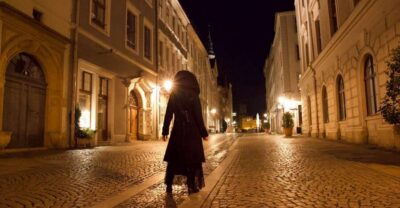
Görlitz: Ghosts and Spooky Historical Night Walking Tour
Read our review →
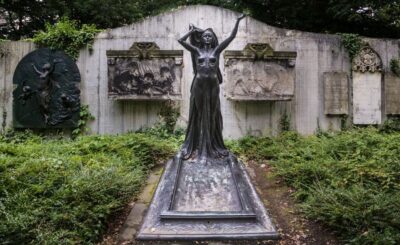
Leipzig Old Cemetery: 75-Minute Dark History Tour
Read our review →Browse the lists this tour appears in