
Review · BARCELONA
Barcelona’s Dark History Walking Tour in El Raval
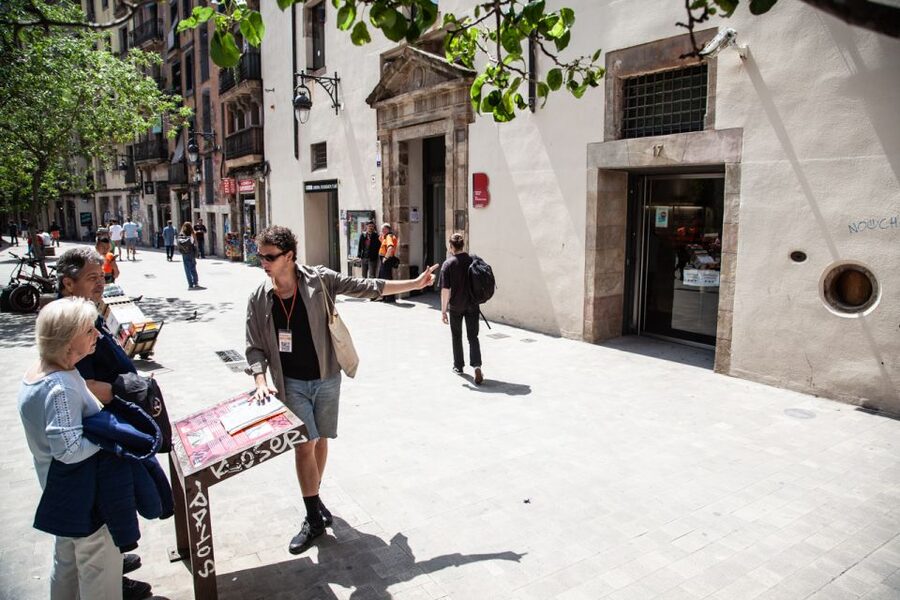
Barcelona’s El Raval is not a polished postcard neighborhood. Its narrow lanes, old institutions, rough edges, political murals, and long record of poverty and crime make it one of the city’s most compelling areas to explore on foot. This tour uses the darker side of Raval as a doorway into its past, mixing ghost stories with social history, art, architecture, and local legends.
I like the way the route connects real places to memorable stories, especially the Casa de la Misericòrdia, the old Hospital de la Santa Creu, and the tale of the Vampiress of the Raval. I also like the shift from historic sites to Keith Haring’s political mural and changing street art, which keeps the walk from feeling like a string of old dates and names. The main drawback is the subject matter: stories of abandoned children, murder, grim hospitals, and cabarets may not suit young children or anyone wanting a gentle introduction to Barcelona.
Key points at a glance
- The Vampiress of the Raval: Hear the disturbing story of Barcelona’s most infamous alleged serial killer and the house linked to her.
- Casa de la Misericòrdia: Visit a former house of mercy where abandoned children were cared for, and where local ghost stories still linger.
- Keith Haring’s AIDS mural: See an important piece of public art behind the MACBA, with a message tied to politics and the AIDS crisis.
- Old Hospital de la Santa Creu: Walk through an ancient medical complex and garden connected with some of the city’s more macabre tales.
- Bar Marsella: Pass Barcelona’s oldest bar, a more than 200-year-old meeting place associated with artists such as Dalí, Gaudí, and Picasso.
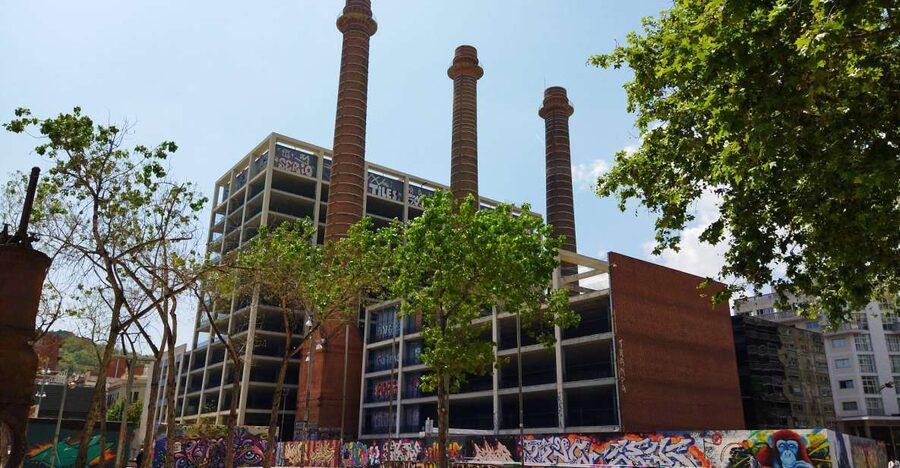
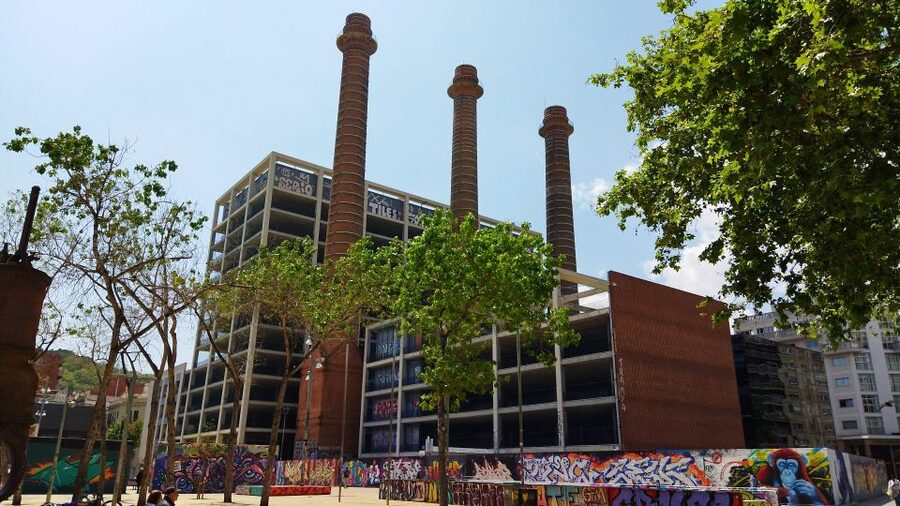
- South Raval street art: Finish among colorful graffiti, old entertainment venues, and the Three Chimneys.
Why El Raval makes a strong setting for a dark-history walk
The appeal of this tour is not simply that Barcelona has spooky stories. Many cities can offer a ghost tale or two. Here, the stories are tied to buildings and streets you can actually see, which gives the walk a stronger sense of place.
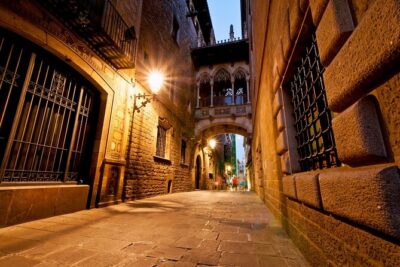
El Raval has long sat just outside the grander image of Barcelona. Its lanes were shaped by religious institutions, hospitals, factories, nightlife, poverty, political unrest, and immigration. You will not be touring a preserved historic quarter where every facade has been tidied for visitors. You will be walking through a working part of the city with old buildings, new art, independent shops, and signs of social change.
That mix gives the guide room to explain how Barcelona grew and changed. A story about a former orphanage can lead into the city’s charitable institutions. A tale about a notorious killer can reveal how rumor and fear spread. Street art can open a discussion about politics, public space, and who gets to make a statement on a city wall.
The tone appears to be lively rather than relentlessly grim. Andreas is one guide associated with the experience, and Owen, also known as Eoghan, has led it with an energetic storytelling style. Your guide may be different, but the best version of this walk depends on clear storytelling and a good balance between fact, legend, and humor.
More Dark History Tours in Spain
- Barcelona: Dark History Night Walking Tour
★ 4.8 · 344 reviews - Barcelona’s Dark History Night Tour
★ 5.0 · 181 reviews - Barcelona Dark History Night Walking Tour With Drinks
★ 5.0 · 153 reviews
Starting at Sant Pere Nolasc in Plaça de Castella
The tour begins outside the Church of Sant Pere Nolasc Mercedaris, beside Plaça de Castella. This is a useful starting point because you meet in a public square before moving into smaller streets. Take a moment to get your bearings before the walk begins, since El Raval’s lanes can feel confusing once you leave the open space.
The route covers about two miles at a leisurely pace over two hours. That is not a strenuous distance, but you should wear comfortable shoes. The walk involves city streets, older lanes, and several stops where you listen to the guide rather than simply pass through.
The opening church also sets the mood. Barcelona’s religious buildings are often treated as art stops, but on this walk the focus is more likely to be on the institutions and stories connected with them. You begin with the sense that this is a neighborhood shaped by faith, charity, illness, fear, and survival.
Casa de la Misericòrdia and the children who never left
The first major stop is the Casa de la Misericòrdia, a former house of mercy. Its past is tied to abandoned children and the difficult work of caring for people who had nowhere else to go.
This is where the tour moves from atmosphere into uncomfortable social history. The idea of a haunted building is memorable, but the more important point is the human story behind it. Institutions like this one reveal how earlier Barcelona dealt with poverty and abandonment, often through religious or charitable organizations with limited resources.
The building is also linked with a local claim that some of the children who died there still walk its halls. Your guide will separate, or at least frame, the known history and the legend. That distinction matters. A good dark-history tour should let you enjoy the eerie story without pretending every supernatural detail is documented.
This stop may be especially interesting if you like tours that place folklore beside real history. It may be less comfortable if you prefer architecture without stories of death or suffering. The subject is serious, and the guide’s tone will shape how well it lands.
MACBA, the Keith Haring mural, and public art with a message
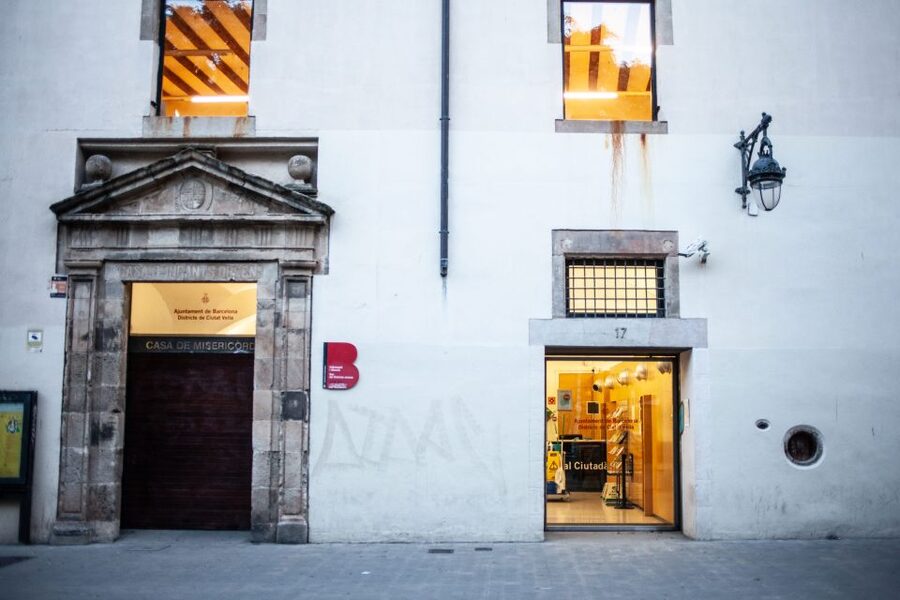
The route then turns through El Raval’s medieval streets toward the Barcelona Museum of Contemporary Art, usually known as MACBA. The museum itself is a major modern building and a familiar gathering point for skateboarders.
You do not need to enter the museum for this part of the walk. Instead, the guide takes you behind the building to see the Mural del Sida, a public artwork by Keith Haring. Its simple figures and bold design are easy to read at a glance, but the message is political and connected to AIDS activism.
This is one of the tour’s best changes of pace. After old churches, charitable institutions, and ghost stories, you get a direct look at modern public art. The mural also shows how El Raval’s walls can carry messages that official monuments often avoid.
I like this stop because it makes the neighborhood feel current. The tour is not saying that Raval belongs only to the past. It shows a place where old buildings and present-day debates share the same streets. The area around MACBA is also known for skating, so you see a more youthful side of the district before the route turns back toward darker legends.
More Ghost Walking Tours in Spain
- Barcelona: Gothic Quarter Ghosts and Legends Walking Tour
★ 4.7 · 1,443 reviews - Barcelona El Raval Dark History Walking Tour
★ 5.0 · 70 reviews - Barcelona Ghosts of a Dark Past Gothic Walking Tour
★ 5.0 · 55 reviews - Barcelona: El Born Ghost Walking Tour.
★ 4.0 · 54 reviews
Carrer de Joaquín Costa and the Vampiress of the Raval
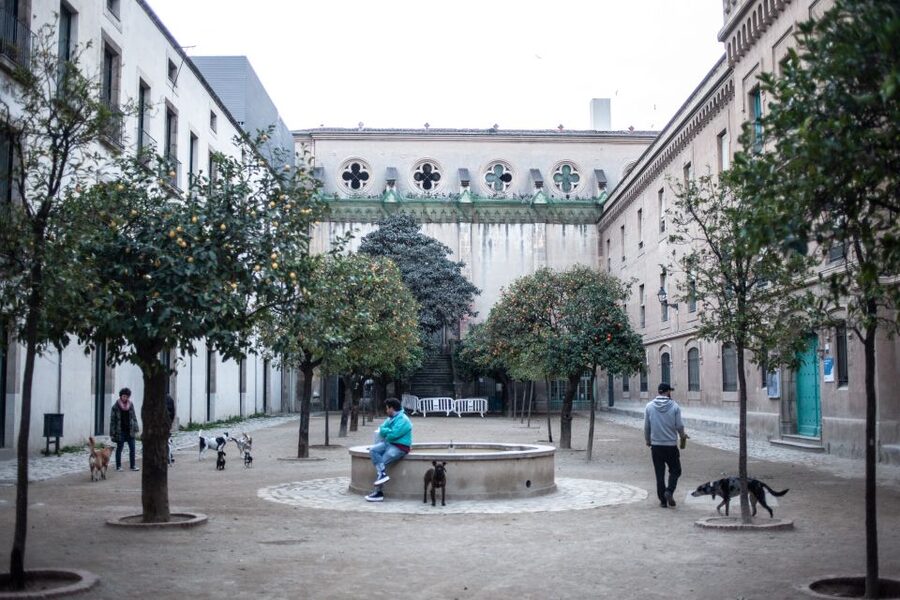
One of the most memorable stops comes on or near Carrer de Joaquín Costa, where the tour connects the neighborhood with the story of the Vampiress of the Raval. She is remembered as Barcelona’s most infamous serial killer, and the guide points out the place where she was said to have lived.
The name sounds like pure folklore, but the tale sits in the uneasy space between crime story, urban legend, and vampire myth. That is part of its appeal. You are not simply told a spooky story in a dark room. You are standing on an ordinary city street, looking at a real address connected with a figure who has become larger than life.
The phrase Vampiress may suggest supernatural horror, but the story’s force comes from the confusion between fact and legend. Your guide can show how a criminal case became a piece of local mythology. Listen for the difference between what is presented as historical record and what belongs to the tale.
This is also a point where the tour’s tone may become more theatrical. Owen, or Eoghan, has been associated with vivid storytelling, while Andreas has been praised for combining information with fun. If your guide tells this part well, it should be gripping without turning the victims or the neighborhood into a cheap spectacle.
The old Hospital de la Santa Creu and its macabre garden
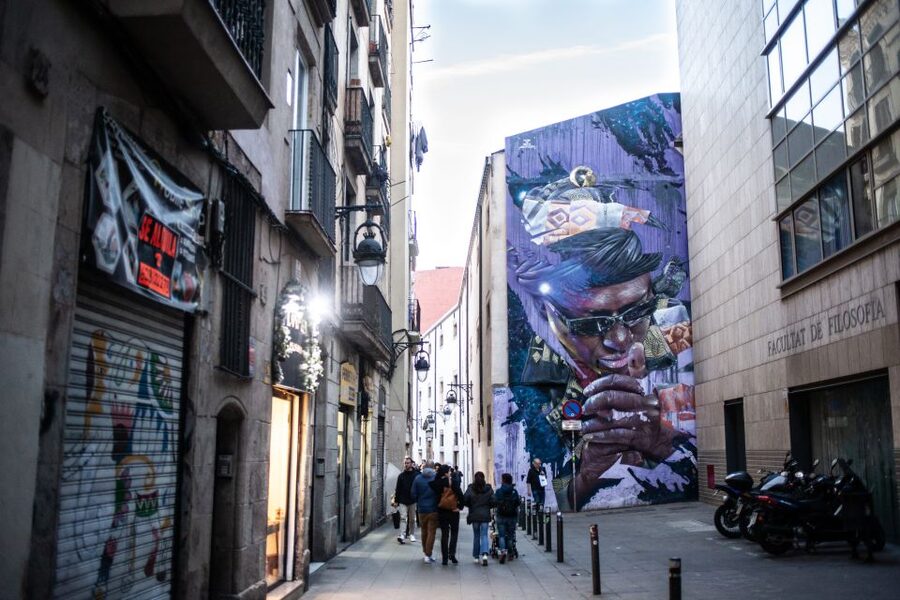
The former Hospital de la Santa Creu is one of the route’s most substantial historic stops. You walk through its grounds and garden, a place with centuries of medical and institutional history.
The hospital helps explain how Barcelona cared for the sick before modern medicine. It also carries darker associations. The grounds were once linked with shows and spells of a macabre nature, giving the guide another chance to connect documented history with unsettling local stories.
Architecturally, this is one of the places where you should slow down and look around. The old hospital is more than a backdrop for a ghost story. Its courtyards and garden show the scale of the institutions that once shaped daily life in the city.
The stop may appeal most to people who like history with a physical setting. You are not only hearing about an old hospital. You are moving through the place itself. On the other hand, the details may feel grim if your main goal is to see Barcelona’s grand churches and elegant squares.
Bar Marsella, absinthe, and Barcelona’s creative past
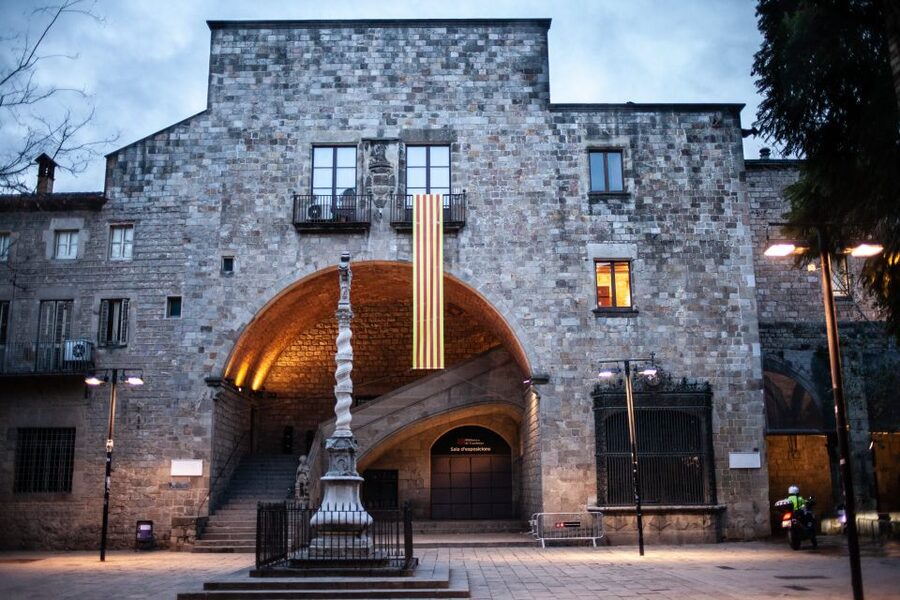
The route continues toward La Rambla de Raval and Bar Marsella, described as the oldest bar in town. It has been open for more than 200 years and is linked with famous creative figures including Dalí, Gaudí, and Picasso.
You should understand this as an exterior stop and story point unless your guide says otherwise. The tour includes a guided visit to the location, but a drink is not listed as part of the price.
Bar Marsella adds a welcome dose of character. After the institutional history of the hospital, the bar shows another side of old Barcelona: artists, writers, nightlife, and questionable beverages. It helps explain why El Raval has long attracted people who wanted to live or work outside the city’s more respectable image.
This is also a good place to remember that the tour is not a haunted-house attraction. Its darker material is mixed with cultural history and ordinary urban life. A historic bar can be just as useful as a cemetery for explaining how a neighborhood developed.
Sant Pau del Camp and a troubled church legend
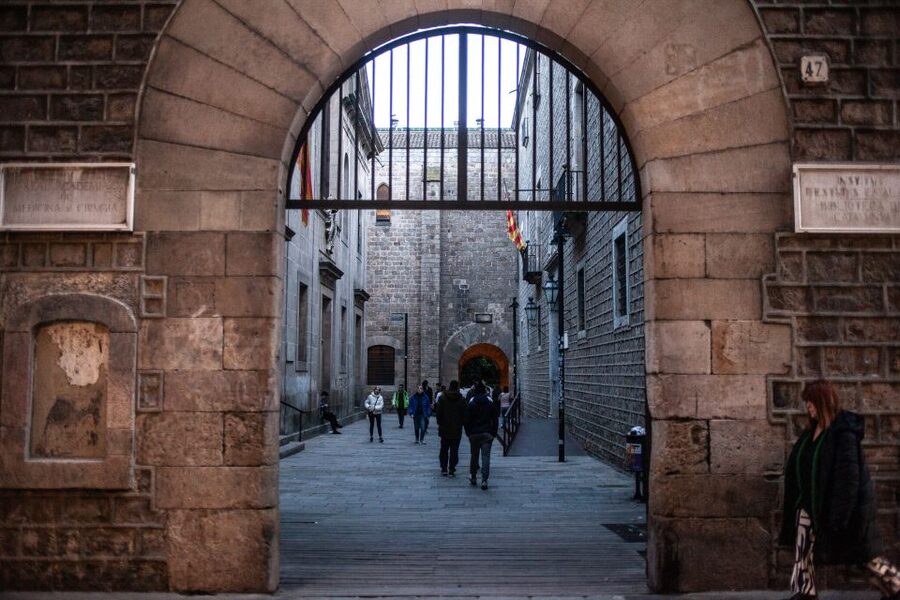
From Bar Marsella, the route heads toward Sant Pau del Camp, a Romanesque church more than 1,000 years old. It is described as Barcelona’s oldest church, and its age alone makes it a major stop.
The church also carries a troubled past connected with a local legend. That combination is typical of the walk: first you get the age and architecture, then you hear the story that gives the place its darker reputation.
Sant Pau del Camp provides a useful contrast with the earlier modern mural. Keith Haring’s work is direct, colorful, and public. Sant Pau del Camp represents a much older Barcelona, when religious buildings were central to community life and the city was far smaller.
Do not expect a full architectural lecture. The tour’s purpose is to connect the building to El Raval’s stories rather than cover every Romanesque detail. If you want an in-depth church tour, this stop may feel brief. If you want a strong sense of place and a memorable legend, it fits the route well.
South Raval, old cabarets, and the Three Chimneys
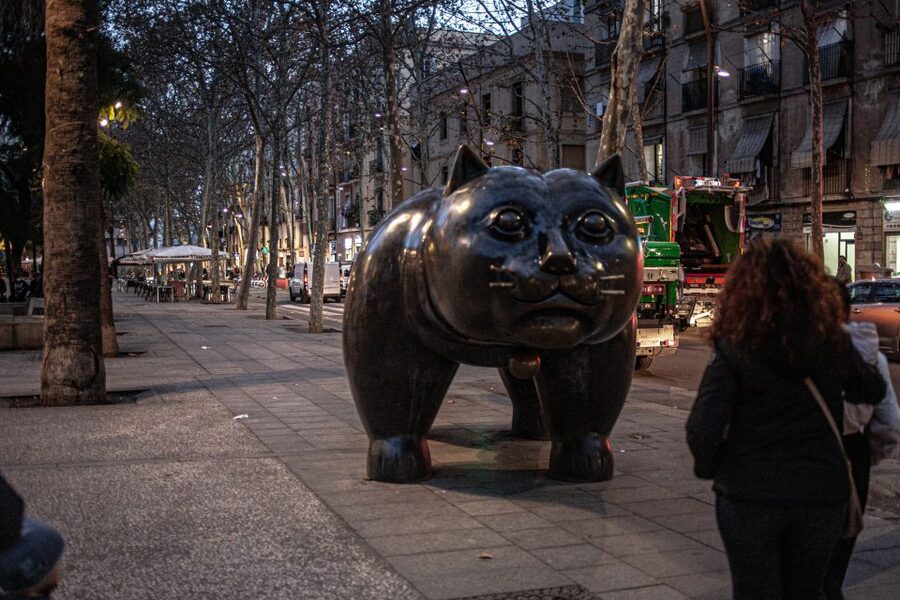
The final stretch takes you into the south side of El Raval. Here, the subject shifts to clubs, cabarets, and casinos that once drew crowds a century ago. Your guide points out places connected with that entertainment past, including a few that have survived into the modern city.
This part of the walk helps correct the idea that Raval’s dark history is only about ghosts and murder. Nightlife, gambling, performance, and crime have all shaped the district. The old entertainment scene also shows how the neighborhood’s reputation was built over time.
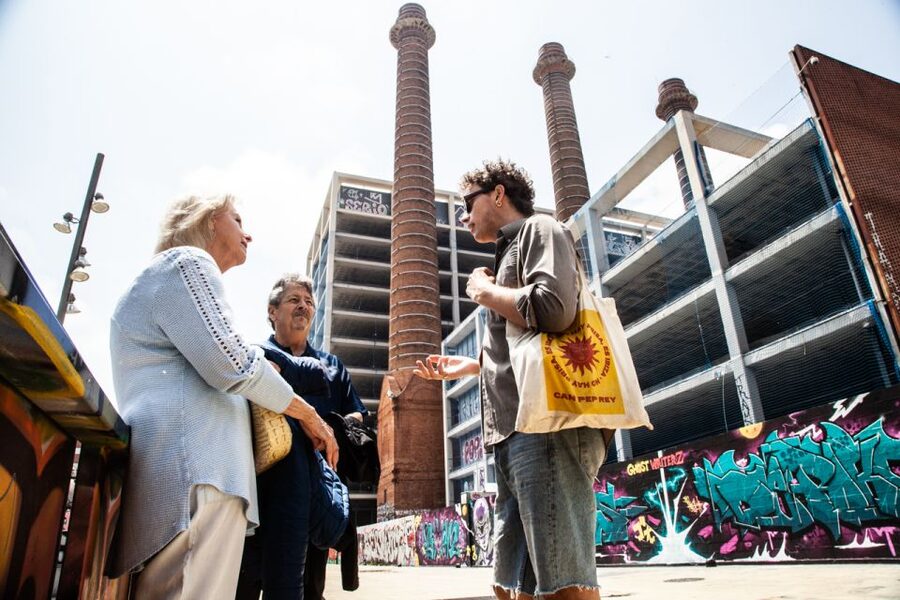
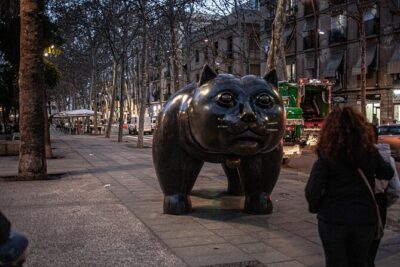
The route ends near the Three Chimneys, close to a former power factory. This is one of the best areas on the walk for street art. Graffiti changes constantly, so what you see depends on the day. You might even catch artists working, though that is not guaranteed.
The listed finish is the Jardins de les Tres Xemeneies, or Three Chimneys Gardens. The meeting information also says the activity ends back at the starting point, so confirm the exact end location when you book. That small detail matters if you have a restaurant reservation, museum entry, or train to catch afterward.
Price, pace, and who will enjoy this walk
At $33 per person, the tour is priced fairly for a two-hour guided walk in central Barcelona. You are paying for a live English-speaking guide, a planned route, and the interpretation that links separate sites into one story. You are not paying for museum admission, food, drinks, or private transport.
The value is strongest if you want context. You could pass the mural, old hospital, bar, and churches on your own, but you would miss much of the connection between them. The guide turns a collection of streets into a clear story about institutions, crime, art, and nightlife.
The tour is wheelchair accessible, though you should still ask about the exact route if you need detailed access information. It runs in rain or shine, and extreme weather is the stated exception. Cancellation or rescheduling is allowed without cost up to 24 hours before the start time. Tips are not included, but you can tip if your guide gives you an especially strong experience.
I would choose this walk for adults, older teenagers, history fans, urban explorers, and anyone who has already seen Barcelona’s big sights and wants a different angle. It is less suitable for small children or anyone sensitive to stories about murder, abandoned children, and grim medical history.
Should you book Barcelona’s Dark History Walking Tour?
Book it if you want stories tied to real Barcelona streets, rather than a standard highlights walk. The best reasons are the Vampiress of the Raval, Casa de la Misericòrdia, the Keith Haring mural, and the unusual mix of old hospital grounds, Romanesque church, historic bar, and changing graffiti.
Skip it if you want a relaxed architecture tour, a food walk, or a visit focused only on famous landmarks. The subject matter can be unsettling, and the route’s appeal depends heavily on the guide’s storytelling.
For most curious adults, this is a good use of two hours. You get a sharper understanding of El Raval’s past and present, with enough legends to keep the walk lively and enough real history to give it weight.
FAQ
Where does the tour start?
Meet your English-speaking guide outside the Church of Sant Pere Nolasc Mercedaris in Plaça de Castella, Barcelona.
Where does the tour finish?
The route information lists the Jardins de les Tres Xemeneies as the final stop. The meeting information also says the activity ends back at the meeting point, so confirm the exact end location before making a tight onward plan.
How long does the tour last?
The tour lasts two hours.
How far do you walk?
The route covers about two miles at a leisurely pace.
What language is the tour in?
The tour is conducted in English.
Is the tour wheelchair accessible?
Yes, the activity is listed as wheelchair accessible.
Is entry to museums or drinks at Bar Marsella included?
The included service is a guided tour. Museum entry, food, and drinks are not listed as included.
Does the tour run in bad weather?
Yes. The tour runs rain or shine, unless extreme weather causes the operator to cancel.
Can I cancel or reschedule?
You can cancel or reschedule for a full refund up to 24 hours before the tour starts. Cancellations or changes within 24 hours may incur costs.
More Ghost Walking Tours in Barcelona
- Barcelona: El Born Ghost Walking Tour
★ 3.8 · 47 reviews - Barcelona: Ghosts of a Dark Past Walking Tour
★ 5.0 · 10 reviews - Walking Tour Mysteries and Legends of Barcelona and its Ghosts
★ 5.0 · 3 reviews - New Orleans Premier Ghost, Voodoo and Vampire Walking Tour
★ 4.5 · 12,856 reviews
More Dark History Tours in Barcelona
- Barcelona: Gothic Quarter Tour Dark History & Ghosts Tour
★ 4.8 · 64 reviews - Dark History and Legends Night Walk of Gothic Quarter
★ 5.0 · 2 reviews - Adults-Only New Orleans Ghost, Crime, Voodoo, and Vampire Tour
★ 5.0 · 6,545 reviews - Edinburgh: Dark Secrets of the Old Town Ghost Walking Tour
★ 4.6 · 1,671 reviews
Freshly reviewed haunts around Barcelona
- Walking Tour Mysteries and Legends of Barcelona and its Ghosts★ 5.0 · 3 reviews
- The Gothic Trail – Ghosts of Barcelona Exploration Game★ 4.5 · 33 reviews
- Witch Hunt on Montjuïc: Self-Guided Puzzle Quest in Barcelona★ 4.5 · 9 reviews
- Barcelona Ghosts of a Dark Past Gothic Walking Tour★ 5.0 · 55 reviews
- Dark History and Legends Night Walk of Gothic Quarter★ 5.0 · 2 reviews
- Barcelona Ghosts and Legends Gothic Quarter Tour★ 5.0 · 152 reviews
- Barcelona: El Born Ghost Walking Tour.★ 4.0 · 54 reviews
- Barcelona: Gothic Quarter Tour Dark History & Ghosts Tour★ 4.8 · 64 reviews
Barcelona Ghost Tours, compared.

Barcelona: Gothic Quarter Ghosts and Legends Walking Tour
Read our review →
Barcelona: Gothic Quarter Tour Dark History & Ghosts Tour
Read our review →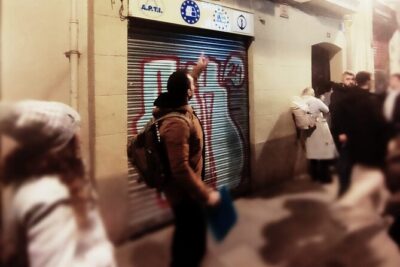
Barcelona Ghosts of a Dark Past Gothic Walking Tour
Read our review →
The Gothic Trail – Ghosts of Barcelona Exploration Game
Read our review →Browse the lists this tour appears in