
Review · BARCELONA
Barcelona: Ghosts of a Dark Past Walking Tour
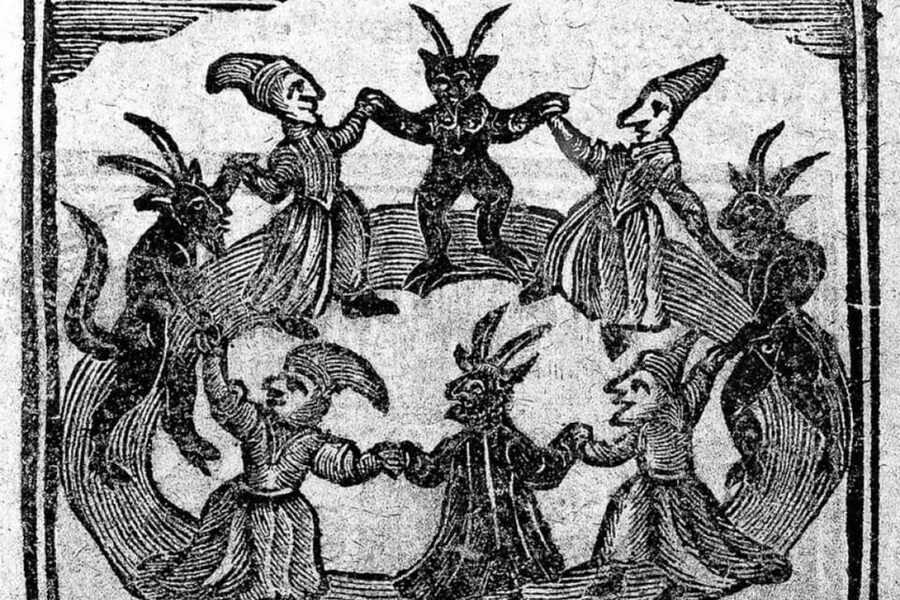
Barcelona’s darkest stories are not ghost tales. They are the documented accounts of torture, witch trials, political violence, and ordinary people caught in brutal systems. This two-hour night walk through the Gothic Quarter connects the Spanish Inquisition and medieval superstition with the Franco dictatorship, giving you a side of the city that standard sightseeing tours often skip.
I like the focus on real history instead of spooky theater, and I like the way the route brings together several centuries of fear and repression. The story of Henriqueta Martí, known as the Vampire of Barcelona, adds a true-crime thread, while guide Onno has been praised for clear, engaging storytelling and strong historical explanations.
The main drawback is the subject matter. This is not a light evening stroll, and the stories include executions, torture, church burnings, assassinations, and political oppression. You also need comfortable shoes for uneven streets, and the experience is not suitable for children under 12 or people with certain health and mobility concerns.
Key points to know before you book
- Barcelona’s real horrors: Learn about the Inquisition, witchcraft accusations, political violence, and Franco-era repression without invented ghost stories.
- Henriqueta Martí’s case: Hear the disturbing early 20th-century story of the woman remembered as the Vampire of Barcelona.
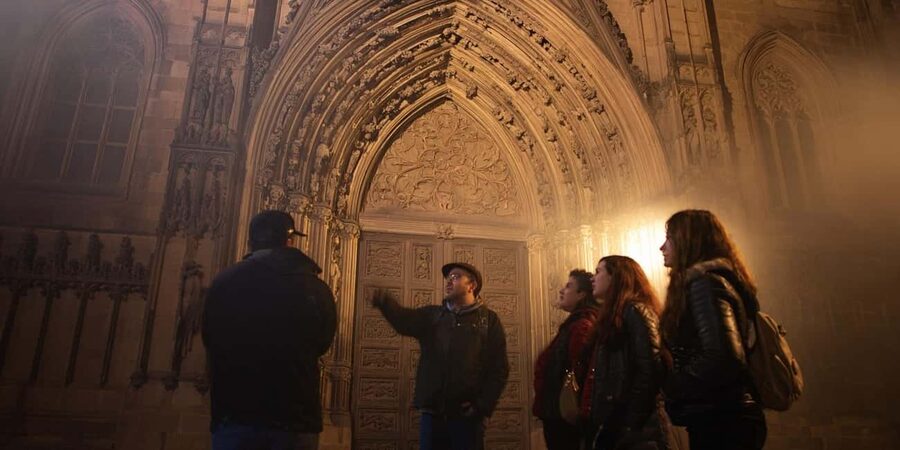
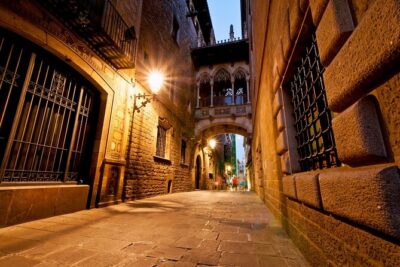
- Gothic Quarter at night: Walk through old lanes and corners linked with punishment, public executions, religious conflict, and civic unrest.
- Strong guide-led storytelling: Guide Onno has been praised for being friendly, clear, and engaging, though the guide for your departure may differ.
- Good value at $21: Two hours with a live English-speaking guide makes this a reasonably priced history walk, with a €1 headset charge added.
- Practical limits: The route uses uneven surfaces, bans flash photography, and is not designed for young children or people with serious mobility or heart concerns.
A different way to read Barcelona’s Gothic Quarter
Many first visits to Barcelona focus on Gaudí, markets, beaches, and grand boulevards. This tour asks you to look again at the older city, especially the narrow Gothic Quarter streets where power was once displayed through punishment, religion, and political control.
I like that the tour does not treat darkness as a costume. The aim is not to make every alley seem haunted. Instead, the guide explains how real fears shaped daily life: fear of heresy, fear of witchcraft, fear of the church or state, and fear of being accused by the wrong person.
That approach gives the walk more value than a simple collection of gruesome anecdotes. You hear individual stories, but you also get the systems behind them. The Spanish Inquisition was not just a name from a textbook. Witch trials were not simply old superstitions. Franco’s dictatorship was not only a political footnote. Each subject shows how institutions could control ordinary lives.
The night setting helps, but it does not replace the history. Barcelona’s old lanes are atmospheric after dark, yet the guide keeps the attention on documented events and their meaning. If you enjoy true crime, social history, or dark tourism with a serious purpose, this is likely to suit you.
More Ghost Walking Tours in Spain
- Barcelona: Gothic Quarter Ghosts and Legends Walking Tour
★ 4.7 · 1,443 reviews - Barcelona: Dark History Night Walking Tour
★ 4.8 · 344 reviews - Barcelona Dark History Night Walking Tour With Drinks
★ 5.0 · 153 reviews
Starting at Plaça de Catalunya
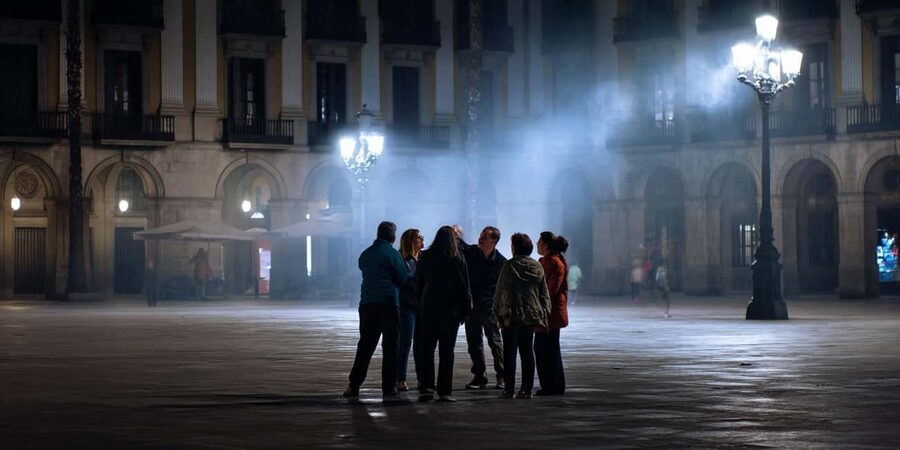
The meeting point is on the sidewalk in front of the Foot Locker at Plaça de Catalunya. This is a practical place to begin because the square is a major central landmark, but it can also be busy and confusing, especially at night.
Look for the guide carrying a white umbrella. That detail matters in a crowded square, so give yourself enough time to find the correct side of the plaza. The tour is conducted in English, and a guide-radio headset is used so you can follow the commentary while walking. The headset costs an additional €1 per person and is paid at the start.
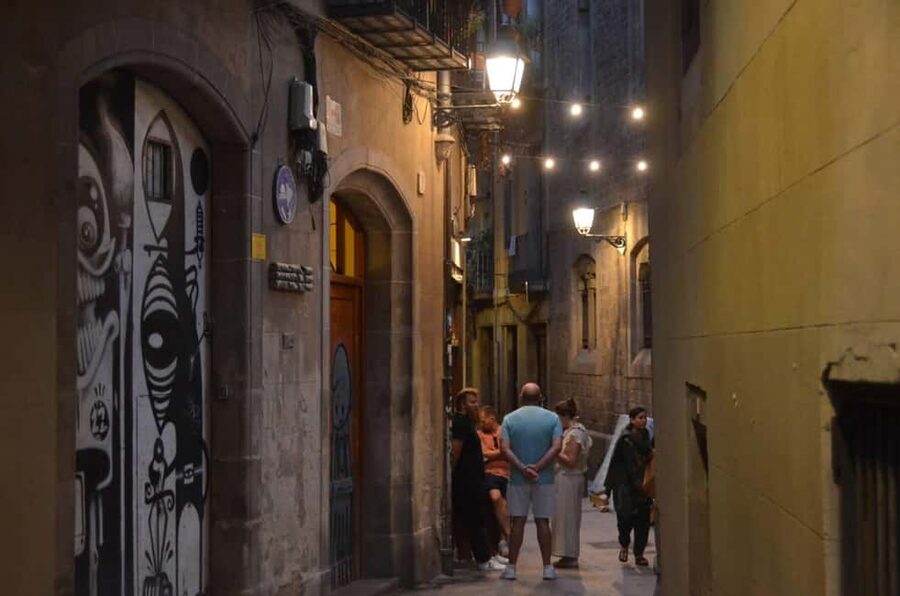
From Plaça de Catalunya, the walk moves toward the Gothic Quarter and its maze of older streets. You should not expect a sightseeing bus or a long transfer between sites. The appeal is the gradual change in atmosphere as you leave the open square and enter narrower lanes where the city’s past feels much closer.
Through the Gothic Quarter’s places of punishment
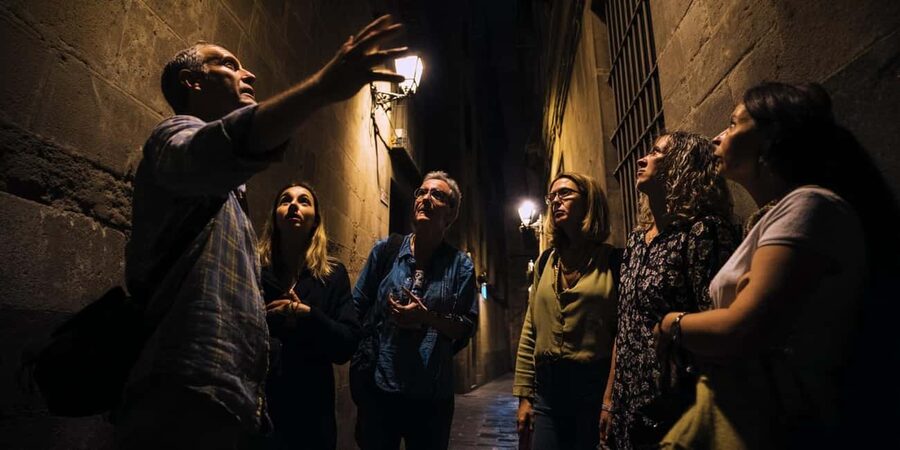
The Gothic Quarter is often presented through Roman remains, medieval buildings, and picturesque lanes. This walk looks at a harsher side of those same spaces. You learn about corners associated with public executions, burnings, and punishments that once turned civic spaces into places of fear.
The value here is context. A public execution was not merely a private act of violence. It could be a warning staged before a crowd. Punishment helped rulers, religious authorities, and civic leaders show what happened to anyone who challenged the accepted order.
The guide also explores the beliefs that made such punishment possible. Medieval ideas about witchcraft, heresy, and demonic possession could turn suspicion into legal action. Accusations often carried more weight than evidence, and the result could be torture or death.
You will walk on old, uneven surfaces, so this is not the time for thin sandals or dress shoes. Wear comfortable walking shoes and bring water. The pace is a walking pace, but two hours on stone streets can feel tiring if you are not prepared.
The Spanish Inquisition and witch trials
The section on the Spanish Inquisition is one of the tour’s central subjects. Rather than presenting it as a distant institution with no connection to daily life, the guide explains the fear it created and the methods used to control religious belief and behavior.
You hear about tribunals, accusations, torture, and punishments. The material is grim, but it helps explain how faith and political authority could become closely linked. The tour also places witchcraft accusations in their period setting, when sickness, bad luck, unusual behavior, and unexplained events could be blamed on supernatural forces.
I appreciate this part because it avoids treating people of the past as simply foolish. Superstition existed alongside limited medical knowledge, rigid religious rules, social pressure, and institutions ready to punish dissent. That does not excuse the violence, but it helps you understand why these events took hold.
Expect vivid storytelling rather than a lecture packed with dates. The strongest feedback about the guiding points to clear explanations and memorable anecdotes. Onno, specifically, has been praised for combining gruesome stories with wider accounts of Barcelona’s past. Your guide may be different, but the experience is designed around a trained local guide and history specialist.
More Ghost Walking Tours in Barcelona:
- Barcelona El Raval Dark History Walking Tour
★ 5.0 · 70 reviews - Barcelona Ghosts of a Dark Past Gothic Walking Tour
★ 5.0 · 55 reviews - Barcelona: El Born Ghost Walking Tour.
★ 4.0 · 54 reviews - Barcelona: El Born Ghost Walking Tour
★ 3.8 · 47 reviews
Henriqueta Martí, Barcelona’s infamous Vampire
The story of Henriqueta Martí gives the tour its most recognizable true-crime chapter. She became known as the Vampire of Barcelona, and her case horrified the public in the early 20th century.
This is not presented as folklore or a supernatural tale. The interest comes from the real person, the crimes associated with her, and the reaction the case produced. The story is particularly effective within the wider tour because it shows that Barcelona’s dark reputation did not end with medieval courts or religious persecution.
You should expect disturbing material. The subject involves crimes that are difficult to hear about, and the guide’s treatment is meant to explain rather than simply shock. If you prefer your evening walks light and cheerful, this section may be uncomfortable.
For people who enjoy well-told true crime, it provides a clear personal focus. Instead of hearing only about anonymous victims and abstract institutions, you encounter a case that captured public attention and became part of the city’s darker popular memory.
From anticlerical violence to political assassinations
The tour then broadens from individual crime to political and religious conflict. You learn about anticlerical violence, church burnings, and political assassinations, subjects that show how Barcelona’s tensions could erupt beyond the courtroom or prison.
This part is important because it prevents the tour from becoming a simple procession of medieval horrors. Barcelona’s difficult past continued into more modern periods, when debates over religion, class, government, and political power could produce violence in the streets.
Church burnings are especially useful for understanding the tension between religious institutions and anticlerical movements. The tour does not ask you to accept an easy heroes-and-villains version of the past. Instead, it traces how anger, inequality, belief, and political struggle could feed one another.
The guide’s job here is vital. These topics can quickly become confusing if they are reduced to names and dates. The best moments are likely to be the ones that connect the events to ordinary citizens and show how public conflict changed daily life.
Franco’s dictatorship and the memory of repression
The final historical stretch covers the dark legacy of Franco’s regime. This gives the tour a modern political edge and reminds you that repression in Barcelona was not confined to the medieval world.
You learn how dictatorship shaped the lives of ordinary Barcelonans and how political oppression could erase stories, silence opposition, and limit public life. The subject is less about theatrical horror and more about the lasting effects of power on families and communities.
This is one of the tour’s most valuable features. A walk centered only on medieval punishments might leave you with a dramatic but incomplete picture of Barcelona. Including Franco connects the old stories of control and fear with a period close enough to remain part of living memory.
The tour also points toward resilience. You leave with a better sense of how Barcelona’s people endured and how the city’s identity was shaped by conflict as well as art and architecture. The experience does not turn suffering into entertainment, though the storytelling remains accessible and engaging.
What the two-hour format does well
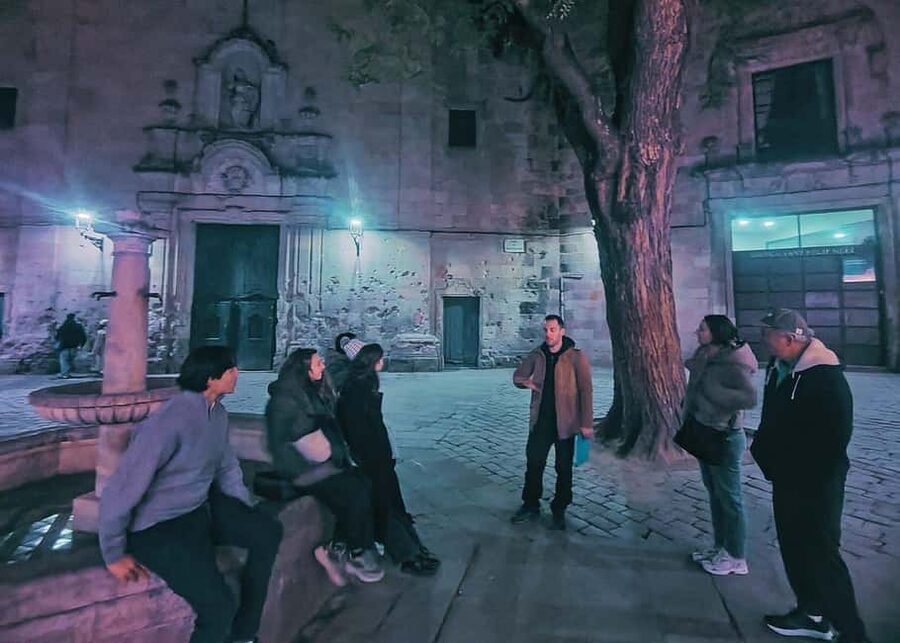
Two hours is enough time to cover several historical periods without committing your entire evening. The route appears designed as a continuous walk, so you get a coherent story rather than a series of unrelated stops.
The short format also keeps the focus sharp. A longer tour could provide more dates and background, but it might dilute the strongest stories. Here, the guide can move from medieval punishment to the Inquisition, the Vampire of Barcelona, political violence, and Franco while maintaining a clear theme: how fear and authority shaped the city.
There is a tradeoff. You should not book this expecting a full academic study of each period. The tour offers an informed overview with vivid examples, not a complete course in Catalan history. If you want detailed political analysis or extensive architectural commentary, another tour may fit better.
I see the experience as a useful evening introduction. You get enough context to make later sightseeing more meaningful, especially if you return to the Gothic Quarter during daylight and recognize the same streets from a different angle.
Is $21 a fair price?
At $21 per person, the tour is fairly priced for a two-hour guided walk in central Barcelona. You are paying for a live English-speaking guide, route planning, historical research, and storytelling rather than admission to a major monument.
The value depends on your interests. If you enjoy history, true crime, or political stories, two hours of focused interpretation can be more useful than another unstructured walk through the Gothic Quarter. If you mainly want architecture, food, or entertainment, the price may feel less worthwhile because the tour spends its time on difficult subjects.
Remember the small extra charge for the guide-radio headset: €1 per person. It is not a large cost, but it means the final expense is not exactly the advertised tour price.
The booking terms are flexible. You can reserve now and pay later, and cancellation is free up to 24 hours before the tour for a full refund. That helps if your Barcelona plans depend on weather, arrival times, or other reservations.
Who should book, and who should skip it?
I would recommend this walk to adults and older teenagers who want more than postcard Barcelona. It suits solo visitors, couples, and small groups who like listening closely and asking questions about the past.
It is especially well matched to you if you enjoy:
- True-crime stories with historical context
- The Spanish Inquisition and witch trials
- Barcelona’s political and religious conflicts
- Dark tourism without fictional ghosts
- Evening walks through old city streets
- Guides who explain causes and consequences, not just shocking details
I would think twice if you dislike stories about torture, executions, murder, religious violence, or dictatorship. Children under 12 are not permitted, and pregnant people, people with heart problems, and people with mobility impairments are advised not to take part.
The activity is described as wheelchair accessible, but the route includes uneven surfaces and the restrictions advise against participation for people with mobility impairments. If you use a wheelchair or have any concern about the streets, contact Nostos Tours before booking and ask for a clear description of the route.
Practical advice for making the most of the walk
Arrive early at Plaça de Catalunya and find the white umbrella near Foot Locker. The square is large, so waiting until the last minute can add needless stress.
Wear shoes with a firm sole. Old Gothic Quarter streets are part of the setting, but they can be uncomfortable if you are dressed for a night out rather than a two-hour walk.
Bring a water bottle. The subject matter may be intense, and the walk involves steady movement through the city. Flash photography is not allowed, so use your phone or camera without flash if you take pictures.
Keep an open mind about the word dark. This is not a ghost hunt, a costumed performance, or a collection of invented legends. The point is that real events can be more unsettling than folklore, especially when they show how institutions treated vulnerable people.
Should you book Barcelona: Ghosts of a Dark Past?
Book it if you want an evening walk that puts Barcelona’s streets into historical context. The mix of Inquisition trials, witchcraft accusations, Henriqueta Martí, political violence, and Franco’s dictatorship gives the two hours a clear purpose.
Skip it if you want a relaxed introduction to Gaudí, architecture, or local food. The material is serious, and the uneven streets may not work for everyone.
For the right audience, this is a good-value history walk led by a local guide who makes difficult subjects understandable. You will not leave with a collection of ghost stories. You will leave with a sharper sense of how fear, power, and resistance helped shape Barcelona.
FAQ
How long does the Barcelona dark history tour last?
The tour lasts two hours.
How much does the tour cost?
The tour costs $21 per person. A guide-radio headset costs an additional €1 per person.
What language is the tour conducted in?
The live tour guide speaks English.
Where does the tour begin?
The tour begins on the sidewalk in front of the Foot Locker at Plaça de Catalunya.
How do I identify the guide?
The guide will carry a white umbrella.
Does the tour include a headset?
Yes. The tour uses a guide-radio headset, but the €1 cost is paid separately at the start.
Does the tour include ghost stories?
No. The tour focuses on documented historical events rather than fictional ghost stories.
What subjects are covered?
The tour covers the Spanish Inquisition, witch trials, medieval beliefs about heresy and possession, Henriqueta Martí, anticlerical violence, church burnings, political assassinations, and Franco’s dictatorship.
What should I wear and bring?
Wear comfortable walking shoes and bring a water bottle. The route includes uneven surfaces.
Is the tour wheelchair accessible?
The activity is described as wheelchair accessible, but it also involves uneven surfaces and is listed as unsuitable for people with mobility impairments. Contact Nostos Tours before booking to confirm whether the route fits your needs.
Can I cancel the booking?
You can cancel up to 24 hours in advance for a full refund. You can also reserve now and pay later.
Freshly reviewed haunts around Barcelona
- Walking Tour Mysteries and Legends of Barcelona and its Ghosts★ 5.0 · 3 reviews
- The Gothic Trail – Ghosts of Barcelona Exploration Game★ 4.5 · 33 reviews
- Witch Hunt on Montjuïc: Self-Guided Puzzle Quest in Barcelona★ 4.5 · 9 reviews
- Barcelona Ghosts of a Dark Past Gothic Walking Tour★ 5.0 · 55 reviews
- Dark History and Legends Night Walk of Gothic Quarter★ 5.0 · 2 reviews
- Barcelona Ghosts and Legends Gothic Quarter Tour★ 5.0 · 152 reviews
- Barcelona: El Born Ghost Walking Tour.★ 4.0 · 54 reviews
- Barcelona: Gothic Quarter Tour Dark History & Ghosts Tour★ 4.8 · 64 reviews
Barcelona Ghost Tours, compared.
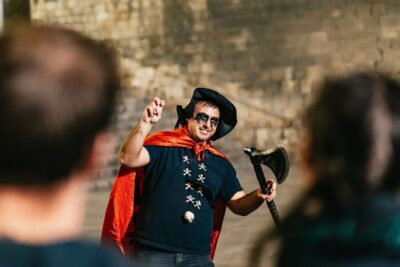
Barcelona: Gothic Quarter Ghosts and Legends Walking Tour
Read our review →
Barcelona: Gothic Quarter Tour Dark History & Ghosts Tour
Read our review →
Barcelona Ghosts of a Dark Past Gothic Walking Tour
Read our review →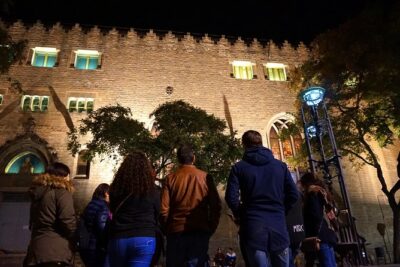
The Gothic Trail – Ghosts of Barcelona Exploration Game
Read our review →Browse the lists this tour appears in