
Review · ROME
Rome: Capuchin Crypts & Ghostly Legends Small-Group Tour
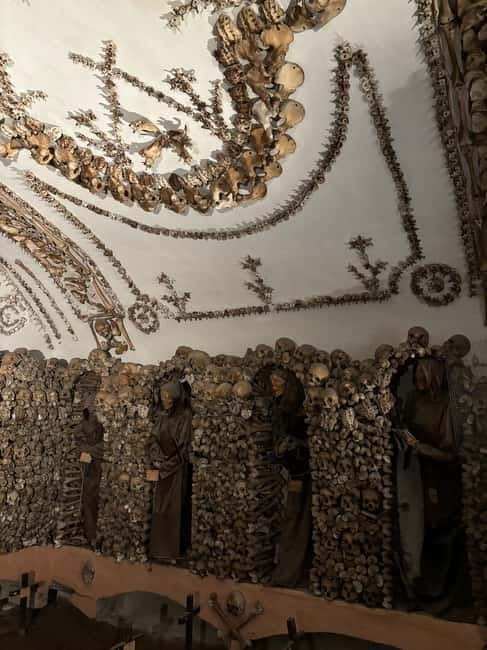
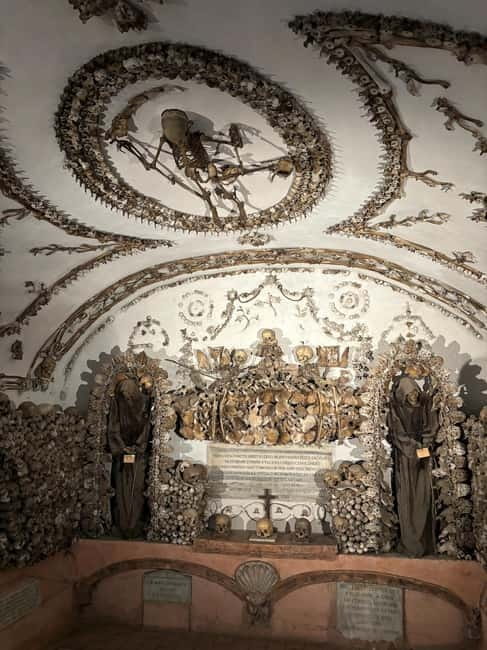
Rome’s Capuchin Crypts do not ease you into the subject of death. More than 3,700 Capuchin monks’ bones decorate five underground chapels, arranged as wall patterns, flowers, arches, and chandeliers. It is beautiful, deliberate, and unsettling in equal measure. The bones are not a side note here. They are the architecture.
I like two things about this tour. First, the crypt visit comes with context about the Capuchins and the meaning of memento mori, rather than a quick look followed by the exit. Second, the walk continues through central Rome, connecting the crypts to tales of ghosts, murder, executions, and scandal. Guides such as Alethea, Marilena, Ben, Leo, and Ivana have been especially praised for humor, clear storytelling, and answering questions.
The main consideration is that the guide does not lead the full museum portion inside the crypt. You use the venue’s required audio guide, then reconnect with your tour guide outside. A few people also found the meeting point confusing, so arrive early and look carefully for the guide at the bottom of the stairs.
Key points to know before booking
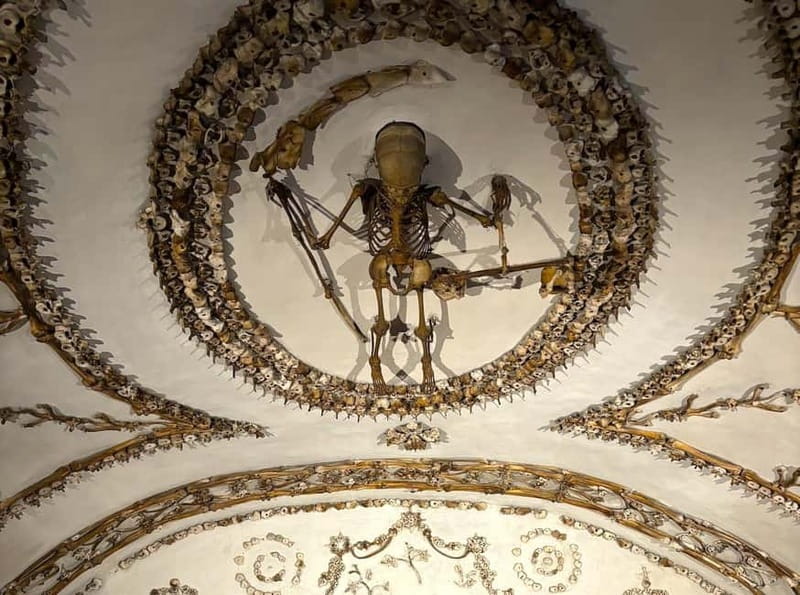
- 3,700 skeletons form the Capuchin Crypts: Expect real human bones arranged as decoration, not a mild historical display.
- The crypt is only half the story: The second part visits Via Rasella, Trevi Fountain, the Pantheon, and Piazza Navona.
- Groups stay small: A maximum of 10 people makes it easier to hear the guide and ask questions.
- The stories are dark but often witty: Ghosts, murder, executions, tax disputes, and unusual Roman scandals are all part of the route.
- Dress rules are strict: Your shoulders and knees must be covered inside the crypt.
- The $35 price is fair for the format: You receive the crypt admission, a guide, and a two-hour walking tour without paying for transport or food.
Why the Capuchin Crypts are worth seeing
Rome has no shortage of grand churches, ancient ruins, and famous fountains. The Capuchin Crypts offer something quite different: a place where death is not hidden behind a polished monument or softened by distance.
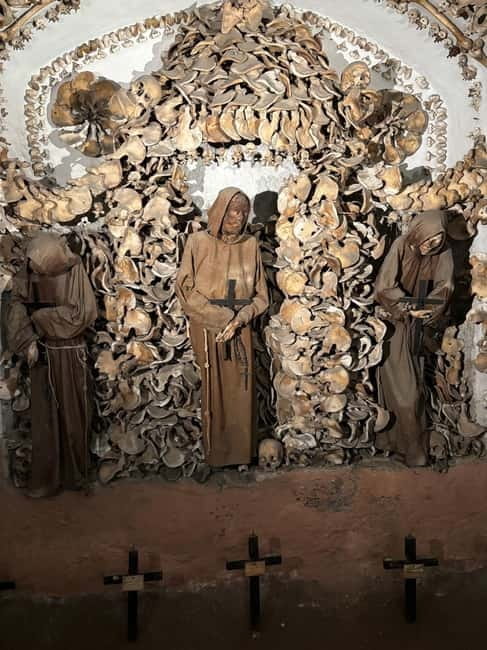
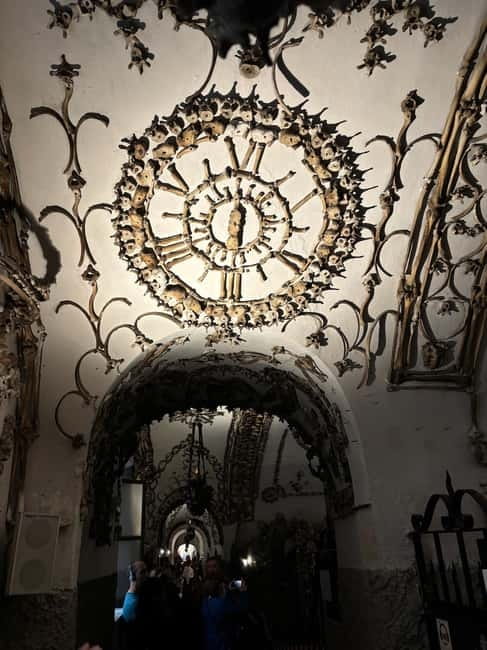
The crypt lies below the Capuchin church and museum on Via Vittorio Veneto. Inside, five small chapels are decorated with the bones of Capuchin friars. Vertebrae become chandelier elements. Femurs and pelvises form repeated patterns. Small bones create borders and floral shapes.
The effect is not simply designed to frighten you. The decoration reflects memento mori, the old Christian reminder that every person must die. In this setting, the idea is physical and unavoidable. You are not reading a plaque about mortality. You are looking at the remains of people who lived, prayed, and were eventually arranged into the room around you.
That context matters. Without it, the crypt can seem like a macabre curiosity. With it, you can read the rooms as a religious meditation on the temporary nature of the body. The experience remains eerie, but it also becomes more thoughtful.
You will not be able to treat the crypt like an ordinary photo stop. The atmosphere calls for quiet and respect, and the required audio guide supplies the official explanation inside. Your live guide does not accompany you through the entire museum section, but can answer questions around the visit and helps frame what you are about to see.
If human remains make you uncomfortable, take that seriously. This is not a display with a few bones behind glass. The bones are the main visual material. Some people find the arrangement beautiful and thought provoking. Others may find it disturbing.
More Ghost Story Tours in Italy
- Rome: Small Group Rome’s Dark Side – Ghosts & Legends Tour
★ 4.9 · 343 reviews - Ghosts, Legends & Mysteries of Rome Tip-Based Walking Tour
★ 4.7 · 284 reviews - Ghosts Legends and Mysteries of Rome Walking Tour
★ 5.0 · 149 reviews
Starting at Via Vittorio Veneto, 19
The tour begins outside the Capuchin Crypt entrance at Via Vittorio Veneto, 19. The meeting spot is at the bottom of the stairs, directly in front of the antique coin shop. Look for the guide holding a sign for the Capuchin Crypts and Dark Centre Tour.
Arrive 10 minutes early. The crypt uses timed entry, and late arrivals cannot be guaranteed admission with the group. This is one place where a relaxed Roman approach to time can work against you.
The guide sets up the story before you enter. You learn why the Capuchin monks used human remains, how the crypt developed, and how to understand the symbols in the bone arrangements. This introduction is valuable because the rooms can be overwhelming at first glance. A few minutes of explanation helps you notice the difference between random piles of bones and carefully planned decoration.
The entrance is easy to reach on foot from central Rome, but transport is not included. You arrange your own way to Via Veneto, and the tour ends at Piazza Navona rather than returning to the starting point.
Inside the crypt: bones, symbols, and silence
The published schedule gives the crypt visit about 30 minutes, while the fuller tour description allows roughly 45 to 60 minutes for the crypt and its introduction. The exact pace can vary, but you should expect the underground visit to take a substantial part of the evening.
The required audio guide handles much of the museum’s formal interpretation. This arrangement has a small drawback: the live guide is not beside you for every step of the museum visit. Still, it lets you move through the chapels at the venue’s required pace while keeping the wider walking tour personal and interactive.
Look closely at the arrangements. The chapels use bones in patterns that can resemble flowers, stars, borders, and architectural details. The chandeliers are particularly striking because their shape turns familiar furniture into something unsettling. The point is not gore. The point is the contrast between careful beauty and the undeniable fact of what you are seeing.
The crypt is also a useful reminder that religious history is not always solemn in the modern sense. Different periods had different ways of thinking about death, the body, prayer, and remembrance. This stop gives you a chance to consider those ideas without the usual museum distance.
Photography and behavior should follow the venue’s rules. The supplied information does not promise a photo policy, so I would not plan the visit around taking pictures. Go for the atmosphere and the explanation.
Via Rasella and Rome’s darker public memory
After the crypt, the group moves into the historic center. Via Rasella is scheduled for about 15 minutes, and the stop adds a sharper political and human edge to the evening.
Here, the tour turns from monastic reflections on death to the way violence enters the city’s streets and memory. The route does not treat Rome as a collection of pretty backdrops. It asks you to notice that ordinary-looking streets have witnessed conflict, executions, and painful events.
This is one reason the small group matters. A guide can pause, explain the setting, and respond to questions without trying to project over a crowd. You are still on a walking tour, not a long seminar, but the stop gives the city more weight than a standard sightseeing route.
More Ghost Story Tours in Rome
- Rome’s Dark Side Ghosts and Legends Tour
★ 5.0 · 93 reviews
Trevi Fountain after the postcards
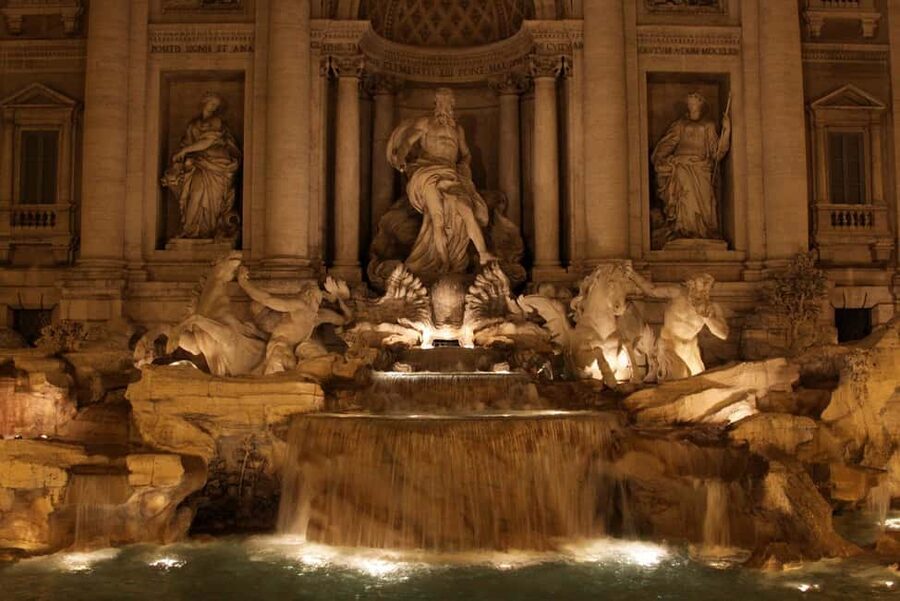
The Trevi Fountain is usually one of Rome’s busiest photo stops. This tour gives you a different reason to pause there.
The scheduled visit lasts about 15 minutes and focuses on a persistent ghost story connected with the fountain. The supernatural tale adds another layer to a place most people see only as a grand Baroque monument and coin-tossing ritual.
I like this approach because it does not replace the fountain’s beauty with a spooky story. It gives you a second way to look at it. Rome’s famous sights often have a public version, the one in guidebooks and photographs, and a less polished version built from local legends, odd deaths, and old rumors.
Do not expect a haunted-house performance. The tone is historical storytelling with humor, not staged horror. The guide’s delivery makes a difference here. Strong guides such as Alethea and Ben have been praised for keeping the stories lively without losing the historical setting.
The Pantheon and an unsettling piazza
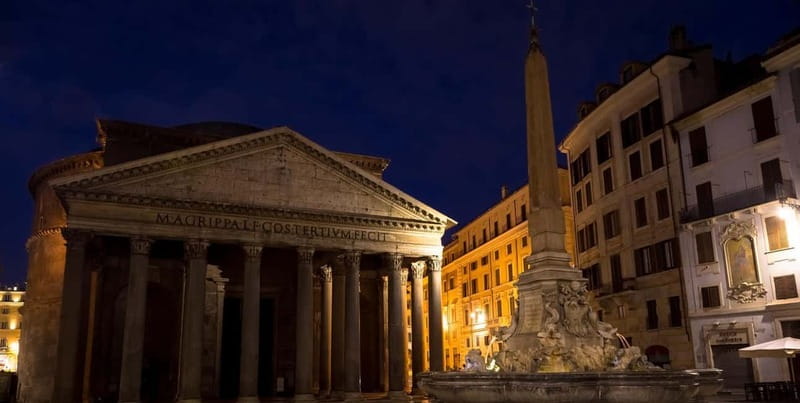
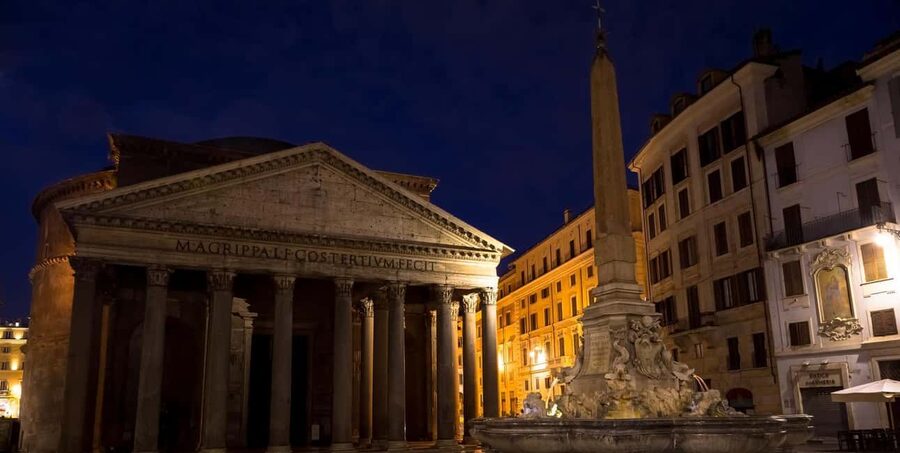
The Pantheon stop lasts about 15 minutes. You will see one of Rome’s most important ancient buildings, but the focus of this tour is not a full architectural lecture.
Instead, the guide uses the area to tell a darker story linked to the elegant piazza opposite the Pantheon. The tale involves a culinary scandal and a particularly grim approach to dealing with unwanted people. It is the sort of story most standard city tours leave out.
That is the appeal, but also the limit. If you want a detailed explanation of the Pantheon’s construction, engineering, interior, and later religious use, choose a dedicated Pantheon tour. Here, the building acts as a setting for a strange piece of Rome’s past.
You still gain useful orientation. The route shows you how close the city’s grand monuments are to stories of ordinary crimes, public punishment, and private revenge. Rome’s beauty and brutality often sit on the same street.
Piazza Navona and the final stories
The tour finishes at Piazza Navona after about 20 minutes there. This is a good ending point because the piazza is easy to recognize, central, and filled with its own layers of history.
The final stories include a noblewoman whose beautiful hands drew dangerous attention and an innkeeper who made the poor choice of complaining to strangers about papal taxes. These tales fit the tour’s main theme: power, money, reputation, and death have always been part of Rome’s public life.
Piazza Navona also gives you a chance to continue your evening on your own. The tour does not include food or drinks, but ending here puts you in a useful part of the historic center. Guides often offer suggestions for the rest of your stay, and several people appreciated receiving practical tips at the end.
The walk is not a ghost tour in the theatrical sense. There are no claims that every corner is genuinely haunted. Instead, it mixes documented history, local legends, and stories that have grown stranger with time. You are encouraged to enjoy the atmosphere while keeping some judgment about what is fact and what is folklore.
What the two-hour format feels like
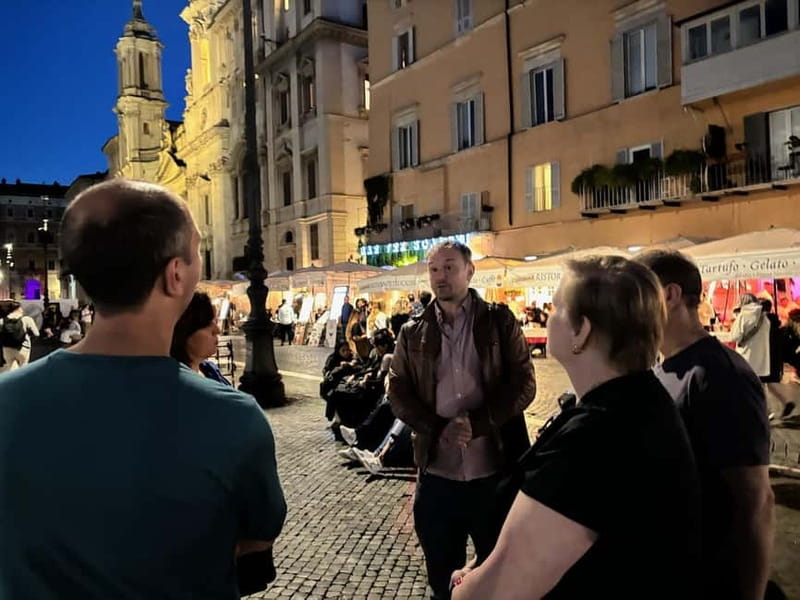
The route is compact but full. The listed stops total around 95 minutes if you add the stated times, before allowing for movement between them. The overall activity is sold as two hours, so the pace and time at each stop may shift.
That is not a serious problem if you want a focused evening walk. You will not spend long periods standing in one place, and the route moves from the crypt to several major landmarks. The tradeoff is that the city stops offer highlights and stories, not full visits to each monument.
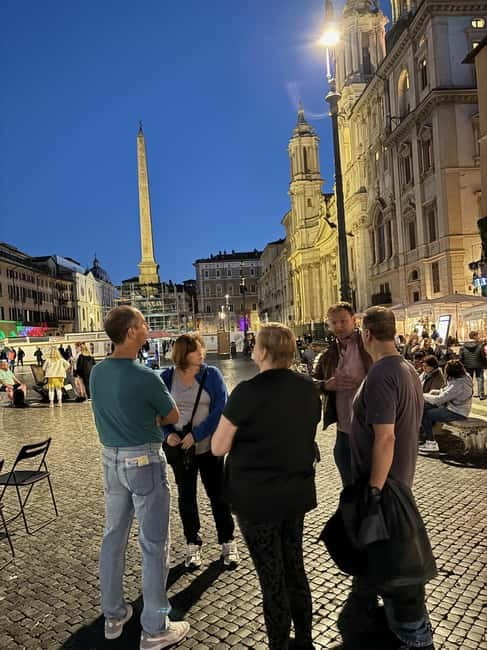
Groups are limited to 10 people. This is one of the strongest features of the experience. At Via Rasella, the Trevi Fountain, and Piazza Navona, you can hear the guide without the strain that comes with a large crowd. You also have a better chance to ask about a detail that catches your attention.
The live tour is in English. The guides praised most often by name include Alethea, also spelled Alithea or Alethia in some accounts, Marilena, Ben, Leo, Ivana, Maria, and Alicia. Individual guides vary, but the strongest pattern is clear: the best part of this tour depends on a guide who can balance facts, legends, and humor.
Clothing, walking, and practical limits
Wear comfortable shoes. You walk between the crypt and several central Roman sights, and the route runs rain or shine. Bring weather-appropriate clothing and a reusable water bottle.
The crypt requires covered shoulders and knees. Shorts, short skirts, and sleeveless shirts are not allowed inside. If you arrive without suitable clothing, coverings can be purchased on site for €1, but it is easier to dress correctly from the start.
The tour is not suitable for wheelchair users. The supplied information does not give further details about the stairs or interior access, so anyone with mobility concerns should ask the operator before booking.
The tour does not include the catacombs. That is worth noting because some people use the words crypt and catacomb loosely. This experience centers on the Capuchin Crypts and a walking route through the historic center.
Is $35 a fair price?
At $35 per person, the price is reasonable if you value a live guide and a small group. The fee includes the Capuchin Crypt visit and the walking tour, which covers five main stops and several stories that would be hard to find in a standard Rome guidebook.
The value is strongest for someone who wants more than admission to the crypt. You are paying for the framing before the visit, the route afterward, and a guide who can connect the sites through a shared theme.
The price may feel high if you only want to see the bone chapels and leave. You could prefer a simpler admission option if one is available for your dates. The small group also adds value, but the museum’s audio guide means the first section is not fully live-guided.
The high rating of 4.9 from 133 reviews matches the tour’s clearest strengths: guide quality, unusual stories, a friendly group size, and the crypt itself. The less positive points are practical rather than dramatic: one person found the activity overpriced, another had meeting-point confusion, and another did not expect to be separated from the guide inside the museum.
Who should book this Rome tour?
I would choose this tour if you have already seen the main postcard sights, or if you want to meet Rome through its stranger stories. It works especially well for adults, older children, and teenagers who can handle real human remains and a serious discussion of death.
It suits you if you enjoy:
- Dark history without a theatrical haunted-house format
- Religious art and unusual burial customs
- Ghost stories mixed with documented events
- Small groups and conversational guiding
- A short evening walk through central Rome
I would think twice if you dislike bones, murder stories, or grim subjects. The crypt is not subtle, and the walking portion does not soften the theme. I would also choose a different tour if your priority is a detailed architectural study of the Pantheon, Trevi Fountain, or Piazza Navona.
Should you book the Capuchin Crypts and Ghostly Legends tour?
Book it if you want Rome with the sugar coating removed. The crypt is the main event, but the walking route gives the visit meaning by showing how death, scandal, superstition, and power shaped the city beyond its churches and fountains.
Arrive early at Via Vittorio Veneto, dress modestly, wear good shoes, and expect the museum portion to use an audio guide. If those conditions suit you, $35 buys an unusual two-hour experience with a strong chance of hearing excellent storytelling from guides such as Alethea, Marilena, Ben, or Leo.
FAQ
How long does the tour last?
The activity lasts about two hours. The schedule includes the crypt and walking stops at Via Rasella, Trevi Fountain, the Pantheon, and Piazza Navona.
Where does the tour begin?
It begins outside the Capuchin Crypt entrance at Via Vittorio Veneto, 19, at the bottom of the stairs in front of the antique coin shop.
Where does the tour finish?
The tour finishes at Piazza Navona.
How many people are in each group?
The group is limited to a maximum of 10 participants.
What language is the tour in?
The live tour guide speaks English.
Is the crypt visit guided live?
The crypt requires its own audio guide. Your tour guide provides context before entering and remains available for questions, then continues with the group outside.
What should I wear?
Your shoulders and knees must be covered inside the Capuchin Crypt. Shorts, short skirts, and sleeveless shirts are not allowed.
Are food and drinks included?
No. Food and drinks are not included.
Does the tour include the catacombs?
No. The experience includes the Capuchin Crypts, but not the catacombs.
Can wheelchair users join?
No. The tour is not suitable for wheelchair users.
More Cemetery Tours in Rome
- Rome: Ghosts & Bone Crypts Tours: 2 Tours, 1 Discount Ticket
★ 4.9 · 37 reviews - Rome’s Dark Side: Ghosts, Scandals and Crypts – small group
★ 5.0 · 2 reviews - Edinburgh: Haunted Underground Vaults and Graveyard Tour
★ 4.6 · 6,607 reviews - Paris: Haunted Père Lachaise Cemetery Guided Tour
★ 4.6 · 3,591 reviews
Freshly reviewed haunts around Rome
- Rome: Guided Haunted Rome Ghost Tour with Dowsing Rods★ 4.8 · 63 reviews
- Rome: Ghosts & Bone Crypts Tours: 2 Tours, 1 Discount Ticket★ 4.9 · 37 reviews
- Rome: Haunted Ghost Tour, Mystery Crimes and Blackmagic★ 4.2 · 43 reviews
- Rome: Colosseum and Ancient Dark History Walking Tour★ 5.0 · 10 reviews
- Rome After Dark: Ghosts & Medieval Backstreets Tour★ 4.8 · 4 reviews
- Ghosts of Rome 2-Hour Tour★ 4.3 · 16 reviews
- Rome’s Dark Side: Ghosts, Scandals and Crypts – small group★ 5.0 · 2 reviews
- Ghosts Legends and Mysteries of Rome Walking Tour★ 5.0 · 149 reviews
Rome Ghost Tours, compared.
Rome: Paranormal Night Walking Tour & Secret Backstreets
Read our review →
Rome: Guided Bar Crawl with Drinks & Dark History
Read our review →
Rome: Small Group Rome’s Dark Side – Ghosts & Legends Tour
Read our review →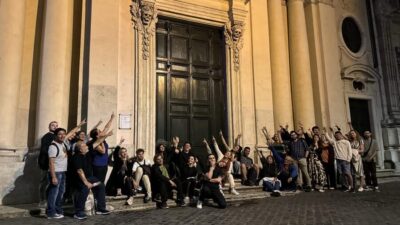
Ghosts, Legends & Mysteries of Rome Tip-Based Walking Tour
Read our review →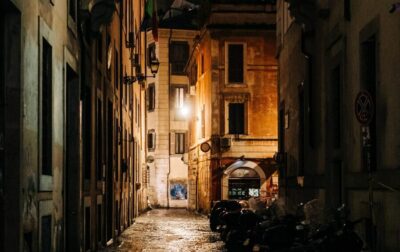
Rome: Guided Haunted Rome Ghost Tour with Dowsing Rods
Read our review →Browse the lists this tour appears in