Review · ROME
Ghosts Legends and Mysteries of Rome Walking Tour
Rome’s grand monuments look different after sunset, and this walk takes you straight into the city’s darker stories. You’ll pass Castel Sant’Angelo, a haunted arch, an old prison, a church filled with symbols of death, and the execution ground of Giordano Bruno. It is less a ghost hunt than a nighttime history walk with grim tales and urban legends.
I like the short 90-minute route, which fits neatly into an evening, and I like the mix of famous sights with lesser-known corners such as Corte Savella and Santa Maria dell’Orazione e Morte. Guides including Ivan, Simone, and Max have been praised for humor, photos, and lively storytelling. The main drawback is that the experience may not feel truly scary, and some people have found it hard to hear the guide in busy streets.
Key points to know before you go
- Castel Sant’Angelo to Campo de’ Fiori: The route crosses central Rome on foot and ends in a lively square with buses and taxis.
- Stories, not paranormal activity: Expect legends, dark history, crimes, executions, and ghostly tales, not apparitions or special effects.
- A very low advertised price: The $3.63 price is tied to a tip-based format, so guides work for tips rather than a standard tour fee.
- English at 8 p.m.: The tour is offered in English and begins after dark, when the streets and monuments take on a different mood.
- Graphic subject matter: Torture, murder, executions, sexual violence, and religious persecution are part of the material. It is not recommended for children under 12.
- Small enough to follow, but not private: The group can reach 24 people, so staying near the guide matters, especially around traffic and crowds.
Rome’s dark side begins at Castel Sant’Angelo
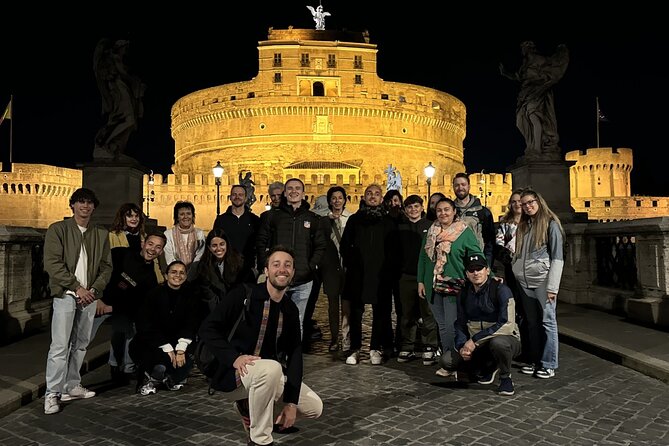
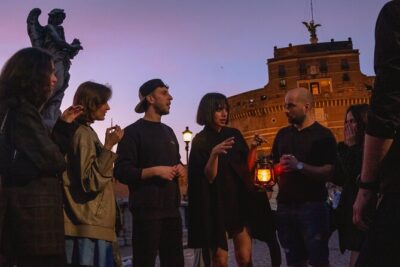
Meet at Lungotevere Castello at 8 p.m., near Castel Sant’Angelo. The tour starts beside one of Rome’s most recognizable buildings, a massive cylindrical structure on the Tiber crowned by the statue of the Archangel Michael.
The castle began as Emperor Hadrian’s mausoleum. Later, it became a fortress, papal residence, and prison. That long change from tomb to stronghold gives the guide plenty of material before the walk even gets moving. You are not entering the castle on this tour, and admission is not part of the experience. The focus is the stories connected with the building and the streets around it.
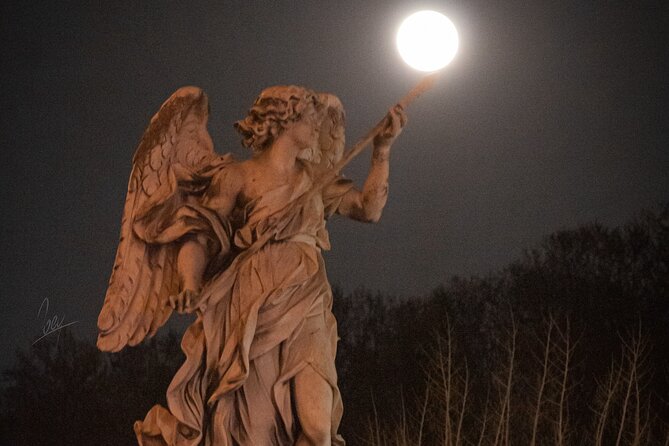
From here, you cross Ponte Sant’Angelo. The bridge is lined with ten angel statues designed by Bernini and his students. Each holds an object linked to the suffering of Christ, including the instruments of the Passion. In daylight, the statues look refined and theatrical. At night, their shadows and solemn faces create a more fitting setting for tales of prisoners, executions, and souls passing toward the fortress.
This opening section is one of the best parts of the route because the scenery does much of the work. You get a famous Roman view, a river crossing, and a strong sense of place before the stories become more specific.
More Ghost Story Tours in Italy
- Rome: Small Group Rome’s Dark Side – Ghosts & Legends Tour
★ 4.9 · 343 reviews - Ghosts, Legends & Mysteries of Rome Tip-Based Walking Tour
★ 4.7 · 284 reviews - Rome: Capuchin Crypts & Ghostly Legends Small-Group Tour
★ 4.9 · 133 reviews
Via Paola and the kindly executioner
The next stop is Via Paola, identified as the home of Rome’s kindest executioner. That phrase alone gives you an idea of the tour’s tone. The stories are grim, but the guide may use irony and humor to keep the walk from becoming unrelentingly heavy.
This is a brief stop of about ten minutes. You will hear the tale outside rather than enter a building. The value here is the contrast between ordinary streets and the violent work once carried out by people who lived in them. Rome’s darker past is not confined to museums. It is mixed into residential lanes and everyday addresses.
If you prefer a strictly academic presentation, some of the storytelling may feel informal. If you enjoy a good historical yarn with a macabre edge, this section should fit the mood.
The Haunted Arch and an exorcist’s place of prayer
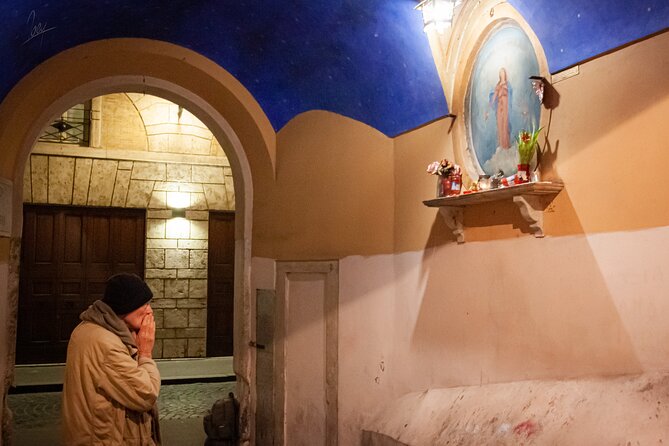
Arco dei Banchi is known on this walk as the Haunted Arch. It is also associated with a controversial Roman exorcist and a place of prayer.
You spend only about five minutes here, so this is a quick story stop rather than a long explanation of the site. The appeal comes from the setting. Arches, narrow streets, and dim evening light make a natural stage for stories about spirits and religious belief.
The tour does not promise a paranormal investigation. You should not expect equipment, ghost-hunting claims, or a search for supernatural evidence. The experience uses the old stories attached to Rome’s streets, then lets you decide how much of them to believe.
Benvenuto Cellini and the uncomfortable side of genius
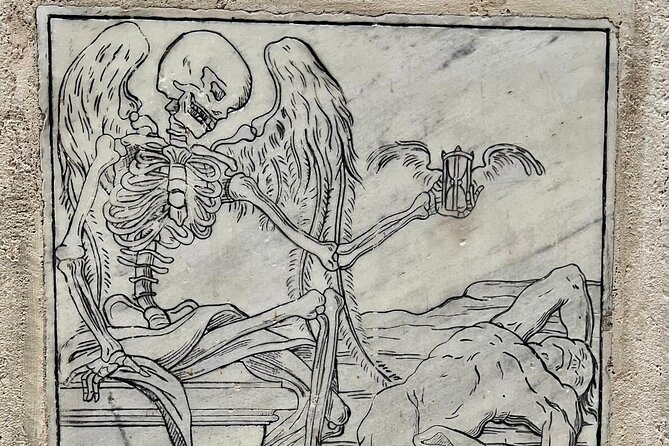
At Largo Ottavio Tassoni, the guide points out the former house of Benvenuto Cellini. He is remembered as a major sixteenth-century artist, but the account here also confronts accusations of rape and murder connected with his reputation.
This is a useful reminder that the tour is not only about ghosts. It also looks at violent people, disputed reputations, and the uneasy way history remembers celebrated figures. A famous name does not always come with a clean story.
The stop lasts around five minutes. That is enough for a pointed introduction, but not enough for a full biography. You will get a dark anecdote and historical context, then move on. If you want detailed art history, this is not the place for it. If you like seeing familiar figures from a less flattering angle, it adds bite to the evening.
More Ghost Story Tours in Rome
- Rome’s Dark Side Ghosts and Legends Tour
★ 5.0 · 93 reviews
Giulia Tofana and the stories of the Inquisition
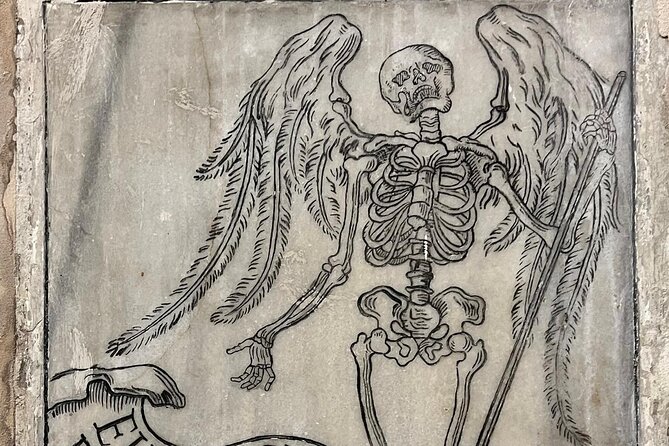
Vicolo della Moretta brings the group to the supposed haunted house of Giulia Tofana. The stop also covers stories linked to the Holy Inquisition.
This is one of the more unsettling sections because it combines a person associated with poisoning with the machinery of religious investigation and punishment. The subject matter can be grim, and the tour description warns that it includes graphic information. Parents should take the age recommendation seriously.
The alley itself is part of the appeal. You are not looking at a large attraction with signs and displays. You are hearing a story tied to a specific corner of old Rome, which makes the past feel close at hand.
The guide’s delivery matters here. Ivan has been praised for using photographs and for telling stories with energy and humor. That style can make a difficult subject easier to follow. It can also feel too light for people who want a solemn treatment of torture and persecution.
Corte Savella and the fate of Beatrice Cenci
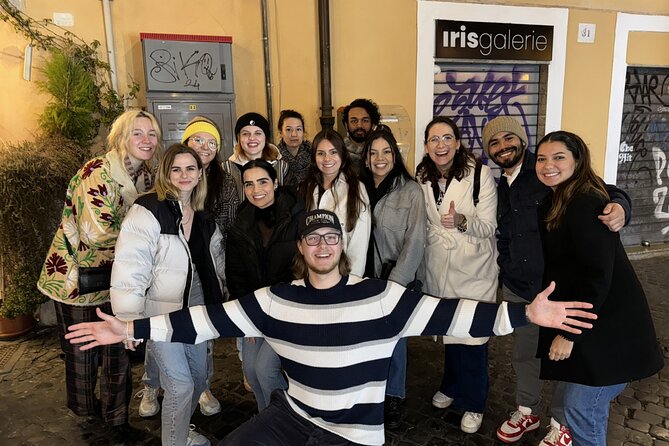
On Via di Monserrato, the walk reaches Corte Savella, described as the only prison in Rome authorized to execute convicts within its walls. This is also linked to Beatrice Cenci, who was tortured before her execution.
The stop is short, about five minutes, but the story has considerable weight. Beatrice Cenci remains one of Rome’s most famous tragic figures, and her story brings together family violence, imprisonment, torture, public judgment, and execution.
You will hear the account from outside rather than tour the former prison interior. That limitation is worth knowing. The experience is built around storytelling at street level, not access to historic rooms or formal museum interpretation.
Still, the location adds meaning. A plain Roman street becomes a place connected with one of the city’s most troubling cases. That shift in perspective is the main reason to choose this walk over a standard evening stroll.
Via Giulia offers a calmer stretch
Via Giulia changes the pace. Designed by Bramante in the early sixteenth century for Pope Julius II, this long, elegant street is lined with Renaissance palaces, ivy-covered walls, and courtyards tucked behind façades.
The guide discusses the street’s role in the life of Rome’s aristocracy. After the stories of prisons, murder, and torture, the quieter architecture gives you a chance to look around and breathe.
This is not a long stop, around five minutes, and the walk may be interrupted by cars and pedestrians. One useful tip is to stay close to the guide. A group of up to 24 people can spread out quickly on a historic street, especially when the guide pauses to point out a doorway or building.
The route’s mix of beauty and brutality works well here. Rome does not separate its elegant streets from its darker past. The same lanes can hold grand façades, religious history, and tales of violence.
Santa Maria dell’Orazione e Morte
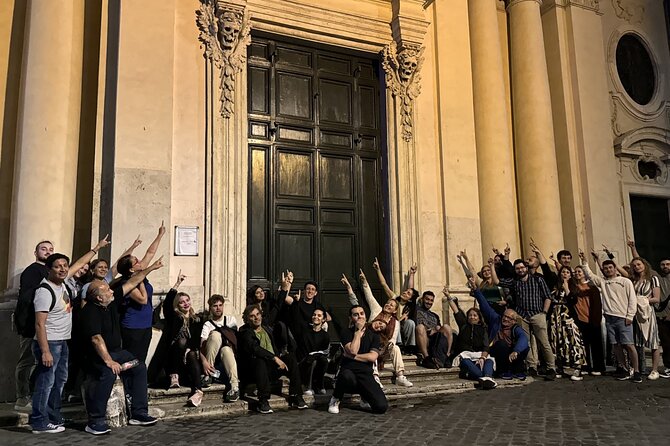
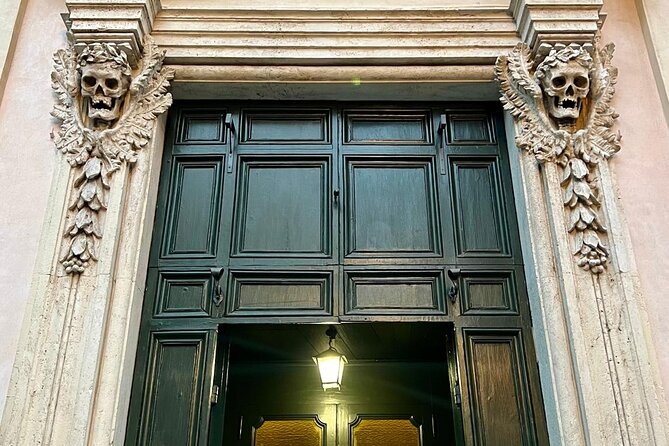
Santa Maria dell’Orazione e Morte is perhaps the most naturally spooky stop on the route. The Baroque church was built by a confraternity devoted to finding and burying abandoned corpses. Its interior is associated with skulls, bones, and symbols of death.
The tour does not include entry, so you should not expect to see the church’s interior during the walk. The guide tells you about the building and the brotherhood from outside. Even so, the subject gives this stop a strong atmosphere.
This is where the distinction between a ghost tour and a dark-history walk becomes clear. The story is frightening because it is rooted in death, burial, and neglected bodies, not because something is expected to appear in front of you.
If you want a tour with dramatic historical settings, this stop is a highlight. If you specifically want to enter haunted buildings, this experience will not meet that expectation.
The Fontana del Mascherone and a modern crime
At the Fontana del Mascherone, you’ll see a Baroque fountain with a large stone mask spouting water from its grimacing mouth. It is an odd and memorable detail on Via Giulia, and it fits the evening’s mood better than a polished fountain in a grand piazza might.
The guide also connects this location with the kidnapping of John Paul Getty III. That brings the tour out of the distant past and into a more recent crime story. The change keeps the route from feeling like a single lecture about medieval or Renaissance violence.
This five-minute stop is another example of how the walk uses real places as anchors. You may pass the fountain during another Rome stroll without giving it much thought. Here, it becomes part of a story about crime and fear.
Campo de’ Fiori and Giordano Bruno
The tour ends at Campo de’ Fiori after roughly 90 minutes. By morning, the square is known for its market of produce, flowers, and local goods. At night, it becomes a popular meeting place surrounded by bars and restaurants.
In the center, the statue of Giordano Bruno recalls the square’s darker role during the Inquisition. Bruno was executed here, and his statue now faces the piazza where executions once took place. Ending here gives the walk a clear final image: a busy Roman square layered over a history of punishment and religious control.
Campo de’ Fiori is practical as an end point. It is well connected by buses and taxis, and you can continue your evening nearby. The square can also be crowded and noisy, so the end may feel less eerie than the quieter streets earlier in the route.
What the $3.63 price really means
The advertised price of $3.63 per person is remarkably low for a licensed guide and a 90-minute walk. The important detail is that this is a tip-based tour. The guides work for tips alone, so the listed amount should not be treated as the complete cost of the experience.
You are paying for a storytelling service through gratuity rather than a fixed admission fee. The company explains the tip structure at the beginning, and card payments are accepted for convenience. Plan your budget with that in mind.
At this price, the value is strong if you want an inexpensive introduction to Rome’s darker stories. You receive a guided route, ten themed stops, and an English-speaking professional. The value is weaker if you expect a staged theatrical show, a ghost hunt, or access inside historic buildings.
Guide style, group size, and hearing the stories
The guides are licensed, and the experience is offered in English. Ivan is often associated with energetic storytelling, jokes, historical detail, and old photographs. Simone has been described as prepared, witty, and easy to spend an evening with. Max has also led the walk and brought personal stories and dark Roman history into the presentation.
Your experience can depend on the guide’s pace and delivery. Some people find the stories engaging enough that the 90 minutes pass quickly. Others have found a guide difficult to hear, especially with traffic, pedestrians, and a moving group.
The maximum group size is 24. That is not huge, but it is large enough to create problems on narrow streets. Arrive at the stated meeting point, keep within earshot, and do not drift to the rear when the group crosses busy roads.
The walk is open to most people, and service animals are allowed. Since it takes place outdoors at night, comfortable shoes and weather protection are sensible, although the supplied details do not promise any particular weather arrangement. One group completed the walk in heavy rain with umbrellas and rain covers, so poor weather may not automatically end the experience.
Who should book this Rome night walk
I would choose this tour if you enjoy stories about crime, executions, religious persecution, prisons, haunted houses, and notorious characters. It also suits you if you want a compact evening activity after a day spent visiting major attractions.
It is a good fit for first-time visitors who want to connect famous landmarks with lesser-known streets. Castel Sant’Angelo, Ponte Sant’Angelo, Via Giulia, and Campo de’ Fiori give you familiar Roman scenery, while the stories add a new angle.
I would skip it if you want a serious paranormal investigation or a frightening theatrical performance. The guides themselves make clear that the experience is about legends, mysteries, and history. You will not enter buildings, see ghostly apparitions, or receive a promise of supernatural activity.
The material is also not ideal for young children. Torture, sexual violence, murder, executions, and graphic religious history are part of the route, and it is not recommended for children under 12.
Should you book it?
Book this walk if you want a low-cost, English-language introduction to Rome’s grim side and you are happy to tip the guide. The route is well chosen, the evening timing works for a busy sightseeing schedule, and the final stop at Campo de’ Fiori makes it easy to continue your night.
Keep your expectations clear. This is a storytelling walk through real places, not a ghost hunt. For Ivan, Simone, or Max at their best, it can be funny, sharp, and memorable. If clear sound and a spooky mood matter most to you, stay close to the guide and understand that the history may chill you more than the supernatural tales.
FAQ
How long does the Ghosts Legends and Mysteries of Rome Walking Tour last?
The tour lasts approximately 1 hour and 30 minutes.
What time does the tour begin?
The start time is 8 p.m.
Where does the tour meet?
The meeting point is Lungotevere Castello, 50, 00193 Rome, near Castel Sant’Angelo.
Where does the tour end?
The walk ends at Campo de’ Fiori, a central square with nearby bus stops and taxi stands.
Is the tour offered in English?
Yes. The tour is offered in English.
Is this a real ghost hunt?
No. It is a storytelling walking tour about haunted places, urban legends, mysteries, crimes, executions, and darker Roman history. It does not promise paranormal activity or ghost sightings.
How much does the tour cost?
The advertised price is $3.63 per person. It is a tip-based tour, and guides work for tips alone. Card payments can be accepted for tips.
Are children allowed?
Most people can participate, but the tour includes graphic material and is not recommended for children under 12.
Can I cancel the booking?
You can cancel up to 24 hours before the start time for a full refund. Changes or cancellations made less than 24 hours before the start time are not accepted, and the experience may be canceled if its minimum number of participants is not reached.
More Ghost Walking Tours in Rome
- New Orleans Premier Ghost, Voodoo and Vampire Walking Tour
★ 4.5 · 12,856 reviews - London: The Original Jack the Ripper Walking Tour
★ 4.7 · 7,833 reviews - Chicago: Gangsters and Ghosts Walking Tour
★ 5.0 · 7,155 reviews - Prague: Ghost Walking Tour Where Legends Come To Life
★ 4.4 · 5,253 reviews
More Ghost Walking Tours in Italy
- Rome: Paranormal Night Walking Tour & Secret Backstreets
★ 4.9 · 1,921 reviews - Rome: Haunted City Night Walking Tour
★ 4.9 · 616 reviews - Haunted Rome Ghost Night Walking Tour
★ 5.0 · 495 reviews - Rome: Colosseum and Ancient Dark History Walking Tour
★ 5.0 · 10 reviews
Freshly reviewed haunts around Rome
- Rome: Guided Haunted Rome Ghost Tour with Dowsing Rods★ 4.8 · 63 reviews
- Rome: Ghosts & Bone Crypts Tours: 2 Tours, 1 Discount Ticket★ 4.9 · 37 reviews
- Rome: Haunted Ghost Tour, Mystery Crimes and Blackmagic★ 4.2 · 43 reviews
- Rome: Colosseum and Ancient Dark History Walking Tour★ 5.0 · 10 reviews
- Rome After Dark: Ghosts & Medieval Backstreets Tour★ 4.8 · 4 reviews
- Rome: Capuchin Crypts & Ghostly Legends Small-Group Tour★ 4.9 · 133 reviews
- Ghosts of Rome 2-Hour Tour★ 4.3 · 16 reviews
- Rome’s Dark Side: Ghosts, Scandals and Crypts – small group★ 5.0 · 2 reviews
Rome Ghost Tours, compared.
Rome: Paranormal Night Walking Tour & Secret Backstreets
Read our review →
Rome: Guided Bar Crawl with Drinks & Dark History
Read our review →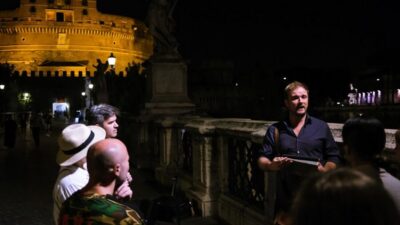
Rome: Small Group Rome’s Dark Side – Ghosts & Legends Tour
Read our review →
Ghosts, Legends & Mysteries of Rome Tip-Based Walking Tour
Read our review →