
Review · LONDON
London: Jack the Ripper Small Group Tour
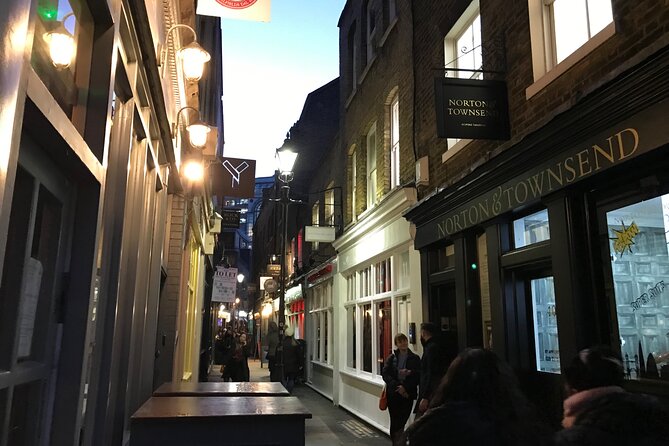
The unsettling heart of this tour is that it takes you through the actual East End streets linked to the 1888 murders. You are not sitting through a museum talk. You are walking from Aldgate East toward Whitechapel, Spitalfields, Brick Lane, and the Ten Bells pub while your guide connects modern streets with Victorian evidence.
I like the small groups, often around 13 people and sometimes much fewer. That gives you room to hear guides such as Becky, Ollie, Cova, Sarah, and Jay, ask questions, and discuss suspects. I also like the careful focus on the victims and the use of photographs and evidence, rather than treating the case as a cheap horror show. The main drawback is practical: this is an outdoor walking tour, and cold, wet weather can make the two hours feel long.
Key points to know
- The route covers real East End locations: Whitechapel Road, Spitalfields, Brick Lane, Aldgate East, and the Ten Bells pub.
- Guides bring different strengths: Becky is praised for clear delivery and humour, while Ollie, Cova, Sarah, Jay, and Angie are noted for strong storytelling and case knowledge.
- The tone is dark but respectful: The murders are discussed plainly, with attention given to the women who were killed.
- Visual material adds context: Period photographs and other evidence help you picture the streets as they were.
- Plan carefully for the meeting point: Aldgate East station has four exits, and the guide cannot wait for late arrivals.
- The value is strong at $26: You get a two-hour guided walk through one of London’s most atmospheric historic districts.
Walking into Whitechapel’s darkest chapter
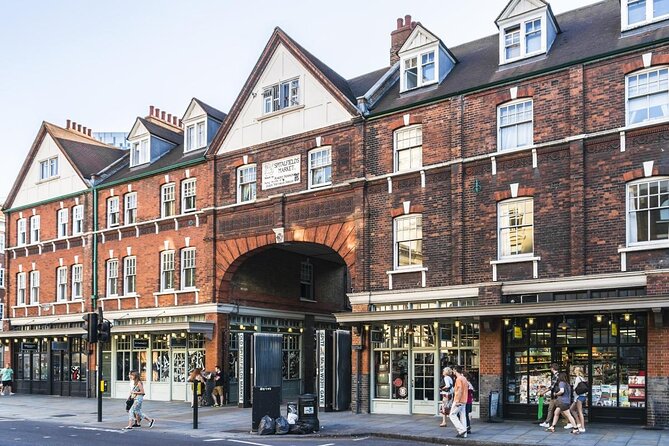
Jack the Ripper is one of London’s most enduring mysteries, but the strongest part of this tour is not simply guessing the killer’s name. It is seeing how the case fits into the streets, buildings, pubs, markets, and crowded working-class neighbourhood of Victorian Whitechapel.
Your guide sets the scene before the walk gets moving. Whitechapel in 1888 was not the polished East End you see today. It was a packed district marked by poverty, poor housing, hard work, and difficult choices. That background matters because the murders did not happen in an empty gothic maze. They happened in a real neighbourhood where people lived, worked, drank, argued, and tried to get by.
The tour uses stories, evidence, photographs, and occasional re-enactment to give the case a human shape. The violent details cannot be avoided, but the better guides keep the focus on the victims rather than turning them into props. That distinction makes a real difference.
Guides have their own style. Becky is repeatedly described as clear, funny, and well prepared. Ollie, also written as Olly, brings easy humour and strong local detail. Cova is especially passionate about the subject, while Sarah is praised for explaining both the murders and the wider setting. Jay and Angie are also noted for making time for questions.
More Jack the Ripper Tours in London:
- London: The Original Jack the Ripper Walking Tour
★ 4.7 · 7,833 reviews - London Jack the Ripper Guided Tour with Ripper-Vision
★ 4.5 · 4,840 reviews - London Jack The Ripper Guided Walking Tour
★ 5.0 · 3,131 reviews
Aldgate East and finding the group
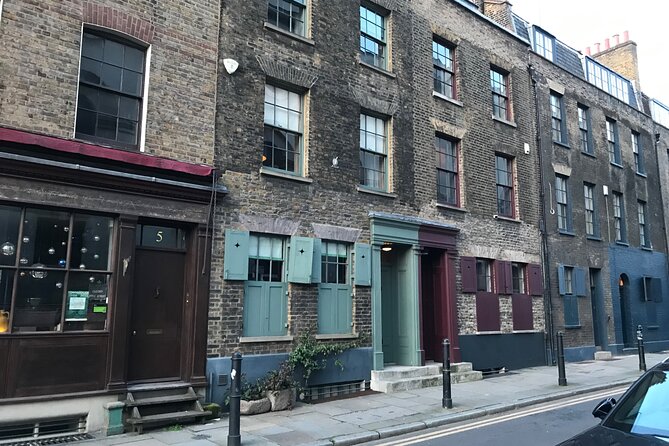
The meeting point is beside Aldgate East station, near a place marked Fashion Warehouse. This sounds simple, but the station has four exits, so give yourself extra time to get oriented. The guide cannot wait for late arrivals, and missing the start would be particularly frustrating on a walking tour where the opening explanation helps make sense of everything that follows.
Look for the tour guide near the stated meeting point rather than wandering around the station area. Since the experience takes place outside, check the forecast and wear shoes you can walk in comfortably. There is no food or drink included, so take care of that before the tour if you need something.
The walk lasts two hours. That is enough time to cover several locations without turning the experience into an all-night expedition. Some outings may finish a little before the full two-hour mark, depending on the pace and the group, but you should plan around the full stated duration.
Whitechapel Road and the lives behind the case
Whitechapel Road is the first major setting. This is where the tour places you close to the centre of the Ripper story and begins to explain how the victims moved through the district.
A good guide will not simply point at a pavement and announce that something terrible happened here. You will get more from the stop if you pay attention to the surrounding streets and the way the guide explains movement, visibility, and the social conditions of the time. The location becomes useful evidence, not just a photo stop.
This section also helps shift the story away from the killer alone. The women who were murdered had lives, work, relationships, and daily routines. A respectful account gives you some sense of those people rather than presenting them only as names in a criminal case.
The streets have changed, but not everything has disappeared. Parts of Whitechapel still offer glimpses of older buildings and street patterns. That surviving fabric helps you picture the setting without pretending that modern London is exactly the same as it was in 1888.
Spitalfields and the changing East End
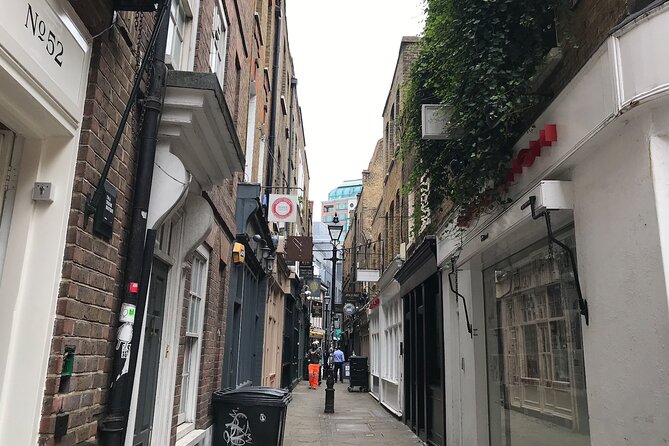
From Whitechapel, the route reaches Spitalfields, an area where old East End character meets modern London. Spitalfields Market is one of the familiar landmarks here, and its present-day shops and food stalls make a sharp contrast with the world described by the guide.
This is one of the tour’s more useful wider-history stops. You learn not just about the killings, but also about the neighbourhood they occupied. The guide may connect the case to streets, workplaces, pubs, and buildings that shaped daily life at the time.
You will also see how much London changes while still holding onto fragments of its past. That contrast makes the walk more than a crime story. It becomes a short history lesson about the East End and the way a notorious case helped fix Whitechapel in the public imagination.
Do not expect every building to look untouched. The value is in the explanation, not in a perfectly preserved Victorian street. A few older structures remain, but the modern district is busy and active. That can weaken the spooky mood, yet it also keeps the history honest.
Same old streets, another story to hear:
- Ghost, Ghouls and Gallows Tour : Guided Tour with Boat Ride
★ 4.5 · 3,212 reviews - London: Comedy Horror Ghost Tour on a Bus
★ 4.4 · 2,084 reviews - London: Jack the Ripper Tour with Immersive Ripper Vision
★ 4.5 · 1,840 reviews - German Language : Original Jack the Ripper Tour
★ 4.6 · 1,805 reviews
The Ten Bells pub and the danger of legend
The Ten Bells pub is one of the route’s most evocative stops. Several of the Ripper’s victims were said to have frequented the pub, and its connection to the case has helped make it one of the best-known landmarks on the walk.
This is a place where fact and legend need careful handling. The tour promises attention to myths, evidence, and competing theories, so listen for the difference between what can be supported and what became part of the story later. That kind of distinction is more useful than a guide who presents every popular claim as certain.
The pub also gives the tour a strong sense of place. You can see why this location has remained part of the Ripper trail, even as the surrounding neighbourhood has changed. One practical point: the tour does not include food or drink, and it does not promise a pub visit or a dedicated photo break. If that matters to you, treat the Ten Bells as an exterior and historical stop unless your guide says otherwise.
Brick Lane and a very different modern London
Brick Lane adds a sharp change of mood. Today it is known for street art, food, and a mix of cultures, while the tour uses it to explain how the area developed from its rough Victorian past.
This part works best when you appreciate contrast. The colourful modern street does not recreate 1888, but it shows how London keeps layering new life over old streets. Your guide connects the present setting with the darker history beneath it, giving you a broader view of the East End than a simple list of murder sites could provide.
Brick Lane is also a reminder that the tour is a walking history experience, not a haunted-house attraction. You are moving through a living neighbourhood. There may be ordinary street noise, rubbish collection, shoppers, or other activity around you. One outing took place on a very cold night with collection trucks nearby, so do not expect a perfectly controlled atmosphere.
Aldgate East, evidence, and the unsolved question
The route returns to the mystery itself around Aldgate East and nearby locations connected with the investigation. Here the guide brings together the main evidence and the theories about the killer’s identity.
This is where the small-group format earns its keep. You can ask why one suspect is considered more plausible than another, how newspapers shaped the story, or which claims are based on evidence and which grew from later speculation. Several guides are praised for allowing questions throughout rather than saving them for the end.
Do not expect a final answer. The case remains unsolved, and a responsible tour does not pretend otherwise. Instead, you get a clearer picture of what investigators knew, what they failed to establish, and why the story has stayed alive.
The guides also add their own theories. That can be fun when it is clearly presented as interpretation rather than fact. If you enjoy weighing clues, this final section may be the most rewarding part of the walk.
Why the small group matters
A group of around 13 people is small enough for the guide to keep an eye on everyone and answer questions without losing the thread. One particularly quiet departure had only five people, which allowed for a more personal discussion.
That size also makes the photographs and visual evidence easier to see. A guide such as Becky or Ollie can hold up an image and explain how it relates to the street in front of you. In a large crowd, that material would be harder to follow, and the walk could become a voice at the front with a trail of people behind.
The group is not guaranteed to be tiny every time. The experience is described as a small-group tour, but demand and departure size can vary. Even so, the format is a better fit for this subject than a large bus tour because the case depends on questions, comparisons, and close attention to details.
Choosing the right time and preparing for the walk
An evening departure is likely to suit this subject best. Darkness can add atmosphere, and several guides use the dim streets to build tension. Still, night does not make the history more accurate, and you should not sacrifice comfort for mood.
Wear warm layers and sensible shoes. London weather can turn a potentially absorbing walk into a test of endurance, especially in winter. Rain and cold have not stopped the guides from giving energetic presentations, but you will enjoy the stories more if you are not distracted by wet feet.
The route is not suitable for wheelchair users. That is an important limitation to consider before booking. The tour also does not include meals or drinks, so plan those separately.
The booking information gives free cancellation up to 24 hours before the start and allows you to reserve now and pay later. The advertised price is $26 per person, which is fair for a two-hour guided walk in central London, especially with a small group and visual material included.
English, French, and Spanish booking details
The activity information is not fully consistent about languages. One part advertises English and Spanish tours, while the practical booking details list English and French. Check the language attached to your chosen departure before paying, especially if you are not booking in English.
The guide’s delivery matters here. The tour relies on names, dates, locations, and theories, so you want a language option in which you can follow detail easily. If you are booking for a mixed-language group, confirm the departure language rather than assuming it from the general description.
Who will enjoy this tour most
You should book this if you like historical mysteries, old city streets, and guided walks that mix evidence with storytelling. It suits visitors who want to see an East London district they might otherwise miss, as well as people already familiar with the main Ripper theories.
It is also a good group activity. The format gives couples, families with older children, and friends chances to discuss suspects and evidence as they walk. The material is grim, so I would not choose it for very young children or anyone who dislikes accounts of violent crime.
You may want a different experience if you want a quiet architectural walk, an indoor museum, or a fully staged theatrical show. The streets are modern and active, the weather can be rough, and the story contains disturbing details.
Should you book the Jack the Ripper Small Group Tour?
At $26, this is a strong-value way to spend two hours in Whitechapel. Its best features are the compact group size, the use of period images, the clear attention to victims, and guides such as Becky, Ollie, Cova, and Sarah who bring energy as well as facts.
Book it if you can handle the subject matter and are willing to walk outdoors in London weather. Choose an evening time for a darker mood, arrive early because Aldgate East has four exits, and confirm the tour language before booking. If those details work for you, this offers a thoughtful, atmospheric look at one of London’s most disturbing unsolved cases.
FAQ
How long is the Jack the Ripper Small Group Tour?
The guided walking tour lasts two hours. Allow the full two hours when planning your London day, though the exact finish may vary with the group and pace.
Where does the tour meet?
The meeting point is beside Aldgate East station. Look for Fashion Warehouse, where the guide will be waiting.
What languages are available?
The booking information lists English and French, while the tour description also advertises Spanish. Check the language of your selected departure before booking because the information differs by section.
Is the tour suitable for wheelchair users?
No. The activity is not suitable for wheelchair users.
Is food or drink included?
No. Food and drink are not included in the price.
What happens if I arrive late?
The guide cannot wait for late arrivals. Aldgate East station has four exits, so allow extra time to find the correct meeting point.
Freshly reviewed haunts around London
- Ghosts, Gore & Other Ghasty Stories in the City of London★ 5.0 · 7 reviews
- Visit Jack the Ripper in French★ 5.0 · 33 reviews
- The Haunted Pubs of Old London: Small Group Tour★ 5.0 · 38 reviews
- Afternoon Jack the Ripper : Guided Tour★ 5.0 · 183 reviews
- Wicked Whitechapel: Where Now’s Jack The Ripper Audio Tour★ 5.0 · 2 reviews
- The Fading Light London Ghost Walk★ 5.0 · 35 reviews
- The Ghosts of the secret alleyways of old London town★ 5.0 · 2 reviews
- Jack the Ripper – What About the Women?★ 5.0 · 39 reviews
London Ghost Tours, compared.
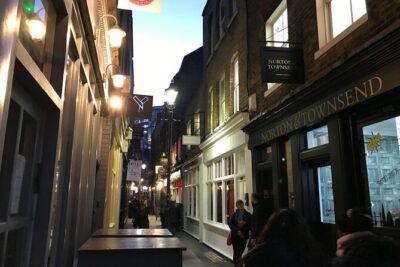
London: The Original Jack the Ripper Walking Tour
Read our review →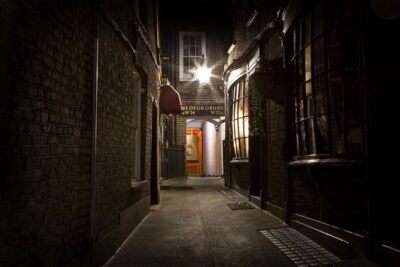
London Jack the Ripper Guided Tour with Ripper-Vision
Read our review →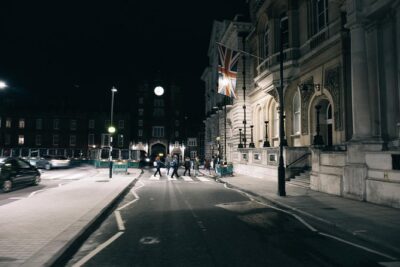
Ghost, Ghouls and Gallows Tour : Guided Tour with Boat Ride
Read our review →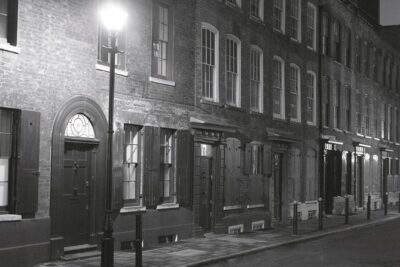
London: Jack the Ripper Tour with Immersive Ripper Vision
Read our review →
German Language : Original Jack the Ripper Tour
Read our review →
Ultimate Jack the Ripper : Guided Tour of London
Read our review →Browse the lists this tour appears in