
Review · LONDON
Jack the Ripper – What About the Women?
Jack the Ripper tours often turn a tragedy into a killer’s story. This one takes a better route. You follow the lives of Martha Tabram, Polly Nichols, Annie Chapman, Mary Jane Kelly, Elizabeth Stride, and Catherine Eddowes, while learning how poverty, poor housing, addiction, and prejudice shaped Victorian East London.
I especially like the victim-first approach and the way the walk links old murder sites with living East End institutions, from Brick Lane Mosque to present-day charities. Guides Cecily and Ellie are praised for clear, humane storytelling, and the small group limit of 20 makes it easier to hear and ask questions. The main drawback is that the subject remains grim, and two hours of evening walking through busy streets may not suit anyone looking for a short, purely atmospheric ghost tour.
Key points to know before you book
- The women come first: The tour gives names, families, work, hardship, and personal stories more attention than the murderer’s legend.
- A social history walk: You learn about dosshouses, workhouses, addiction, immigration, street poverty, and Victorian ideas about respectable behavior.
- Six East London locations: The route includes Whitechapel Road, Brick Lane, Spitalfields, Petticoat Lane, St Botolph’s Church, and Mitre Square.
- No gruesome picture show: The focus is factual and respectful, with little attention to sensational crime details.
- Good family option for mature children: One family found it suitable for daughters aged 12 and 15 because the murders are handled without graphic description.
- Practical evening timing: It begins at 6:30 pm outside Aldgate station and lasts about two hours, with a maximum of 20 people.
A different kind of Jack the Ripper walk
The strongest reason to choose this tour is its refusal to make Jack the Ripper the main character. His name gets you to East London, but the tour’s real subject is the six women connected with the Whitechapel murders and the society that left poor women exposed to danger.
That change in focus matters. Instead of hearing one more version of the killer’s supposed cleverness, you learn who Martha Tabram, Polly Nichols, Annie Chapman, Mary Jane Kelly, Elizabeth Stride, and Catherine Eddowes were. Their lives are placed in the setting of working-class Victorian London, where cheap lodging, insecure work, alcohol dependence, and limited help could quickly turn a bad period into a crisis.
The guides also connect the past with the present. You see modern charities working in the area, hear about immigration and cultural change, and walk through streets where old buildings sit beside newer shops, restaurants, street art, and markets. That makes the experience feel like a London neighborhood walk with a serious historical subject, not a stage-managed fright show.
More Jack the Ripper Tours in London:
- London: The Original Jack the Ripper Walking Tour
★ 4.7 · 7,833 reviews - London Jack the Ripper Guided Tour with Ripper-Vision
★ 4.5 · 4,840 reviews - London: Jack the Ripper Small Group Tour
★ 4.7 · 3,159 reviews
Starting at Aldgate at 6:30 pm
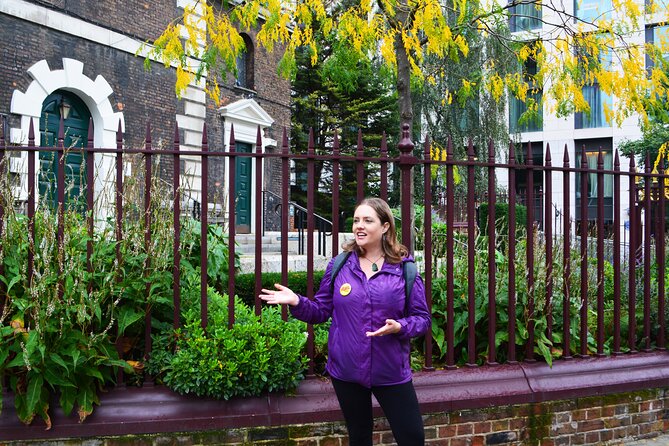
The meeting point is on Aldgate High Street, outside Aldgate station. This is a useful start for a walking tour because the station is easy to reach by public transport and gives you a clear place to meet after a day in central London.
The tour is offered in English and includes a mobile ticket. The group can have up to 20 people. That is not an intimate private walk, but it is small enough to avoid the unwieldy feel of a large crowd. If you have hearing concerns, position yourself near the guide at the start and let the guide know. One participant with significant hearing difficulty found Cecily especially easy to follow, though no special audio equipment is listed.
You begin on Whitechapel Road, where the guide introduces Martha Tabram and Polly Nichols. This opening section sets the tone. You hear about life for poor residents of the East End, including the cramped and uncertain forms of accommodation available to people without stable homes.
The terms matter here. Dosshouses offered basic shelter at a price. Workhouses provided relief under harsh conditions. Spikes were emergency night shelters, often with strict rules and little comfort. These were not simply background details. They help explain the pressures facing women who lacked steady income, family support, or safe housing.
This first stop lasts about 20 minutes. You also hear about charities still working in the area today. That link is handled well because it keeps the story from becoming a museum piece. Whitechapel is not just a backdrop for old crimes. It remains a place where questions about poverty and support still matter.
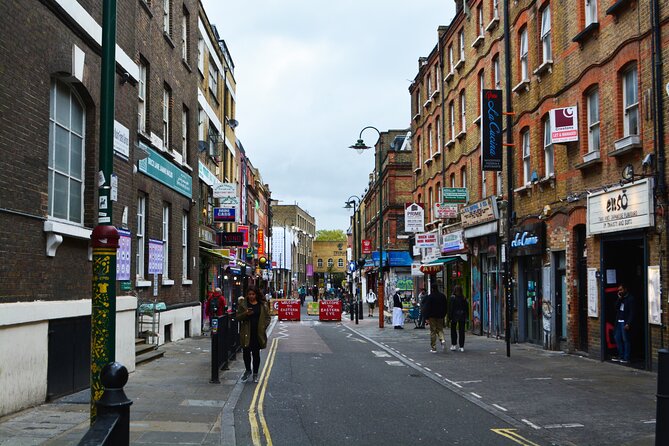
Brick Lane, Polly Nichols, and the changing East End
From Whitechapel Road, the walk moves toward Brick Lane. This is one of the more useful parts of the route for anyone who wants to understand East London beyond the murders.
You stop near the former site of the pub where Polly Nichols spent her final night. The discussion turns to her life and to alcohol addiction in Victorian England. The subject is handled as a social problem rather than a moral punch line, which gives you a clearer sense of the limited choices available to many people in poverty.
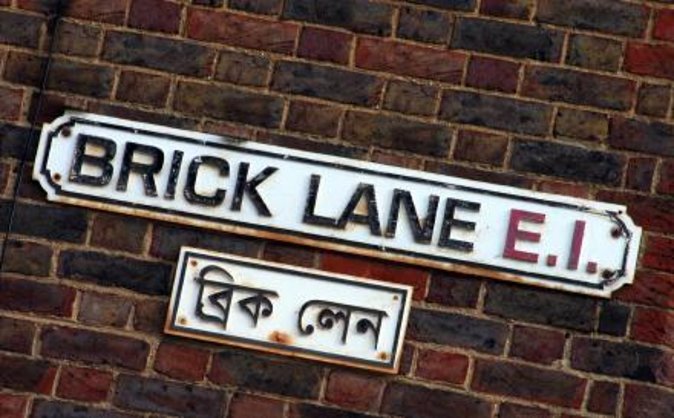
The Brick Lane stop also introduces immigration and religious change through the history of Brick Lane Mosque. The building and site reflect the shifting communities of the East End, and the guide places the Whitechapel murders within a neighborhood that has long been shaped by migration.
Allow about 15 minutes here. Brick Lane itself can be busy, so the group may need to gather closely and listen carefully. That is part of the trade-off of a real street walk. You are not standing in a quiet museum gallery, but you are seeing the area as a living part of London.
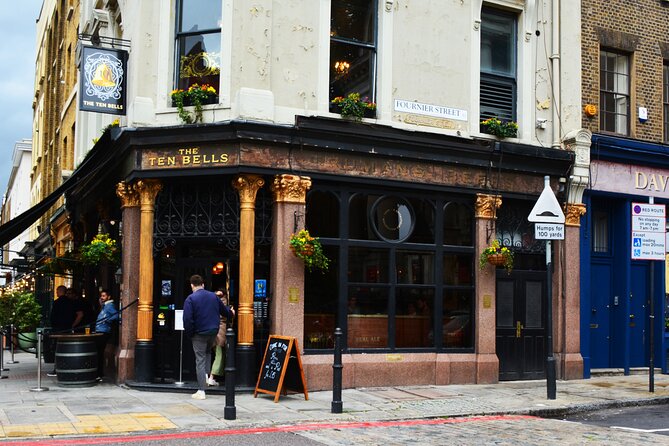
Spitalfields, Annie Chapman, and the Ten Bells
The route continues into the Spitalfields area and the site of the old Truman Brewery, once described as the largest brewery in the world. You then reach 29 Hanbury Street, where Annie Chapman was found on September 8, 1888.
The guide uses this location to talk about Chapman’s life, including the personal hardship and loss she endured. The story is not reduced to the place where she died. That is one of the tour’s most humane choices, and it gives the stop more weight than a simple crime-scene retelling.
Nearby, at the Ten Bells pub, you hear more about Chapman and about the way her story became part of local legend. The pub was once renamed the Jack the Ripper pub, a marketing decision that made the killer more prominent than the women. The Reclaim the Night movement helped pressure the pub to return to the Ten Bells name.
That detail shows how public memory can change. The name of a pub may seem small, but it tells you who gets remembered and who gets pushed aside. The stop lasts about 10 minutes, though the surrounding walk and discussion add to the time.
Same old streets, another story to hear:
- Ghost, Ghouls and Gallows Tour : Guided Tour with Boat Ride
★ 4.5 · 3,212 reviews - London Jack The Ripper Guided Walking Tour
★ 5.0 · 3,131 reviews - London: Comedy Horror Ghost Tour on a Bus
★ 4.4 · 2,084 reviews - London: Jack the Ripper Tour with Immersive Ripper Vision
★ 4.5 · 1,840 reviews
Old Spitalfields Market and Mary Jane Kelly
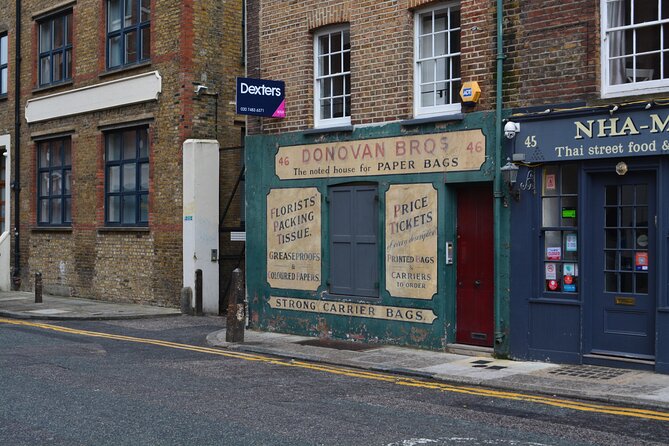
Old Spitalfields Market opened in 1887, the year of Queen Victoria’s Golden Jubilee and one year before the Whitechapel murders began. Here, the guide contrasts royal celebration and imperial confidence with the poverty faced by working people only a short distance away.
That contrast is a key theme of the evening. Victorian London could display immense wealth, ceremony, and industrial power while many residents lived in cramped rooms and struggled to afford food or shelter. You do not need a long lecture to understand the inequality. The route itself makes the point.
The walk then heads to Crispin Street, where you see the former site of a refuge for working-class people that actually functioned well. This is a useful counterpoint to the grim picture of lodging houses and workhouses. Not every attempt to help the poor failed, and the guide points out an example of support that offered something more effective.
Across the street is the former site of Mary Jane Kelly’s residence. Kelly was the last of the commonly identified victims and perhaps the most mysterious. Her biography has attracted more speculation than those of the other women, so this stop is a good place to separate what is known from what later storytellers added.
Old Spitalfields Market also gives you a chance to pause in a more open setting. The stop itself is listed at about 15 minutes. Since the tour takes place at night, the market area may feel quite different from its daytime shopping atmosphere.
Petticoat Lane and the working East End
The short stop at Petticoat Lane Market lasts about five minutes. It was once the center of the East End textile trade, so it helps explain the work and commerce that shaped this part of London.
Do not expect a long market visit or shopping break. This is a quick historical marker along the route. Its value comes from showing that the district was not only a place of poverty and crime. It was also a working commercial area where clothing, textiles, and small-scale trade supported local families.
If you want plenty of time to browse markets or eat along Brick Lane, plan that for before or after the tour. The walking route has a fixed schedule and keeps moving.
St Botolph’s Church and the final stories
At St Botolph’s Church without Aldgate, the guide introduces Elizabeth Stride, who was originally from Sweden. Her story begins in Gothenburg and continues through the difficult turns of her life in London.
This stop gives the tour an international angle. The women connected with the Whitechapel murders were not all from the same place or shaped by the same path. Stride’s background helps challenge the lazy image of the victims as a single anonymous group.
The walk finishes near Mitre Square, where Catherine Eddowes was found. Eddowes came from Wolverhampton, and the guide presents her as a person with spirit and personality rather than as a name attached to a crime scene.
This final section lasts about 25 minutes, the longest stop on the route. It allows more time for Eddowes’s story and for the guide to draw the main themes together: poverty, gender, public judgment, policing, and the way later generations choose to remember violence.
The supplied meeting information lists Spitalfields Market at 65 Brushfield Street as the end point, while the route description says the walk finishes near Mitre Square. Because those locations are close within the East End but not identical, confirm the exact finishing point when you book, especially if you have a timed dinner reservation or a late train.
How much walking and how difficult is it?
The tour lasts about two hours and includes frequent stops. The timed stops add up to roughly 90 minutes, leaving the rest for walking between locations and moving the group through active streets.
This is not a strenuous hike, but you will be on your feet in the evening. Some stops offer places to sit if needed, according to the tour details. Comfortable shoes are sensible, and you should allow extra time if wet weather slows the group.
The tour requires good weather. If poor conditions lead to cancellation, you can choose another date or receive a full refund. It also requires a minimum number of participants, so a cancellation is possible if that number is not met.
Most people can take part, and service animals are allowed. The experience is near public transportation, which makes the 6:30 pm start and post-tour departure fairly practical.
Is $34.28 a fair price?
At $34.28 per person, this is a reasonable price for a two-hour guided walk in central London, especially with a group capped at 20. You are paying for a guide who supplies context you would struggle to gather by simply locating addresses on a map.
The value is strongest if you want social history, clear storytelling, and the women’s personal stories. It is weaker if your main goal is a dramatic crime tour packed with police theories, gruesome details, and speculation about the murderer.
The tour also gives you a useful introduction to several East End districts. You pass through Whitechapel, Brick Lane, Spitalfields, Petticoat Lane, and Aldgate in one evening. You will not have long at any one place, but you get a well-shaped overview of how the area changed and how its past still appears in the streets.
Cecily and Ellie receive particular praise for warm delivery, clear speech, and strong command of both the women’s stories and the neighborhood. Cecily also shares suggestions for local restaurants, pubs, and shops, which can help you turn the walk into a wider evening in East London.
Who should book this walk?
I would choose this tour if you have read about the Whitechapel murders but want to correct the usual killer-centered version. It also suits you if you enjoy social history, urban change, women’s history, and thoughtful local guiding.
Families with mature children may find it suitable. A family with children aged 12 and 15 found the approach appropriate because the murders are discussed without graphic images or detailed descriptions. Still, the subject involves murder, poverty, addiction, and death, so parents should judge their children’s comfort for themselves.
The tour is also a good fit for first-time visitors to East London. You get more than crime sites. You see a mosque, markets, a church, a former brewery site, and streets where old and new London meet.
Skip it if you want a theatrical ghost walk, a fast-paced tour focused on the killer, or a short ride with little walking. This is a measured history tour, and its strongest moments come from listening rather than being startled.
Should you book Jack the Ripper: What About the Women?
Book it if you want the women remembered as people, not plot devices. The thoughtful focus, small group size, useful route, and guides such as Cecily and Ellie make this a strong choice for a more respectful look at Whitechapel.
The tour does not erase the murders, but it refuses to let them swallow the women’s lives. At $34.28, it offers solid value for two hours of East London history, provided you are comfortable walking at night and discussing difficult subjects.
FAQ
Where does the tour start?
It starts at Aldgate High Street, London EC3N 1AH, outside Aldgate station.
What time does the tour begin?
The start time is 6:30 pm.
How long does the tour last?
The tour lasts approximately two hours.
What language is the tour offered in?
The tour is offered in English.
How much does the tour cost?
The listed price is $34.28 per person.
What locations does the walk visit?
The route includes Whitechapel Road, Brick Lane, the Truman Brewery site, 29 Hanbury Street, the Ten Bells area, Old Spitalfields Market, Crispin Street, Petticoat Lane, St Botolph’s Church, and Mitre Square.
Does the tour use graphic images?
The tour focuses on the women’s lives and Victorian society rather than gruesome murder details. No graphic images are listed.
Is the tour suitable for children?
Most people can participate, and the non-graphic approach may suit mature children. The subject still includes murder, poverty, addiction, and death, so parents should decide based on their children’s comfort.
How large is the group?
The maximum group size is 20 people.
What happens if the tour is canceled because of weather?
You will be offered another date or a full refund if poor weather causes the cancellation. Free cancellation is available up to 24 hours before the start time, while cancellations within 24 hours are not refundable.
Freshly reviewed haunts around London
- Ghosts, Gore & Other Ghasty Stories in the City of London★ 5.0 · 7 reviews
- Visit Jack the Ripper in French★ 5.0 · 33 reviews
- The Haunted Pubs of Old London: Small Group Tour★ 5.0 · 38 reviews
- Afternoon Jack the Ripper : Guided Tour★ 5.0 · 183 reviews
- Wicked Whitechapel: Where Now’s Jack The Ripper Audio Tour★ 5.0 · 2 reviews
- The Fading Light London Ghost Walk★ 5.0 · 35 reviews
- The Ghosts of the secret alleyways of old London town★ 5.0 · 2 reviews
- Dark History of the Tudors: Private Tour of Hampton Court Palace★ 5.0 · 10 reviews
London Ghost Tours, compared.
London: The Original Jack the Ripper Walking Tour
Read our review →
London Jack the Ripper Guided Tour with Ripper-Vision
Read our review →
Ghost, Ghouls and Gallows Tour : Guided Tour with Boat Ride
Read our review →
London: Jack the Ripper Tour with Immersive Ripper Vision
Read our review →
German Language : Original Jack the Ripper Tour
Read our review →Browse the lists this tour appears in