
Review · CHICAGO
Chicago: Gangsters and Ghosts Walking Tour
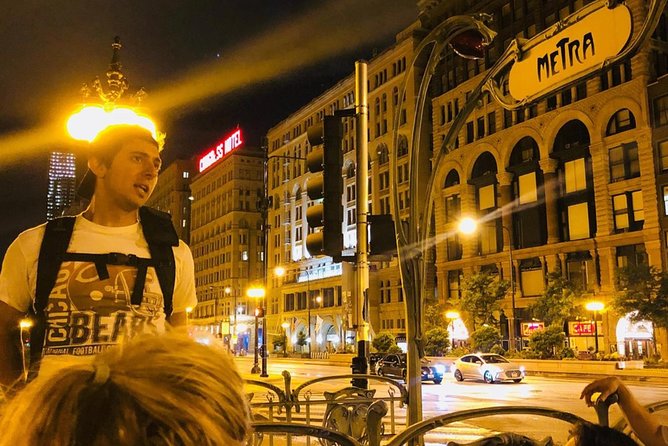
Chicago’s Loop has plenty of polished towers and tourist sights, but this tour points out the darker stories beneath them: Al Capone’s Chicago, old vice districts, reported hauntings, and the tragic events tied to places such as the Congress Hotel. The history comes in short stops as you walk about 1.5 miles through the city center.
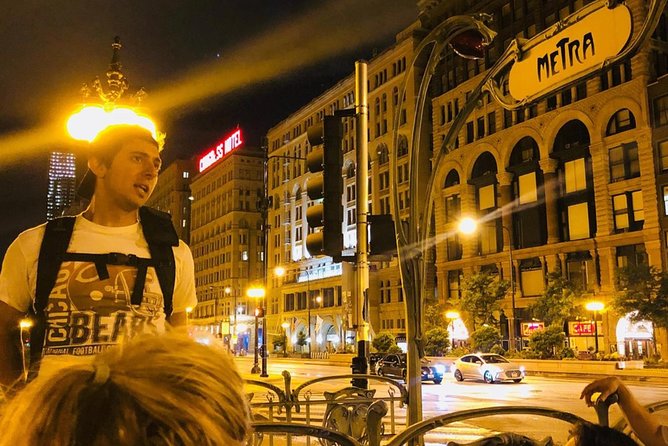
I like the way the tour combines real Chicago history with ghost tales, rather than treating the whole outing as a haunted-house performance. I also like the guides’ clear delivery. Taka, Sophia, Tanner, Willis, and Avery have each earned praise for strong storytelling and for keeping groups together on noisy city streets. The main drawback is that much of the tour happens outdoors, and you generally look at buildings from the street rather than touring their interiors.
Key points to know before you book
- Al Capone’s old headquarters: The tour ends at the Congress Plaza Hotel, where Capone reportedly set up his headquarters and where his ghost is often associated with the eighth floor.
- A 1.5-mile city walk: Frequent stops, a refreshment and restroom break, and a moderate pace make this manageable for many people with average fitness.
- Historic hotels and haunted sites: The Palmer House and Congress Hotel provide some of the strongest links between Chicago’s past and its ghost stories.
- A historian guide: The storytelling is presented in a conversational, around-the-campfire manner rather than as a theatrical show.
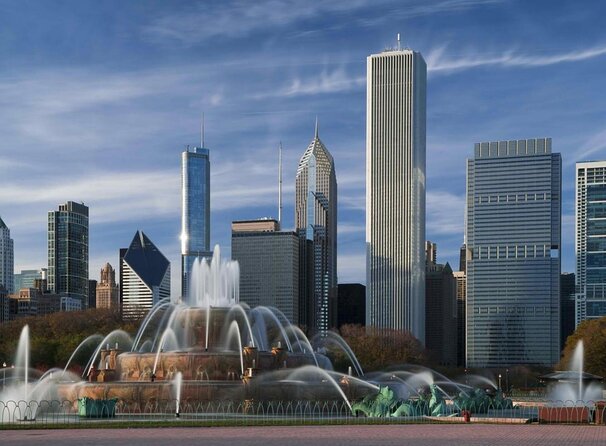
- A useful first look at the Loop: You pass Millennium Park, the Riverwalk, the Chicago Theatre, and lesser-known corners while learning what happened there.
- A minibus option: The upgraded version follows the same general theme by bus and includes one stop at Harry Caray’s Italian Steakhouse.
Why Chicago’s Loop makes such a good setting
The Loop is an ideal place for this subject because the landmarks are close together, yet the stories span several different eras. In the 1920s and 1930s, the area was tied to speakeasies, bootlegging, organized crime, and underground passageways. Today, you may be walking past offices, hotels, and major attractions without realizing how much trouble once unfolded nearby.
That contrast gives the tour its appeal. You are not driven to a remote crime museum or a staged haunted attraction. You walk through the ordinary city center and learn to read it differently. A polished hotel lobby becomes a place linked to ghost reports. A famous downtown corner becomes part of a story about gang warfare, vice, or loss.
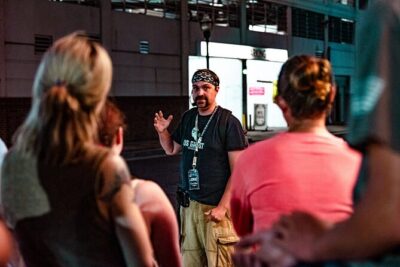
The guide is central to the experience. The strongest comments about the tour focus on guides such as Taka and Sophia, who explain events clearly, project their voices over traffic, and keep the group moving. Tanner is also praised for mixing history, humor, and scary tales, while Willis is singled out for his storytelling. That range matters because this is a spoken tour. If the guide cannot hold your attention, the buildings alone will not carry it.
The presentation is not meant to be a theatrical ghost show. Stories are told in a conversational style, more like a well-told campfire tale adapted for busy downtown streets. You hear about ghosts, but also about Chicago’s development, Prohibition, famous disasters, and people who shaped the city.
More Ghost Walking Tours in the USA
- Chicago: Gangsters and Ghosts Guided Walking Tour
★ 4.7 · 1,697 reviews - Haunted Chicago Booze and Boos Ghost Walking Tour
★ 5.0 · 266 reviews - Chicago: Ghosts & Hauntings of the Windy City Walking Tour
★ 4.4 · 45 reviews
Starting at 71 East Wacker Drive
The tour begins at 71 E. Wacker Drive, a central location near public transportation. Arrive ready to walk outside for much of the next two hours. A mobile ticket is accepted, and the group can include up to 20 people, small enough to hear the guide more easily than you might on a large coach outing.
The exact opening story may vary by guide, but the Loop sets the tone. This is the part of Chicago most associated with the city’s gangster era and reported hauntings. Your guide connects present-day streets with former saloons, speakeasies, bootlegger routes, and places tied to well-known mob figures.
The walk covers about 1.5 miles. That is not a strenuous distance for most people, but the city surface, traffic crossings, weather, and frequent standing stops affect how it feels. You will not be walking nonstop. The group pauses often while the guide explains what happened at each place.
Millennium Park and the famous Bean
Millennium Park adds a familiar landmark to the tour. You will see Cloud Gate, the polished sculpture commonly called the Bean, while hearing how the modern Loop fits into the older city around it.
This stop is useful because it gives you a break from the crime stories and connects the tour to a major Chicago attraction. If you have already visited Millennium Park, the value here is not a new admission or special access. It is the historical framing. You are seeing one of the city’s best-known public spaces as part of a larger walk through downtown.
Expect a photo stop rather than an extended visit. The tour is designed to keep moving, so you should not count on free time to explore every corner of the park.
The Palmer House and its haunted lobby
The Palmer House is one of the tour’s most interesting stops. It is presented as Chicago’s oldest hotel and the oldest continuously operating hotel in the United States. The lobby provides a welcome pause, along with a restroom and refreshment break.
The hotel’s importance is more than age. It is also tied to ghost stories, making it a natural bridge between documented Chicago history and reported paranormal activity. Your guide explains the tales in the same straightforward style used throughout the tour. You get atmosphere and local lore without entering a haunted attraction built for effects.
The stop also gives you a chance to get out of the wind or cold for a short time. That matters in Chicago, where a two-hour outdoor tour can feel very different in summer than it does on a bitter winter evening. Bring clothing suited to the forecast, since most of the experience remains outside.
One practical limit is worth noting: visiting the lobby is not the same as touring the hotel. You should expect a short stop and storytelling, not access to private rooms, the eighth floor, or a broad interior tour.
More Ghost Walking Tours in Chicago:
- Chicago Ghosts & Haunted History Walking Tour
★ 5.0 · 11 reviews - New Orleans Premier Ghost, Voodoo and Vampire Walking Tour
★ 4.5 · 12,856 reviews - London: The Original Jack the Ripper Walking Tour
★ 4.7 · 7,833 reviews - Prague: Ghost Walking Tour Where Legends Come To Life
★ 4.4 · 5,253 reviews
Walking beside the Chicago River
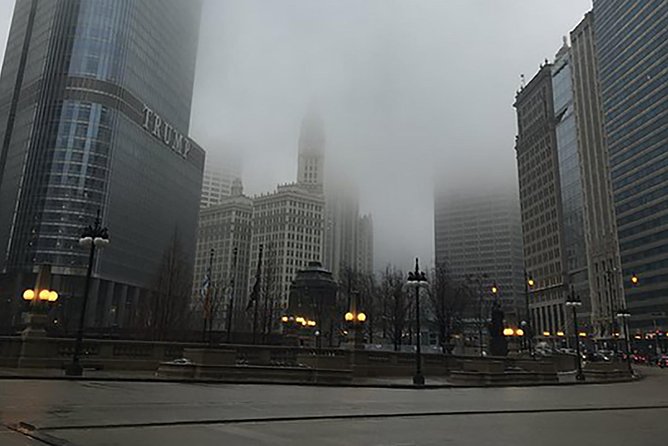
The Chicago Riverwalk brings a change of scenery and a different set of stories. The guide continues the walk along the river while explaining gangster hangouts, ghost reports, and other episodes from the city’s past.
The Riverwalk is also one of the tour’s more atmospheric stretches. Water, bridges, old buildings, and downtown traffic give the stories a strong sense of place. You are not simply hearing a list of names and dates. You can look around and understand how Chicago’s geography helped shape commerce, nightlife, and movement through the city.
The tour may include stories beyond the central Capone material. One example highlighted by the guides is the SS Eastland disaster, a tragic event that adds a human and somber layer to the outing. That variety is welcome. A tour built only around gangsters could become repetitive, while the ghost stories work better when they sit alongside real deaths, disasters, and social history.
The guide’s voice matters especially here. City noise can make group walking tours frustrating, but Taka is praised for speaking loudly and clearly enough for a large group. That practical skill is as important as knowing the stories.
The Chicago Theatre and downtown photo stops
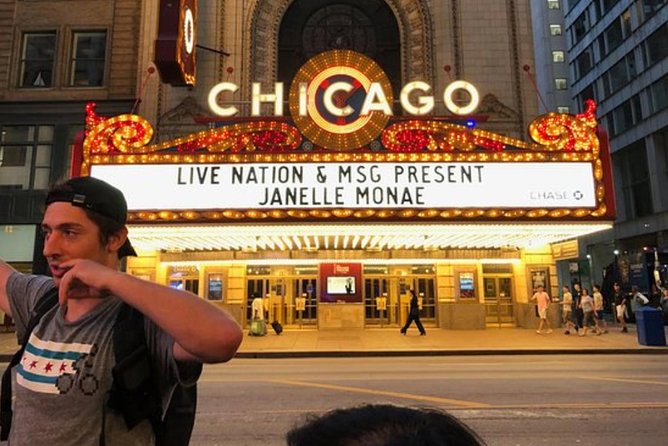
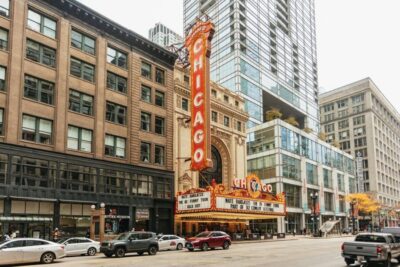
The Chicago Theatre is another photo stop. You get a chance to see one of the city’s best-known facades while the guide continues connecting the Loop’s landmarks to its past.
This part of the route helps balance the more unsettling material. You are still seeing famous Chicago, but you are doing it with added context. The tour works best when you enjoy that mix: a major landmark one minute, then a tale about a former hangout or a reported ghost in the next.
Do not expect long entrance visits at every stop. The schedule allows roughly 15 minutes at places such as Millennium Park, the Riverwalk, and the theatre. Those times include storytelling, movement, and photos, not a full museum-style visit.
Ending at the Congress Plaza Hotel
The tour ends near the Congress Plaza Hotel and Convention Center at 520 S. Michigan Avenue. This is the strongest final stop because it brings the gangster and ghost themes together.
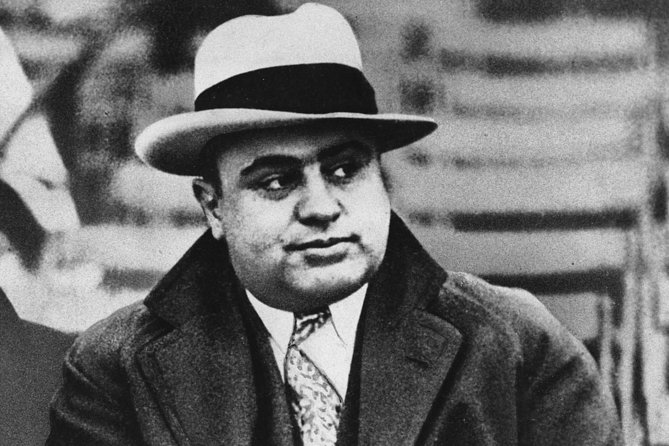
The Congress Hotel is described as one of the most haunted places in Illinois. It is also associated with Al Capone, who reportedly used the hotel as a headquarters. His ghost is most often linked to his former suite on the eighth floor.
The important word here is reported. The tour shares ghost stories as part of local lore, but the experience is not presented as scientific proof of paranormal activity. If you enjoy hearing how a place acquires its reputation, you will likely appreciate the stop. If you want a fully documented crime tour with archival evidence at every turn, the ghost material may feel less satisfying.
Ending at the Congress Hotel also makes practical sense. You finish near the southern end of the Loop and close to other downtown sights. From here, you can continue toward Grant Park, explore Michigan Avenue, or make your own way back by public transportation.
What the bus upgrade changes
The upgraded minibus option covers the same general gangster and ghost subject by vehicle. It includes one stop at Harry Caray’s Italian Steakhouse for an immersive experience.
The bus option may suit you if standing outdoors for two hours is difficult or if you prefer to cover the city with less walking. It may also help on a day when the weather is unpleasant. Still, the walking tour offers a closer connection to the streets, river, hotels, and corners being discussed. You feel the distances between the sites instead of seeing them through a window.
The available details do not give a separate price for the upgrade, so check the current booking choices before paying. Do not assume the bus version includes more interior access. The walking and bus options share the same general stories, with the bus version adding its stop at Harry Caray’s.
Guide quality, group size, and pace
The tour’s strongest feature is the guide. Taka is praised for passionate storytelling, clear instructions, and an ability to make complicated Chicago history easy to follow. Sophia is described as energetic, personable, and theatrical in a way that works well for both adults and an 18-year-old. Tanner is praised for entertaining people of different ages, while Avery is noted for a pleasant and well-managed outing.
That consistency is important because the experience depends more on delivery than on admission tickets. There are no major attractions included inside the $52 price. You are paying for the route, the research, the organization, and the guide’s ability to turn city streets into a coherent story.
The maximum group size is 20. That is not private, but it is small enough for a guide to manage without the outing feeling like a large procession. Several comments specifically praise guides for keeping people together and explaining what would happen next.
The pace is described as light, with frequent stops and a break. You should still wear comfortable shoes and be ready for normal city walking. A moderate level of physical fitness is recommended, and the experience depends on good weather.
Is $52 a fair price?
At $52, this is not the cheapest way to see the Loop. You can walk past Millennium Park, the Chicago Theatre, and the Riverwalk on your own for free. You can also read about Al Capone and Chicago’s Prohibition era before you arrive.
The value comes from having someone organize the route and explain the connections. A good guide saves you from wandering between disconnected landmarks. The best guides also add details you would be unlikely to notice on your own, including the former gangster hangouts, the Palmer House stories, and the SS Eastland account.
I think the price is fair if you want an easy, structured introduction to Chicago history and enjoy spoken storytelling. It is less compelling if you mainly want interior access, formal exhibits, or a serious investigation of paranormal claims. In that case, the tour gives you atmosphere and context, not a museum collection or a research seminar.
The high overall rating and 95 percent recommendation suggest the format works well for its intended audience, especially people looking for a lively evening activity in the Loop. The best value comes when you treat it as both a history walk and a city orientation.
Who should book this walk?
I would recommend it to first-time Chicago visitors who want to see central landmarks while learning about the city’s less polished past. It also suits local residents. One guide helped someone who had lived in Chicago for most of their life discover stories they had never heard before.
Families with older children and teenagers can enjoy it if they like crime stories, ghosts, and unusual city history. An 18-year-old and parent both enjoyed the outing, which suggests the subject can work across generations without becoming too academic.
You should think twice if you dislike walking in poor weather, need guaranteed indoor access, or want a strictly factual tour with no ghost lore. You should also allow extra time after the tour if you want to visit the Congress Hotel or other landmarks independently, since the guided stops are fairly short.
Cancellation is free up to 24 hours before the start time. Cancellations within 24 hours are not refunded, and poor weather can lead to a different date or a full refund.
Should you book the Chicago Gangsters and Ghosts Walking Tour?
Book it if you want a well-told introduction to Chicago’s Loop, with Al Capone, Prohibition, haunted hotels, the Riverwalk, and local tragedies woven into one manageable walk. The guides are the key reason to choose it, and names such as Taka, Sophia, Tanner, Willis, and Avery are linked with clear delivery and engaging stories.
Skip it if you want extensive building access or a fully theatrical ghost show. You will spend most of the two hours outdoors, and several stops are brief photo or storytelling pauses.
For most visitors, this is a good use of an evening or open afternoon. It gives familiar Chicago sights a sharper edge, and it leaves you with more than a list of landmarks. Afterward, you will know why the city’s Loop can feel polished in daylight and uneasy after dark.
FAQ
How long is the Chicago Gangsters and Ghosts Walking Tour?
The tour lasts approximately two hours. The walking route is about 1.5 miles and includes frequent stops plus a refreshment and restroom break.
Where does the walking tour begin?
It begins at 71 E. Wacker Drive in Chicago, Illinois.
Where does the walking tour end?
The tour ends at the Congress Plaza Hotel and Convention Center at 520 S. Michigan Avenue.
Which Chicago landmarks are included?
The route includes the Loop, Millennium Park and Cloud Gate, the Palmer House lobby, the Chicago Riverwalk, the Chicago Theatre, and the Congress Plaza Hotel area.
Is the tour focused only on Al Capone?
No. Al Capone is a major part of the story, but the tour also covers other gangster-era sites, ghost reports, the SS Eastland disaster, Chicago history, and haunted locations.
Is there a bus tour option?
Yes. You can upgrade to a minibus version with the same general gangster and ghost theme. The bus tour includes one stop at Harry Caray’s Italian Steakhouse.
What happens if the weather is poor?
The experience requires good weather. If it is canceled because of poor weather, you will be offered another date or a full refund. You can cancel for a full refund up to 24 hours before the start time.
Freshly reviewed haunts around Chicago
- Prairie Avenue Haunted History Tour and Ghost Hunt★ 5.0 · 11 reviews
- Embers of the Windy City: Chilling Chicago Ghost Tours★ 4.5 · 121 reviews
- Lincoln Park Hauntings Ghost Investigation Tour★ 5.0 · 43 reviews
- Ghosts of Chicago Family Friendly Ghost Tour★ 4.0 · 12 reviews
- Haunted Ghosts & The Chicago Outfit Segway Tour★ 4.5 · 38 reviews
- Chicago Hauntings Original Ghost Bus Tour★ 4.0 · 147 reviews
- Haunted Chicago Exploration Game and Tour★ 4.0 · 6 reviews
- Chicago Ghosts & Haunted History Walking Tour★ 5.0 · 11 reviews
Chicago Ghost Tours, compared.
Chicago: Gangsters and Ghosts Guided Walking Tour
Read our review →
Haunted Chicago Booze and Boos Ghost Walking Tour
Read our review →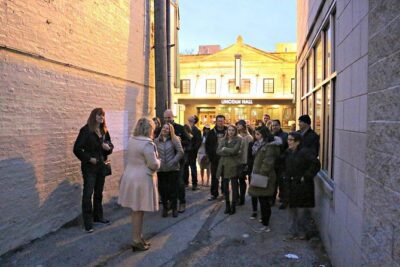
Embers of the Windy City: Chilling Chicago Ghost Tours
Read our review →
Chicago: Medieval Torture Museum Ticket with Ghost Hunting
Read our review →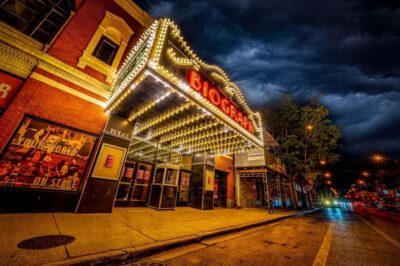
Chicago: Ghosts & Hauntings of the Windy City Walking Tour
Read our review →
Chicago: Historic Gangsters & Ghosts Night Cruise
Read our review →
Browse the lists this tour appears in