
Review · CHICAGO
Ghosts of Chicago Family Friendly Ghost Tour
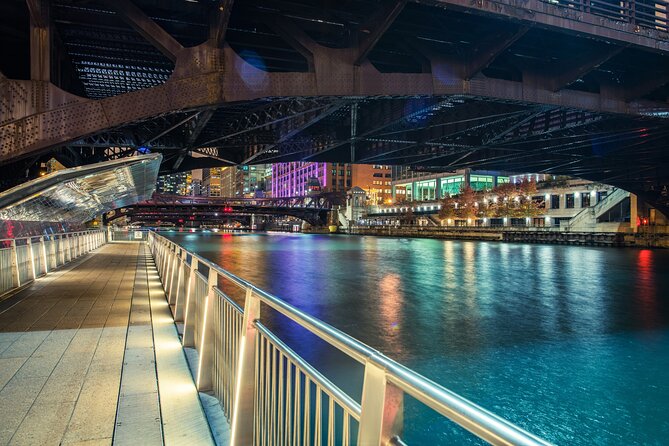
Chicago’s darker stories come into focus on this 90-minute night walk, which links seven downtown sights with tales of murder, tragedy, folklore, and unsettled spirits. You’ll hear about H.H. Holmes, the Devil Baby of Hull-House, the Eastland Disaster, and a famously haunted hotel, all while seeing public art and landmarks along the way.
I like the family-friendly tone, especially if you have children who want a ghost tour without graphic horror. I also like the route’s mix of supernatural stories and real Chicago history, from Indigenous history and Fort Dearborn to John Dillinger and the city’s old burial grounds.
The main concern is reliability. The experience has a 4.1 rating from 12 ratings, but some bookings were affected by late cancellations, a late guide, or confusion over the meeting point. Confirm the start details carefully and arrive early.
Key points to know before you book
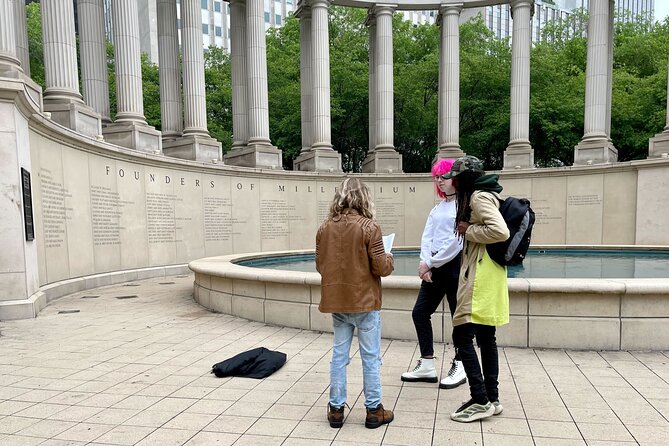
- Seven downtown stops: The route moves from Millennium Monument to Buckingham Fountain, with about 11 minutes at each stop.
- Family-friendly stories: Expect eerie history and ghost lore, not an extreme haunted attraction.
- A mix of fact and folklore: H.H. Holmes, the Eastland Disaster, Lincoln Park, and Fort Dearborn give the tour a solid historical base.
- Nighttime setting: The 6:30 pm start gives the stories a darker mood without making the tour adults-only.
- $29.99 for about 90 minutes: That is a fair price if you want a guided evening walk and a quick introduction to several Chicago stories.
- Small-to-medium group size: Groups can include up to 30 people, so staying close to the guide matters.
Why this tour works for families
The best feature here is its restraint. You get haunted Chicago without signing up for actors jumping from alleys or stories designed to frighten young children. The tone is intended for all ages, and one family found the experience suitable even for a daughter who was nervous about ghosts.
You should still expect subjects such as murder, death, disasters, and violence. H.H. Holmes and the Eastland Disaster are not light topics, but the format is a historical walking tour rather than a horror show. I would describe it as spooky information with a ghostly frame.
The night setting helps. Starting at 6:30 pm means the city has begun to darken, giving the stories a better mood than a daytime history walk. At the same time, the tour remains in central Chicago, near public transportation and well-known landmarks.
For children, the appeal is easy to understand: every short stop offers a new place, a new story, and a reason to keep walking. For adults, the stronger draw is the way the tour connects familiar Chicago sights with events that are easy to miss when you are focused on architecture, shopping, or Millennium Park.
More Family Ghost Tours in Chicago:
- Ghost Tour: History and Haunts – Family Friendly – Best in Gettysburg
★ 4.5 · 378 reviews - Fraidy Cat: The Family Fun Ghost Tour of Savannah
★ 5.0 · 253 reviews - Spooky Family-Friendly Ghost Tour in New Orleans
★ 5.0 · 224 reviews
Starting at Millennium Monument
The tour begins at Millennium Monument, 201 E Randolph St, at 6:30 pm. This is a useful central meeting point, but you should not treat the location casually. One booking ran into confusion because the guide had been told to meet at the Bean while the group had been directed to a fountain. Another group waited in light rain and eventually learned that the guide was not coming.
Those problems appear to be exceptions, but they matter because a night tour has a fixed start and a moving group. I would arrive 10 to 15 minutes early, check your booking messages, and make sure you know the exact meeting point shown on the day of your tour.
The guide is the key to the whole experience. Joe received especially strong praise for recovering from a rough beginning. He was described as personable, entertaining, and well informed, and he helped turn a potentially disappointing evening into a good one. That tells you something useful: the quality of this tour depends heavily on the individual guide and on clear communication before departure.
Stop one: the Flying Dragon and the Devil Baby
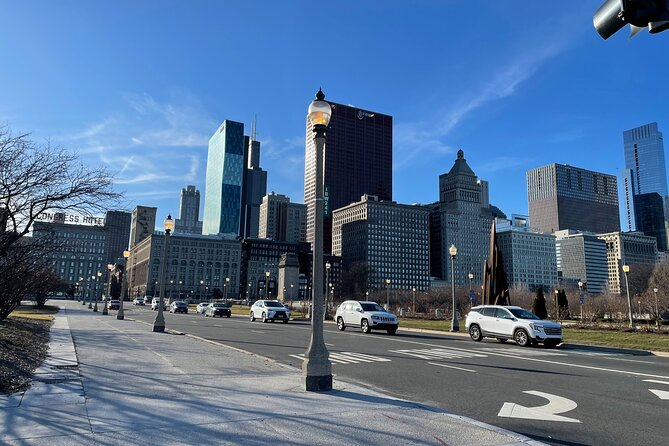
The first stop is the Flying Dragon Stabile by Alexander Calder. You receive a free admission view of the sculpture, then hear about the Devil Baby of Hull-House.
This is a smart opening because it places an unusual piece of public art beside a local legend. You get a visual object to examine while the guide sets the tone. The Devil Baby story also introduces the kind of material used throughout the walk: a tale tied to Chicago’s social and cultural past, presented as part of the city’s ghost lore.
The stop lasts about 11 minutes. That short time is enough for a focused story, but not enough for a long discussion or a detailed art lesson. If you enjoy lingering over sculpture, you may want to return later on your own.
Stop two: the Chicago Stock Exchange Arch and H.H. Holmes
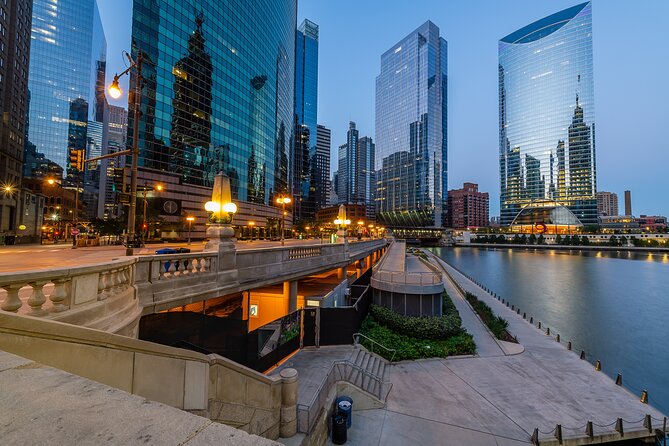
The Chicago Stock Exchange Arch is a remnant of the old Chicago Stock Exchange Building. Here, the tour turns toward H.H. Holmes, presented as America’s first serial killer.
This is one of the strongest stops for visitors who want history alongside ghost stories. Holmes is not simply a supernatural figure. His name is tied to Chicago’s darker criminal past, and the setting gives the story a physical connection to the city’s old commercial center.
You should expect a concise account rather than a full true-crime program. The tour has six more stops to cover, so the guide must keep the story moving. That pacing is helpful for families and first-time visitors, though people who already know the Holmes story may want more detail.
Other ghost walks and hunts we rate around Chicago
- Chicago: Gangsters and Ghosts Walking Tour
★ 5.0 · 7,155 reviews - Chicago: Gangsters and Ghosts Guided Walking Tour
★ 4.7 · 1,697 reviews - Medieval Torture Museum Ticket with Audio Guide and Ghost Hunting
★ 5.0 · 962 reviews - Haunted Chicago Booze and Boos Ghost Walking Tour
★ 5.0 · 266 reviews
Stop three: Abraham Lincoln and Lincoln Park’s burial ground
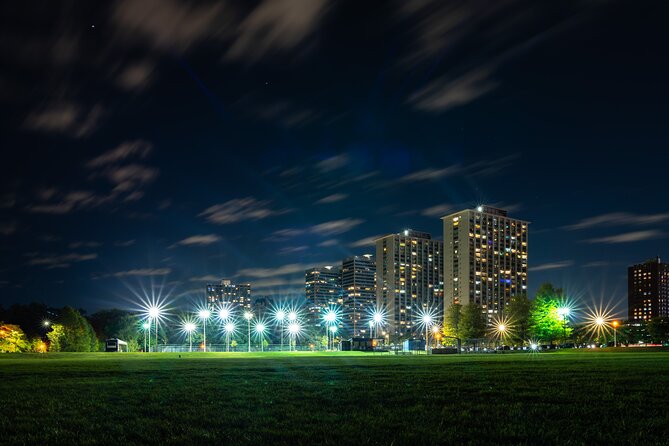
At the Abraham Lincoln, Head of State statue, you hear about Lincoln Park and its earlier use as a burial ground. This stop shifts the mood from one infamous person to the history beneath the city itself.
The idea that a familiar park was once a burial ground gives the tour a useful sense of place. You are not just hearing a ghost story in an empty room. You are being reminded that Chicago’s modern public spaces have older, less visible layers.
The Lincoln connection also broadens the tour beyond crime and hotel legends. The focus is not necessarily on Lincoln as a ghost story, but on the history of the area and the remains of what came before the park. For me, this is the kind of stop that makes the tour more worthwhile than a string of unrelated spooky tales.
Stop four: Congress Triangle Garden and the Congress Plaza Hotel
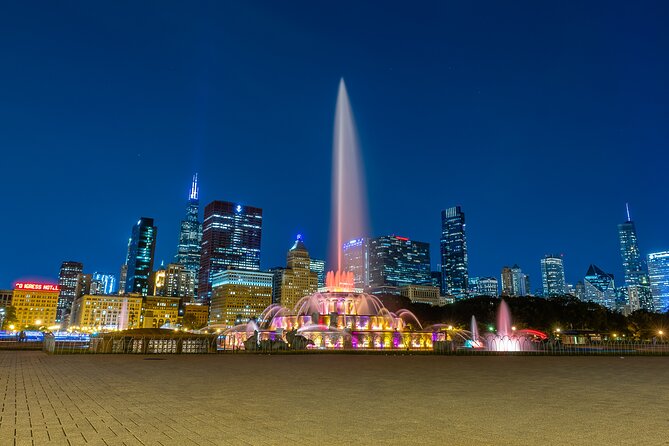
Congress Triangle Garden provides a view of the Congress Plaza Hotel, one of the country’s most famous haunted hotels. The guide discusses tragedies associated with the hotel and explains how room 441 inspired Stephen King to write a short story.
This is likely to be one of the most anticipated stops, particularly for adults who recognize the hotel’s reputation. You do not enter the hotel as part of the stated route. Instead, you view it from the garden and hear the stories connected with it.
That distinction matters. If you expect an indoor investigation, room access, or paranormal equipment, this is not that sort of activity. You are hearing the history and legends from outside, with the building itself supplying the atmosphere.
The stop also shows why this tour works best as a city walk. The hotel is not treated as an isolated haunted attraction. It becomes one chapter in Chicago’s larger story of crime, tragedy, and public memory.
Stop five: The Spearman and Fort Dearborn
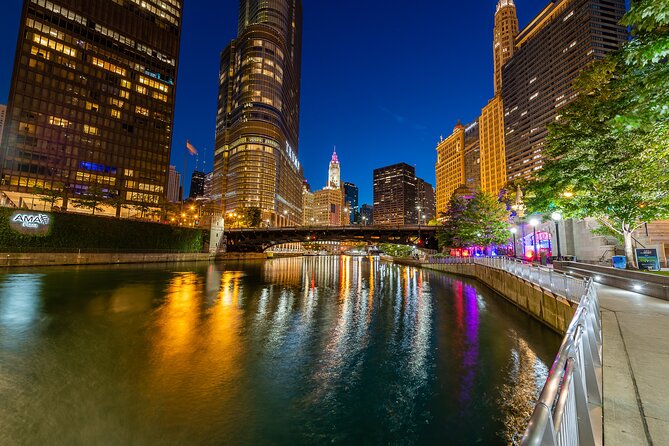
The Spearman is a sculpture intended to capture the Indigenous spirit of the people who lived on the land before later settlement. Here, the guide discusses the Fort Dearborn Massacre.
This is an important inclusion. A ghost tour can easily focus only on famous criminals and haunted buildings. By including Indigenous history, the route points toward the people and conflicts that existed before the modern city took shape.
The subject is serious, and you may find the transition from sculpture to massacre more sobering than spooky. That is not a weakness. It gives the tour a wider historical range and reminds you that stories of tragedy do not need a ghost to matter.
The sculpture also provides a clear visual anchor. You can look at the figure while listening, which helps keep younger participants engaged during a difficult subject.
Stop six: Artists and Automobiles with John Dillinger
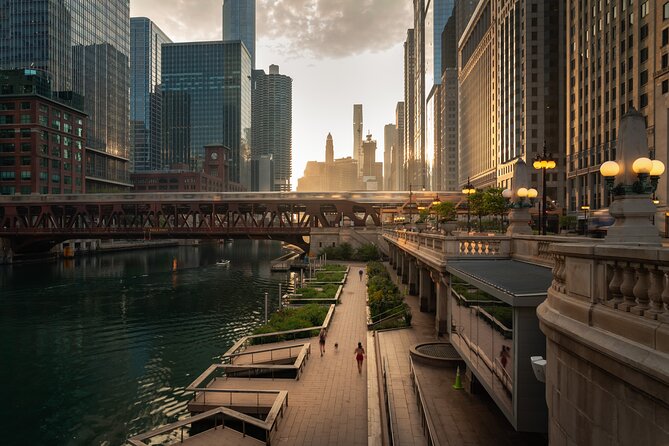
At Artists and Automobiles, the subject turns to John Dillinger, the American gangster. This stop brings the tour back to a well-known Chicago crime story and adds a recognizable name for visitors who enjoy gangster history.
The information is delivered within the same short-stop format, about 11 minutes. You should expect a compact account rather than a complete biography. The value comes from hearing the story in the city where Chicago’s gangster image became part of American popular culture.
For families, this may be a better fit than a more graphic crime tour because the route keeps the focus on history and storytelling. Still, parents should use their judgment. The tour is family-friendly, but that does not mean every topic is suitable for very young children.
Stop seven: Buckingham Fountain and the Eastland Disaster
The final scheduled stop is Buckingham Fountain, at 301 S Columbus Drive. Here, the guide tells the story of the S.S. Eastland and its tragic end in the Chicago River.
This is a fitting final subject because it brings the tour back to a large public tragedy rather than ending with a single criminal or ghost legend. The Eastland Disaster story connects Chicago’s river, industry, transportation, and loss of life in a way that leaves you thinking about the city’s past after the tour ends.
The listed end point is Buckingham Fountain, though the exact finish may vary depending on the guide’s route. That means you should not plan a tightly timed dinner reservation immediately afterward. You may finish close to the stated location, but you should allow extra time.
The fountain area also gives you a useful place to continue your evening. You can stop for photos, walk through the nearby park, or use public transportation, depending on where you are headed next.
What $29.99 gets you
At $29.99 per person, this tour is reasonably priced for a guided 90-minute walk in central Chicago. The calculation works out to roughly $20 per hour, before placing any value on the guide’s preparation and local storytelling.
You are not paying for admission to attractions. All seven stops are viewed from public areas, and admission is free. Your fee mainly covers the guide, the route, and the organized presentation.
That makes the value depend on your interests. I think it is a good buy if you want an easy evening activity that combines sightseeing with local stories. It is less appealing if you want a long, highly theatrical ghost investigation or a deep examination of one haunted site.
A group of up to 30 people is allowed. That is not enormous, but it is large enough for the guide to be harder to hear if everyone spreads out. Stay near the front, especially at busy intersections or public spaces.
The practical issues that matter most
The tour is offered in English and uses a mobile ticket. Confirmation is provided when you book. Service animals are allowed, the route is near public transportation, and most people can participate.
The experience depends on good weather. If poor weather causes a cancellation, you are offered another date or a full refund. The same applies if the minimum number of participants is not reached.
You can cancel for a full refund up to 24 hours before the 6:30 pm start. Changes or cancellations inside that 24-hour window are not accepted for a refund. Since the tour is outdoors and takes place at night, check the forecast and dress for conditions before you leave.
The biggest practical warning is communication. There were cases involving a last-minute cancellation, a guide arriving 25 minutes late, and conflicting instructions about where to meet. I would check your email and booking messages shortly before leaving, keep the confirmation accessible on your phone, and contact the operator promptly if the guide is not present at the stated time.
Who should book this Chicago ghost walk?
I would recommend it to families with school-age children, first-time Chicago visitors, and adults who want a light ghost tour rather than a frightening attraction. It is also useful if you have one evening free and want to see public art, statues, hotels, and fountains while hearing stories tied to each area.
You should book with more caution if you need perfect timing, dislike outdoor walking in uncertain weather, or want guaranteed theatrical scares. One person found the stories mildly interesting but not frightening, and another found the tour boring despite an energetic guide. That criticism is fair: this is a family-friendly history walk with ghosts, not an intense haunted experience.
The guide can make a major difference. Joe’s ability to recover from a poor start shows how much warmth, timing, and storytelling affect the evening. At the same time, a late guide or unclear meeting point can damage the experience before the first story begins.
Should you book it?
Book this tour if you want accessible Chicago history with a spooky edge, especially if your group includes children or adults who prefer atmosphere over scares. The seven stops give you a broad sample of Chicago stories for a fair price, and the mix of public art, crime, tragedy, Indigenous history, and haunted places is more interesting than a simple list of ghost tales.
Skip it if you want a serious paranormal investigation, a fully scripted theatrical show, or a tightly managed evening with no risk of communication problems. If you do book, arrive early, confirm the exact meeting point, and keep your schedule flexible at the end.
FAQ
How long is the Ghosts of Chicago Family Friendly Ghost Tour?
The tour lasts approximately 1 hour and 30 minutes.
Where does the tour begin?
The tour begins at Millennium Monument, 201 E Randolph St, Chicago, Illinois 60601.
What time does the tour start?
The stated start time is 6:30 pm.
Where does the tour end?
The stated end point is Clarence F. Buckingham Memorial Fountain, 301 S Columbus Dr, Chicago, Illinois 60605. The exact ending location may vary depending on the route used by the guide.
Is the tour suitable for children?
Yes. The stories are presented as family-friendly and suitable for all ages, though the subjects include murder, death, disasters, and other serious historical events.
Can I cancel for a full refund?
Yes. You can cancel at least 24 hours before the start time for a full refund. Cancellations or changes made less than 24 hours before the experience are not accepted for a refund.
Freshly reviewed haunts around Chicago
- Prairie Avenue Haunted History Tour and Ghost Hunt★ 5.0 · 11 reviews
- Embers of the Windy City: Chilling Chicago Ghost Tours★ 4.5 · 121 reviews
- Lincoln Park Hauntings Ghost Investigation Tour★ 5.0 · 43 reviews
- Haunted Ghosts & The Chicago Outfit Segway Tour★ 4.5 · 38 reviews
- Chicago Hauntings Original Ghost Bus Tour★ 4.0 · 147 reviews
- Haunted Chicago Exploration Game and Tour★ 4.0 · 6 reviews
- Chicago Ghosts & Haunted History Walking Tour★ 5.0 · 11 reviews
- Chicago Gangsters and Ghosts Luxury Minibus Tour★ 5.0 · 33 reviews
Chicago Ghost Tours, compared.
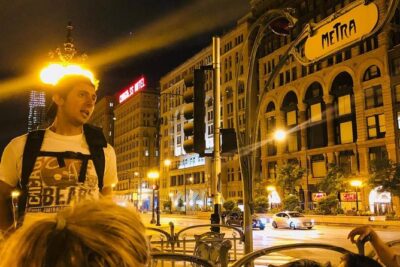
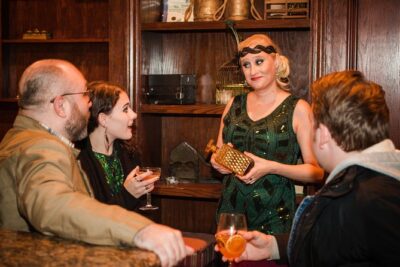
Haunted Chicago Booze and Boos Ghost Walking Tour
Read our review →

Embers of the Windy City: Chilling Chicago Ghost Tours
Read our review →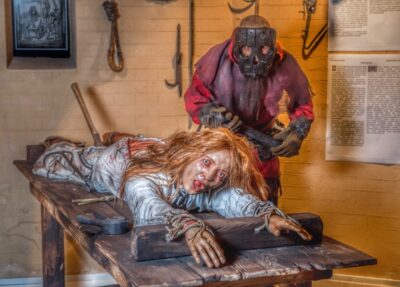
Chicago: Medieval Torture Museum Ticket with Ghost Hunting
Read our review →
Chicago: Ghosts & Hauntings of the Windy City Walking Tour
Read our review →
Chicago: Historic Gangsters & Ghosts Night Cruise
Read our review →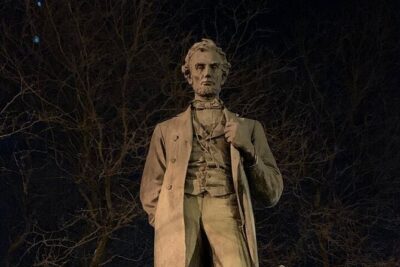
Browse the lists this tour appears in