
Review · GETTYSBURG
Spirits Speak Orphanage
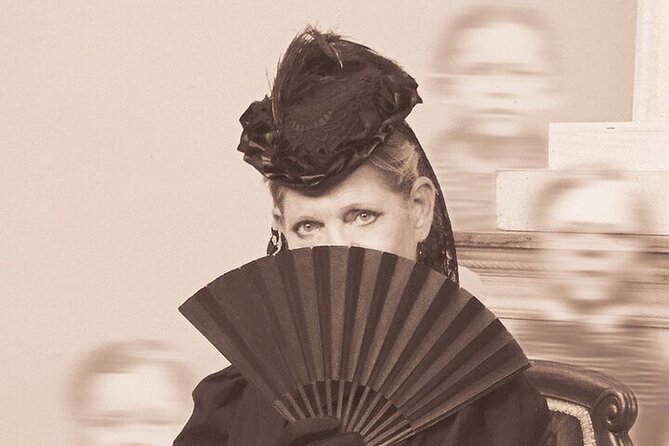
The most unsettling part of this Gettysburg experience is not a sudden ghostly trick. It is the story behind the building. The National Soldiers Orphanage began as a Civil War-era headquarters and hospital, then became a home for children whose fathers had died in the war. Your guide tells that story in character, often as Miss Rosa, an undertaker, or another figure tied to the site. The history comes first, and the paranormal questions follow.
I like two things here. First, the small advertised group size of 10 gives the guide room to involve you instead of shouting over a crowd. Second, the basement and cellar provide a genuinely somber final act, with optional EMF equipment and time to consider the stories for yourself. The main drawback is the theatrical style: if you want a quiet, evidence-based ghost investigation, some of the opening performance may feel too staged.
Key points to know before you book
- Civil War ground first: Begin near East Cemetery Hill, where heavy fighting took place during the Battle of Gettysburg.
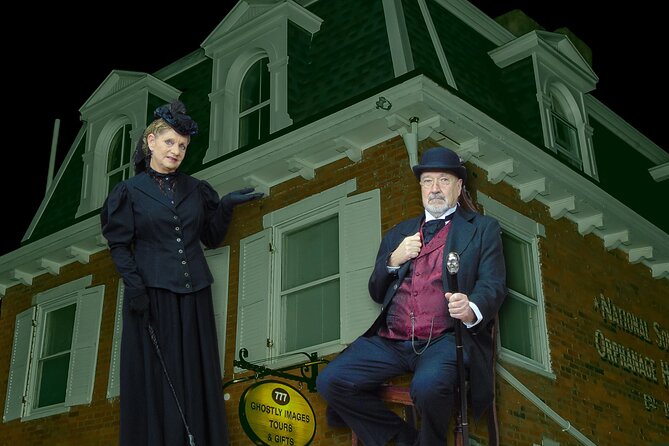
- A building with several past lives: See the homestead linked to General O. O. Howard, wartime hospital care, and the later orphanage.
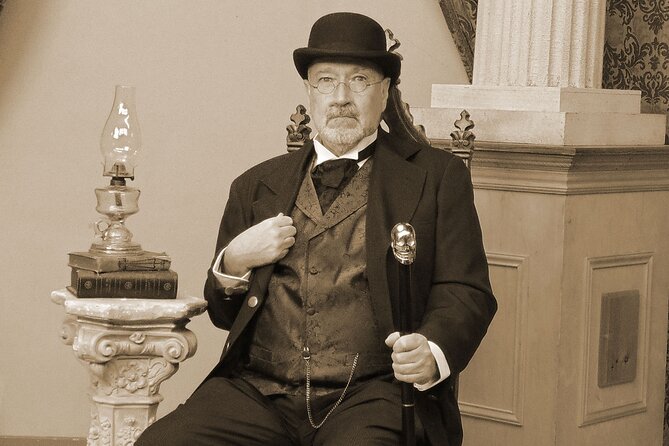
- Character-led storytelling: Guides such as Chris, Miss Rosa, Dr. John, Mike, Cheryl, and Tom use performance as part of the tour.
- The basement is the emotional center: Narrow, steep stairs lead to the cellar, where the stories become darker and optional paranormal tools may be used.
- Ninety minutes for $20: The price is reasonable if you want both local history and a ghost-tour format, not just a quick scare.
- Best for older children and adults: The material includes cruelty and abuse, and the stairs may be difficult for anyone with mobility limits.
Why the orphanage story matters in Gettysburg
Gettysburg is filled with battlefield tours, monuments, and military history. This experience takes a different route. It uses the war as a starting point, then follows the people left behind, especially children who lost fathers during the American Civil War.
That shift gives the tour its strongest purpose. You are not only hearing about troop movements or famous commanders. You are asked to think about what happened after the fighting ended, when a building connected to the war became an orphanage.
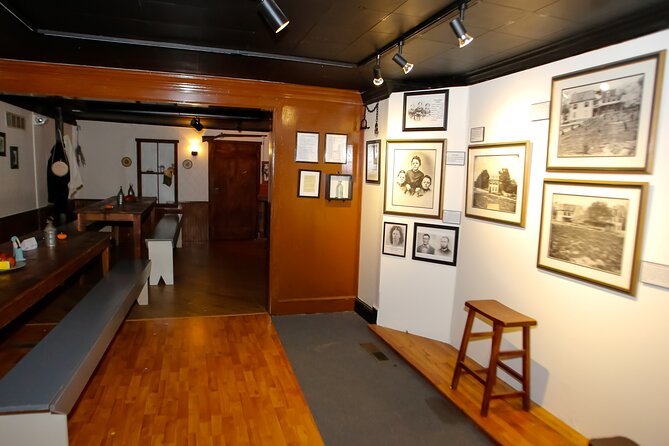
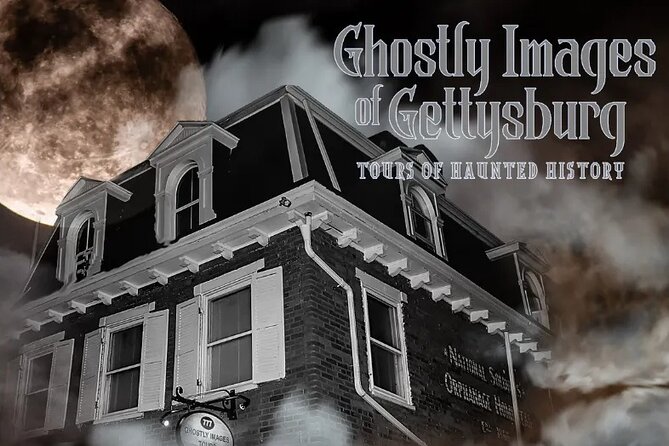
The National Soldiers Orphanage Homestead also carries several layers of Civil War history. During the battle, it served as headquarters for General O. O. Howard. It was then used as a hospital during and after the fighting. Later, it became an institution for children who had lost their fathers.
I like this setup because the ghost stories are tied to a real place with a documented connection to Gettysburg. You can enjoy the theatrical presentation, but you also have solid historical material to consider if you are not convinced by paranormal claims.
Other ghost walks and hunts we rate around Gettysburg
- Civil War Ghosts: Echoes of the Fallen Gettysburg Ghost Tour
★ 4.5 · 913 reviews - Echoes of War All Ages Ghost Tour
★ 5.0 · 658 reviews - Gettysburg: Ghost Hunt Tour with Ghost Hunting Equipment
★ 4.5 · 589 reviews
Starting at East Cemetery Hill
The tour begins at 778 Baltimore Street in Gettysburg and returns there at the end. Your guide first helps you get oriented around East Cemetery Hill, a location that saw heavy fighting during the Battle of Gettysburg.
This opening matters because it places the building in its wartime setting. You are not simply walking into an old house with a spooky reputation. You begin with the battlefield, the violence that took place nearby, and the role the property played during that crisis.
The first part also gives the guide a chance to establish the tone. Depending on who leads your group, you might meet a character such as Miss Rosa, an undertaker, Dr. John, or another costumed or performed figure. Chris has received especially strong praise for holding attention while blending historical detail with character work.
That style will suit you if you enjoy living-history presentations. The guide does not just list dates and names. The story is acted out, with the guide speaking as a person connected to the orphanage or its aftermath.
It can also be the tour’s most divisive feature. Some people find the theatrical introduction gripping. Others find it too dramatic and would prefer the guide to speak plainly from the start. You should book with the understanding that this is a character performance as much as it is a walking history talk.
Entering the former headquarters and hospital
Once you enter the National Soldiers Orphanage Homestead, the focus moves from battlefield context to the building itself. The same structure served different purposes across a short and painful stretch of American history.
As General O. O. Howard’s headquarters, it was tied to military command during the battle. As a hospital, it was connected to wounded people during and after the fighting. As an orphanage, it became a place where children lived after losing their fathers.
The guide uses those changes to build the central story. You hear about the adults and children connected to the orphanage, including the harsh treatment associated with Miss Rosa, the head of the institution. The material is not light. Stories of abuse, punishment, and suffering shape much of the tour.
That is important when deciding who should attend. One family found that a seven-year-old enjoyed the experience while a three-year-old was too young to understand it. Another detailed account recommended avoiding the tour for children under 12 because of the subject matter. The official information says most people can participate, but the emotional content is a separate concern from physical access.
I would think of this as an older-child and adult experience. A mature young person interested in history may find it gripping. A small child may simply become bored, confused, or frightened by the mood and subject matter.
The guide is part of the attraction
The guide can make or break this experience. Chris is praised for maintaining the role of Miss Rosa and for presenting the story with strong energy. Other guides have used characters such as Dr. John and Mike the undertaker.
Mike’s approach includes humor before the tour enters the cellar. That choice makes practical sense. The final section is described as depressing and emotionally heavy, so a few lighter moments earlier in the tour help prevent the whole experience from becoming unrelentingly grim.
Cheryl and Tom have also been singled out for clear explanations of the home and its ghostly stories. The common thread is engagement. You are likely to get more than a standard guide reading a script, though each guide may have a different balance of acting, history, and paranormal discussion.
If you are a history enthusiast, listen for the facts beneath the performance. If you like ghost tours, enjoy the character work but keep your expectations flexible. The experience is not presented as a laboratory investigation with controlled conditions. It is a guided story about a disturbing place, with room for possible spirit encounters.
Same old streets, another story to hear:
- Civil War Ghosts: Echoes of the Fallen Gettysburg Ghost Tour
★ 4.3 · 480 reviews - Ghost Tour: History and Haunts – Family Friendly – Best in Gettysburg
★ 4.5 · 378 reviews - Spirits of Jennie Wade Ghost Night Tour in Gettysburg
★ 5.0 · 310 reviews - Gettysburg: Ghost Hunt Tour with Ghost Hunting Equipment
★ 4.5 · 308 reviews
The cellar and basement are the strongest section
The basement is where the tour seems to find its clearest focus. The stories become darker there, including accounts of further abuse and torture suffered by the children. The setting gives those stories more weight than they would have in a bright room or on a busy street.
Some groups are offered an EMF reader and the chance to interact with possible spirits. You can take part, watch others, or simply treat the equipment as part of the evening’s atmosphere. The activity does not promise a paranormal event, and several people completed the tour without experiencing anything supernatural.
That uncertainty is part of the honest appeal. You may capture an unusual image, feel a touch, or notice nothing at all. A few visitors have described orbs or physical sensations, while others found the historical account more memorable than the ghost element.
The cellar also has practical limits. The stairs are narrow and steep, so anyone with mobility issues should think carefully before booking. The tour is described as roughly half walking and half sitting, but the basement access remains a real consideration.
For me, this is the place where the tour’s two sides meet. The setting supports the ghost-story mood, while the account of the children gives the experience its human weight. Even if you do not believe in spirits, the basement visit can still work as a sober piece of local history.
How much history versus paranormal content?
The balance may vary by guide and by group. The tour clearly includes the Civil War background, the building’s use as headquarters and hospital, and the orphanage’s treatment of children. Paranormal stories are woven through that material rather than replacing it.
That means you should not book this expecting 90 minutes of ghost-hunting equipment and unexplained activity. One disappointed participant felt the tour focused too much on the person who ran the orphanage and not enough on ghosts. That criticism is useful because it reveals the basic shape of the experience: the historical story is the spine, and the haunting claims sit around it.
I think that is a strength if you want substance. Gettysburg already offers plenty of spooky atmosphere, but a ghost tale connected to real wartime and institutional history gives you something to think about after the tour ends.
If you want a more direct paranormal experience, you might find the storytelling slow or overly theatrical. If you enjoy historical interpretation with a supernatural edge, the format should fit better.
Is $20 a fair price?
At $20 per person, this is a modestly priced 90-minute experience in a major historic destination. You are paying roughly $13 per hour, before considering the guide’s character performance, the building visit, the basement access, and the smaller advertised group size.
The value depends on what you want. For a quick ghost story with little context, $20 may feel high. For a guided visit that links East Cemetery Hill, General Howard, a wartime hospital, the orphanage, and the cellar, it is a fair price.
The small group limit is especially useful. A maximum of 10 people should let you hear the guide clearly and take part in discussion. One account described a group of 20 with enough room in the rooms, but the booking information sets the maximum at 10, so I would rely on that advertised limit when planning.
The tour is conducted in English and uses a mobile ticket. It is near public transportation, and service animals are allowed. The activity ends back at the starting point, which makes it easy to fit into an evening in Gettysburg.
You can cancel for a full refund up to 24 hours before the start time. Changes or cancellations made less than 24 hours ahead are not accepted for a refund.
Who should book this experience?
I would recommend it to adults who enjoy Civil War history, ghost stories, or live interpretation. It is also a good fit for families with older children who can handle descriptions of cruelty and loss.
You will get the most from it if you are comfortable with uncertainty. The guide may offer paranormal equipment and encourage interaction, but no supernatural event is guaranteed. Bring curiosity, not an expectation of proof.
This is less suitable for very young children. It is also a poor choice if you have trouble with steep, narrow stairs or want a fully quiet and factual presentation.
Book it if you like your ghost tours with a serious historical core and a touch of theater. Skip it if you want a polished haunted-house scare, a purely academic lecture, or a guaranteed paranormal encounter.
Should you book the Spirits Speak Orphanage?
I would book it as a distinctive second look at Gettysburg, especially after visiting the main battlefield sites. The tour connects military history with the civilians and children affected by the war, then carries that story into a dark basement where the atmosphere becomes much more intense.
The strongest reasons to go are the small-group format, the committed character guides, and the orphanage’s layered past. Chris, Miss Rosa, Mike the undertaker, Dr. John, Cheryl, and Tom each represent the kind of guide-led performance that gives this experience its personality.
Just know what you are buying. This is not nonstop ghost activity. It is a 90-minute historical story with acting, disturbing subject matter, and a chance to investigate possible spirits. If that mix sounds appealing, $20 is a sensible price for an evening that should give you more than a simple scare.
FAQ
Where does the Spirits Speak Orphanage tour begin?
The tour begins at 778 Baltimore Street, Gettysburg, Pennsylvania 17325.
Where does the tour end?
The experience ends back at the meeting point at 778 Baltimore Street.
How long does the tour last?
The tour lasts approximately 1 hour and 30 minutes.
How much does the tour cost?
The listed price is $20 per person.
What language is the tour offered in?
The tour is offered in English.
What is the maximum group size?
The advertised maximum is 10 participants.
Does the tour visit East Cemetery Hill?
Yes. Your guide begins by orienting you to East Cemetery Hill, an area connected to heavy fighting during the Battle of Gettysburg.
What is the National Soldiers Orphanage Homestead?
The building served as General O. O. Howard’s headquarters during the battle, was used as a hospital during and after the war, and later became an orphanage for children whose fathers died in the Civil War.
Are children allowed on the tour?
Children can attend, but the subject matter includes abuse, cruelty, and suffering at the orphanage. The experience may be more suitable for older children and adults.
Is the tour accessible for people with mobility issues?
The tour includes narrow, steep stairs leading to the basement, so it may not suit people with mobility limitations. Service animals are allowed, and most participants can take part according to the activity information.
Freshly reviewed haunts around Gettysburg
- Haunted Smart Phone App Location Aware Walking Tour in Gettysburg★ 4.5 · 8 reviews
- Gettysburg Ghost Hunt★ 4.5 · 31 reviews
- Spirits Speak Jennie Wade★ 5.0 · 33 reviews
- Historic Jennie Wade Birthplace Ghost Hunt w/ Equipment★ 5.0 · 6 reviews
- Gettysburg Haunted Tour by Bus★ 4.5 · 47 reviews
- Jennie Wade Birthplace Ghost Hunt with Equipment in Gettysburg★ 5.0 · 52 reviews
- Gettysburg Self-Guided Audio Ghost Tour★ 3.5 · 4 reviews
- Ghosts of Gettysburg Self-Guided Driving Audio Tour★ 4.0 · 77 reviews
Gettysburg Ghost Tours, compared.
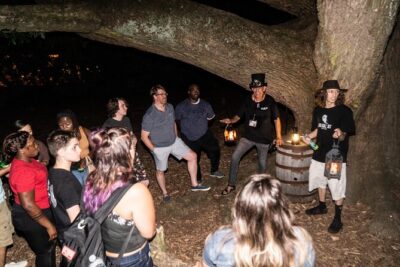
Civil War Ghosts: Echoes of the Fallen Gettysburg Ghost Tour
Read our review →
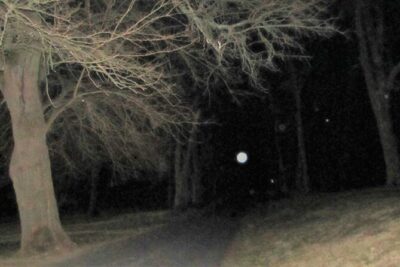
Gettysburg: Ghost Hunt Tour with Ghost Hunting Equipment
Read our review →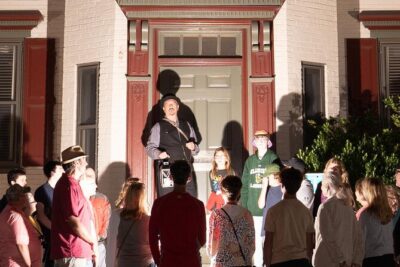
Ghost Tour: History and Haunts – Family Friendly – Best in Gettysburg
Read our review →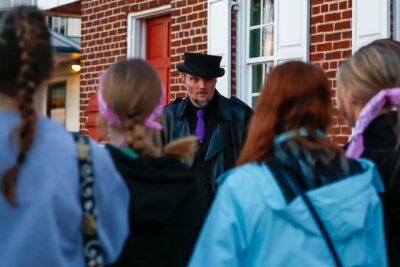
Spirits of Jennie Wade Ghost Night Tour in Gettysburg
Read our review →
Ghosts of Gettysburg Ultimate Dead of Night Haunted Ghost Tour
Read our review →
The Historic Welty House Ghost Hunt with Equipment
Read our review →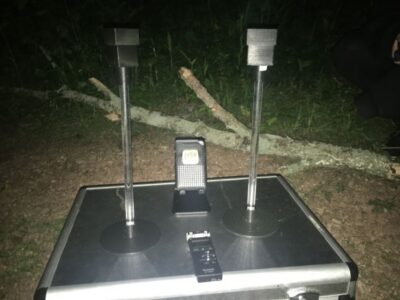
Gettysburg: Devil’s Hour Paranormal Investigation Tour
Read our review →Browse the lists this tour appears in