
Review · SEOUL
Seoul: Korea Dark History Tour at Seodaemun Prison
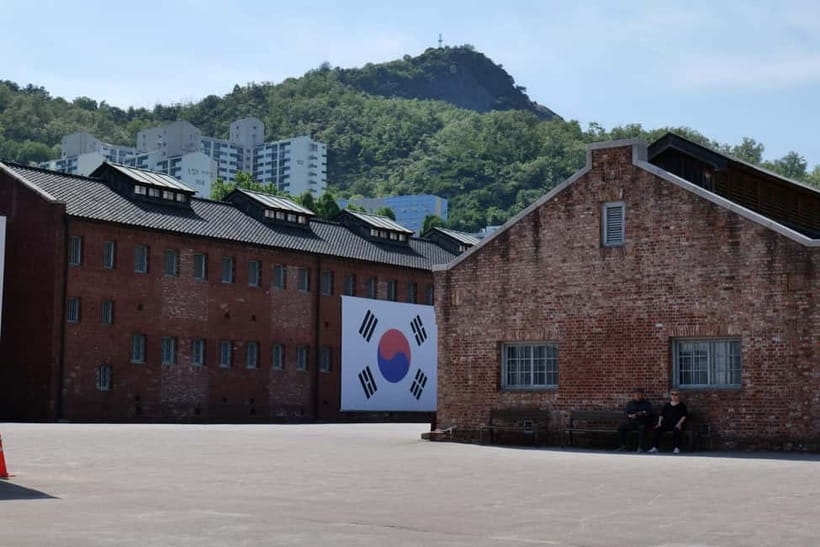
Seodaemun Prison is not a light sightseeing stop. Its preserved cells, punishment spaces, and stories of imprisoned independence activists show the human cost behind Korea’s road to freedom. The tour links the prison with Independence Gate, helping you see how political symbols and personal sacrifice fit together.
I like the small group limit of 10, which makes it easier to ask questions, and I like the generous 100 minutes inside the prison museum. Guides such as Bae Jung-hui are praised for clear explanations, strong English, and a warm welcome. The main consideration is emotional: this is a difficult place, not a quick photo stop.
Key points to know
- Independence Gate sets the political context: Spend about 20 minutes learning why this monument matters to Korea’s idea of self-rule.
- Seodaemun Prison gets most of the time: The guided visit lasts about 100 minutes and includes admission.
- Yu Gwan-sun’s story adds a human focus: Her courage as a 17-year-old student helps put the prison’s history into personal terms.
- Small groups make questions worthwhile: With no more than 10 people, you can ask for explanations and historical context.
- English and Japanese tours are available: Japanese is optional, while English is also offered.
- Wear good walking shoes: The experience involves walking between sites and through historic prison buildings.
Why Seodaemun Prison matters
Seoul can feel fast, polished, and future-facing. Seodaemun Prison brings you to a much more painful chapter, when Korea was struggling under Japanese colonial rule and independence activists were arrested, interrogated, imprisoned, and killed.
The site is not valuable simply because old buildings remain. It gives physical shape to events that can otherwise feel distant. A cell is small. A corridor is narrow. A punishment room is stark. These spaces make the subject immediate without needing grand displays or elaborate staging.
The tour also places the prison within Korea’s wider fight for independence and democracy. You are not just looking at a former jail. You are learning how resistance, sacrifice, and national identity became linked in the Korean story.
That context matters if your knowledge of Korean history begins with the Korean War, the economic rise of South Korea, or modern Seoul. This visit fills in the years before those events and helps explain why independence remains such an important part of public memory.
More Haunted Prison Tours in the world:
- Charleston Haunted Jail Night-Time Walking Tour with Admission to Old City Jail
★ 4.5 · 570 reviews - Adelaide: Ghosts, Dark Secrets and Paranormal Hunt Gaol Tour
★ 3.9 · 93 reviews - Adelaide Gaol Ghost Tour and Paranormal Investigation
★ 4.0 · 66 reviews
Starting at Independence Gate
The first stop is Dongnimmun Gate, also called Independence Gate. You spend about 20 minutes here with your guide.
The monument represents Korea’s wish to govern itself. Its design and location carry political meaning, and your guide explains how it relates to the country’s changing position in the late nineteenth and early twentieth centuries. I like this beginning because it gives you an idea to carry into the prison: independence is not an abstract slogan here. It is a national goal that came with real risk.
This stop is relatively brief, so do not expect a full architectural lecture. Its purpose is to establish the setting and explain the symbol before you enter Seodaemun Prison. A guide is especially useful because the meaning of a gate can be easy to miss if you only pause for a photograph.
The walking portion also helps you shift gears. You leave the ordinary rhythm of Seoul behind and begin focusing on the people and events that shaped the site. Keep your shoes comfortable, since this is a walking tour and the ground around historic buildings may not feel as easy as a smooth city sidewalk.
Inside Seodaemun Prison History Hall
The prison visit lasts about 100 minutes, making it the heart of the experience. Admission is included, and the guide leads you through the history hall and preserved prison areas.
You can expect a serious presentation of the prison system and the people held there. The buildings and cells are not treated as empty relics. Your guide explains what happened in them and why the site remains important to Korea’s national memory.
This is where the quality of the guide matters most. Several guides could point out the same walls, but a good guide connects them to a clear sequence of events. Jimin, a guide praised for explaining history in chronological order and picking out the important points, represents the kind of structure you need here. Without explanation, much of the site can look like a collection of rooms. With it, the place becomes a story about control, resistance, and endurance.
The 100-minute schedule is a good balance. You have enough time to listen, look closely, and ask questions without rushing through every stop. It also means the tour does not reduce the prison to a quick visit followed by a souvenir-shop exit.
The human story of Yu Gwan-sun
One of the most affecting parts of the visit is the story of Yu Gwan-sun, a 17-year-old student who became a national symbol of courage.
Her age is important. It makes the history easier to grasp on a human level, especially when you are standing in a place associated with imprisonment and punishment. You are not only hearing about political movements or famous leaders. You are hearing about a young person who took a dangerous stand and paid a heavy price.
Your guide uses personal stories like hers to keep the tour from becoming a list of dates. That approach is one of the strongest reasons to book a guided visit instead of walking through the museum alone. A display can provide facts, but a local storyteller can explain why one person’s actions still matter.
The subject is painful, and the tour does not try to soften it with entertainment. You should be ready for accounts of suffering and sacrifice. That seriousness is appropriate, but it may not suit everyone in your group, especially young children or anyone looking for a relaxed afternoon activity.
More Dark History Tours in the world:
- Adults-Only New Orleans Ghost, Crime, Voodoo, and Vampire Tour
★ 5.0 · 6,545 reviews - Edinburgh: Dark Secrets of the Old Town Ghost Walking Tour
★ 4.6 · 1,671 reviews - New Orleans Adults-Only True Crime and Ghost Walking Tour
★ 5.0 · 1,666 reviews - Genteel and Bard’s Savannah Dark History and Ghost Encounter Walking Tour
★ 5.0 · 1,546 reviews
Why a small group helps
The group is limited to 10 people. That size matters at a place where questions often matter as much as the prepared explanation.
You can ask about a particular display, clarify a point about Korea’s independence movement, or request more context about the prison’s role. The experience is not designed as a large crowd moving from one sign to the next. A small group gives the guide room to respond.
This was especially useful for people who wanted more than a standard explanation. One guide was praised for answering questions with valuable historical perspective, while Bae Jung-hui was described as welcoming, careful, and able to explain details clearly. Those qualities make a serious site easier to approach.
The small group also creates a quieter mood. You are less likely to feel lost in a crowd, and the guide can check that everyone understands the timeline. If you prefer to remain anonymous and move at your own speed, a self-guided visit may suit you better. If you want conversation and interpretation, this format has a clear advantage.
The guide makes or breaks the visit
The tour is led in English or Japanese, with Japanese available as an optional language. The guide’s role goes well beyond pointing out buildings.
You need someone who can explain the order of events, distinguish political changes from personal stories, and answer questions without losing the thread. The strongest feedback about this experience focuses on those exact traits: clear explanations, good historical command, fluency, kindness, and patience.
Bae Jung-hui is one named guide associated with the experience. She has been praised for making people feel welcome while covering the prison’s history in detail. Another important strength is the ability to explain difficult material in a way that feels understandable rather than academic.
The tone also appears to be personal. One person described being treated warmly, almost like family, while another noted that the guide remained helpful even in poor weather and shared a UV umbrella. Small gestures do not change the history, but they can make a two-hour visit more comfortable.
Because guides can vary, you should focus on the service format rather than expect one specific person every time. The supplied information identifies Bae Jung-hui, but it does not guarantee that she will lead every departure.
What the $31 price gets you
At $31 per person, this is a modestly priced history tour by Seoul standards. The price includes the guided experience and admission to Seodaemun Prison, but not meals, drinks, or transportation to and from the attractions.
The value comes from the interpretation. If you simply want to enter the prison and read signs at your own pace, you may prefer to buy admission separately if that option is available. But the tour gives you a local guide, a planned route, historical context, and time for questions.
The 100-minute prison visit is important here. You are not paying for a short introduction followed by a rushed exit. Most of the two-hour experience is spent at the main site, where the explanation is most useful.
I consider the price fair for visitors who want to understand what they are seeing. It is less compelling for someone who has little interest in modern Korean history or who dislikes emotionally heavy museums. This is a focused history experience, not a general Seoul highlights tour.
Timing, meeting points, and practical comfort
There are two possible starting locations listed as 102-55 and 102-6, and the meeting point can vary according to the option booked. Check your confirmation carefully before setting out, especially since the tour finishes at 102-6.
Transportation to the sites is not included. You need to make your own way to the meeting point and plan your return after the visit. The tour lasts two hours, so it can fit neatly into a half-day plan, but allow extra time around it if you do not know the area.
Wear comfortable walking shoes. You will walk between the starting point, Independence Gate, and the prison complex, then move through historic buildings and museum areas. The tour is not suitable for wheelchair users, so anyone with mobility concerns should take that limitation seriously before booking.
Alcohol and drugs are not allowed. The setting also calls for respectful behavior, since you are visiting a place tied to imprisonment, torture, and death.
You can cancel up to 24 hours before the start for a full refund. The reserve-now, pay-later option is useful if your Seoul schedule is still changing, since you can hold a place without paying at the time of booking.
Who should book this experience
I would choose this tour if you want to understand Korea beyond palaces, shopping districts, and modern design. It suits history-minded adults, students, and anyone who wants a stronger sense of how Korean independence and democracy were shaped.
It is also a good choice if you prefer personal stories to a wall of dates. Yu Gwan-sun’s story gives the visit an emotional center, while the prison buildings provide the setting.
You may want to skip it if you are looking for a cheerful or easygoing attraction. The subject is dark, and the visit can be emotionally intense. It is also not the best fit if you need step-free access or want to explore independently without a set pace.
The English and Japanese options make it practical for international visitors, and the small group format is helpful if you want to ask questions. The tour has received perfect scores across 11 listed evaluations, with repeated praise for the guides’ clarity, kindness, and historical skill. That pattern supports the idea that the guide is the central value of the experience.
Should you book the Seodaemun Prison tour?
Book it if you want a serious, well-explained look at Korea’s struggle for independence and democracy. The combination of Independence Gate, Seodaemun Prison, a 100-minute guided museum visit, and a small group gives you far more context than a quick solo walk-through.
The strongest reason to go is not the architecture alone. It is the way a good guide connects the rooms to real people, especially Yu Gwan-sun and the many activists imprisoned there. At $31, the tour is good value for a visitor who wants history explained clearly and personally.
Skip it only if dark subject matter, walking, or limited accessibility will make the visit uncomfortable. For everyone else, this is one of Seoul’s most useful history stops, and a thoughtful way to understand the struggles behind modern Korea.
FAQ
How long does the tour last?
The tour lasts two hours. About 20 minutes are spent at Independence Gate, followed by about 100 minutes at Seodaemun Prison History Hall.
What is included in the price?
The price includes the guided tour and admission to Seodaemun Prison. Meals, drinks, and transportation to and from the attractions are not included.
What languages are available?
The tour is offered in English and Japanese. Japanese is listed as an optional tour language.
Where does the tour start?
There are two possible starting locations, listed as 102-55 and 102-6. The exact meeting point can vary according to the option booked, so check your booking details.
Where does the tour finish?
The tour finishes at 102-6.
Is the tour suitable for wheelchair users?
No. The experience is not suitable for wheelchair users.
Can I cancel the booking?
Yes. You can cancel up to 24 hours in advance for a full refund. A reserve-now, pay-later option is also available.
Ghost walks heavy on history around the world
- Savannah History and Haunts Candlelit Ghost Walking Tour
★ 5.0 · 3,235 reviews - Stockholm: Ghost Walk and Historical Tour
★ 4.7 · 2,685 reviews - New Orleans Small-Group Haunted History Carriage Tour
★ 4.5 · 2,289 reviews - New Orleans Haunted History Ghost Tour
★ 4.5 · 2,084 reviews
Freshly reviewed haunts around the world
- New Orleans French Quarter Dark History, Haunts, and Laughs Tour★ 5.0 · 30 reviews
- New Orleans’ Finest Haunted Pub Tour★ 4.5 · 38 reviews
- Cheers New Orleans! Cocktails, History, Voodoo & Paranormal Tour★ 4.0 · 4 reviews
- Haunted Drunken History Tour from New Orleans★ 5.0 · 135 reviews
- The Original Asbury Park Ghost Tour★ 4.5 · 29 reviews
- Destrehan Plantation Haunted Night Tour★ 4.5 · 100 reviews
- New Haven’s Ghost Walk★ 3.5 · 69 reviews
- Ghosts of Tonopah Haunted History GPS/APP Smartphone guided Walking Tour outside★ 4.5 · 7 reviews
Seoul Ghost Tours, compared.

Seoul: Evening Dark History, Folklore & Ghost Story Walking Tour
Read our review →
Seoul: Dark Side of the City and Ghost Stories Walking Tour
Read our review →
Blood & Tears: Korea Dark History Guided Walking Tour
Read our review →Browse the lists this tour appears in