
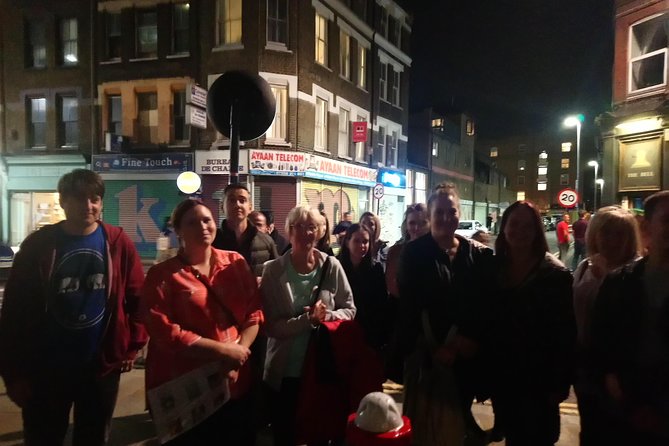
Review · LONDON
Jack the Ripper Walking Tour with Expert Ripperologist
The most striking part of this Jack the Ripper walk is its route through the actual streets where the 1888 murders unfolded. You move from Aldgate into Whitechapel, across old police boundaries, through narrow lanes, and past places tied to victims, clues, and suspects.
I like the use of a 14-inch backlit tablet, which lets you compare modern streets with photographs and drawings from the period. I also like the attention given to the women who were murdered, rather than treating the killer as a celebrity. The main drawback is the group size, which can reach 30 people and may feel crowded at busy stops.
Key points to know before booking
- Mitre Square and Hanbury Street bring you to two of the most important murder locations.
- Lindsey, Jenny, and Paul are among the guides praised for clear storytelling and strong period knowledge.
- Victim photographs and site images are shown on a large tablet, so the story is easier to follow.
- The walk lasts about two and a half hours, with long periods of standing and no reliable toilet access.
- The route crosses the old City and Metropolitan police boundary, an important detail in understanding the investigation.
- The tour suits dark-history fans aged 15 and over, but it is not a gentle ghost walk or a family outing.
From Aldgate Station into Whitechapel

Meet outside Aldgate Station on Aldgate High Street. The tour opens at St Botolph’s Church, sometimes called the Prostitutes Church because women once solicited on the island where the church stood.
This first stop is brief, but it sets the tone. The guide does not begin with lurid tales. Instead, you get a picture of the social conditions that shaped Whitechapel in 1888: poverty, crowded housing, street crime, and people living close to the breadline.
That context matters. The murders did not happen in a theatrical vacuum. The women had limited options, the streets were poorly lit, and the area was difficult for police to control. I appreciate that the tour links the crimes to the lives and surroundings of the victims.
At Aldgate Square, the guide explains what daily life was like in the overcrowded district. This is one of the better uses of a walking tour. You can look around at the modern city while hearing how sharply the same streets once differed.
More Ghost Walking Tours in London
- London: The Original Jack the Ripper Walking Tour
★ 4.7 · 7,833 reviews - London Jack The Ripper Guided Walking Tour
★ 5.0 · 3,131 reviews - London: Jack the Ripper Evening Walking Tour
★ 4.9 · 1,449 reviews
Mitre Square and the night of the double event
The route continues to Mitre Street and Mitre Square, just inside the City of London boundary. This is where the story of Elizabeth Stride, known as Long Liz, is introduced.
The guide explains that Stride was killed on the night often called the double event. A short distance away, Catherine Eddowes was murdered roughly 45 minutes later. Standing near these locations helps you understand the geography and the short time between the two crimes.
This stop also introduces an important practical point about the investigation. The City of London and the Metropolitan Police controlled different areas. That division affected communication, jurisdiction, and the way officers handled the case.
You are not simply shown a plaque or a modern building and told that something happened here. The route asks you to picture the movement between locations, which gives the timeline more force. At the same time, modern construction means you should not expect every setting to look exactly as it did in 1888.
Petticoat Lane and the police boundary
At Petticoat Lane Market, now called Middlesex Street, the guide points out the old boundary between the City and the Metropolitan area. It is a small geographical detail, but an important one.
This is where the tour shifts from individual murders to the structure of the investigation. Two police forces worked across neighboring districts, and the boundary could complicate the hunt for the killer.
The market area also gives you a sense of how the district has changed. The walk is not a preserved Victorian set. It is a working part of London, with modern streets and commerce layered over older events.
Goulston Street and the clue on the wall
The next stop is Goulston Street, where the guide shows you the doorway linked to the only clue found along the police route that night.
This section is especially useful for anyone who knows the case mainly through films and television. You hear how officers followed the trail and why the clue mattered. The guide uses photographs and other images on the tablet to show what the area and evidence looked like at the time.
The visual material is one of the strongest features of this tour. Lindsey, one of the guides, was praised for using clear images to help explain the difference between the modern location and the 1888 setting. You do not have to rely on imagination alone.
Be prepared for difficult images. The tablet includes photographs of victims and murder sites. That makes the presentation more direct, but it also means this walk is not suitable for anyone uncomfortable with graphic material.
More Ghost Walking Tours in the UK
- London: Ghost Walk and River Thames Boat Ride
★ 4.5 · 1,251 reviews - London Jack The Ripper Small-Group Walking Tour
★ 5.0 · 1,013 reviews - Ghastly Ghost Walking Tour in London
★ 5.0 · 878 reviews - London: Ghastly Ghosts 2-Hour Walking Tour
★ 4.9 · 794 reviews
Gunthorpe Street and Martha Tabram
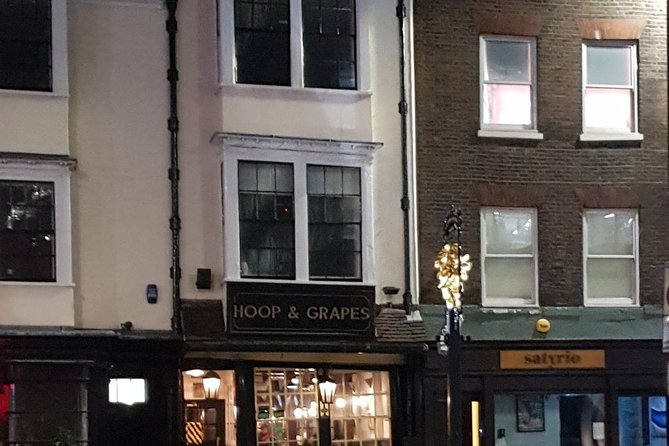
From Wentworth Street, you look toward Gunthorpe Street and the site where Martha Tabram was found murdered in George Yard Buildings on August 7, 1888.
The tour presents Tabram as the likely first victim connected to Jack the Ripper, while also treating the question as part of the wider debate. This gives the walk room to discuss how the list of victims was formed and why some cases remain disputed.
I like this stop because it broadens the story beyond the most famous five victims. The case is not only about the murders most often repeated in popular culture. It also involves uncertain evidence, changing theories, and victims whose names are less familiar.
Thrawl Street and Mary Ann Nichols
The route then reaches Brick Lane and stops opposite the Frying Pan pub at the corner of Thrawl Street. Here you hear about Mary Ann Nichols, who is said to have had her last drink at the pub before walking toward Whitechapel Road.
Her body was found in Bucks Row, behind Whitechapel Station. The guide uses the route itself to explain the movement from the pub toward the murder site.
This is a good example of how the walk connects small details to the larger story. A last drink, a familiar road, and a short journey become part of the timeline. The details can be unsettling, but the guide’s focus remains on the victim and the circumstances around her death.
Hanbury Street and Annie Chapman
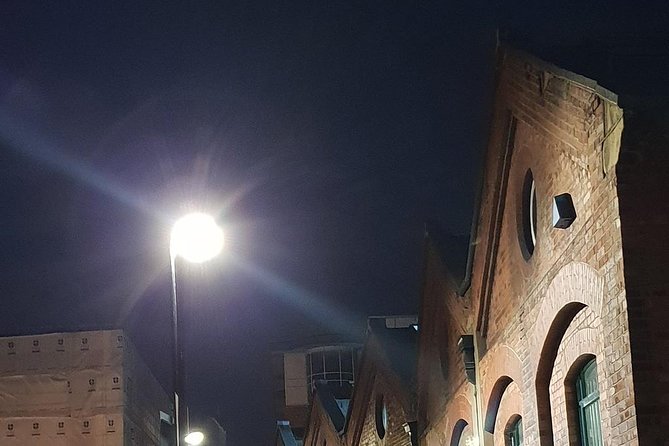
At Hanbury Street, the group turns off Brick Lane to hear about Annie Chapman, who was murdered in the backyard of number 29.
This is one of the key locations on the route. The guide explains the setting and the evidence connected with the crime, while the tablet provides images to make the place easier to picture.
The modern street does not recreate the Victorian courtyard, so you need to listen closely rather than expect a preserved crime scene. Even so, being in the same general location gives the story a physical anchor.
The walk can feel crowded here if the group reaches the narrow street together. A microphone is used to help people hear, but staying near the guide is still wise.
Wilkes Street and the Dear Boss letter
Wilkes Street offers one of the more atmospheric portions of the route. It is described as a street little changed since the 1800s, and the group continues toward Puma Court.
Here the guide discusses the Dear Boss letter, one of the famous pieces of correspondence associated with the Ripper case. The letter helped shape the killer’s public image, though its role in identifying the actual murderer remains uncertain.
This part works best if you are interested in the way the case developed through newspapers, letters, and public fear. It also shows how the Ripper story became more than a police investigation. It became a public spectacle.
The Ten Bells and Itchy Park
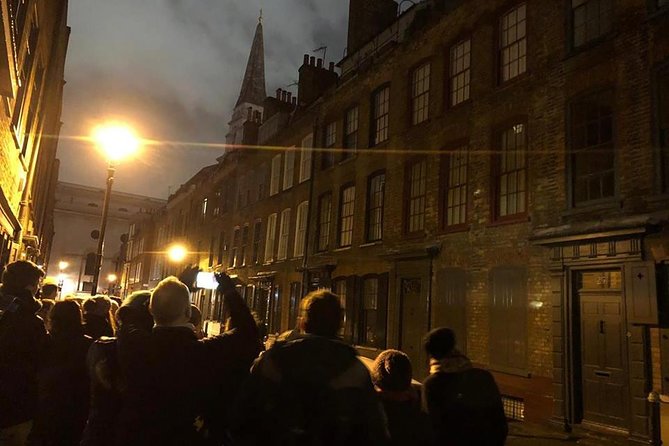
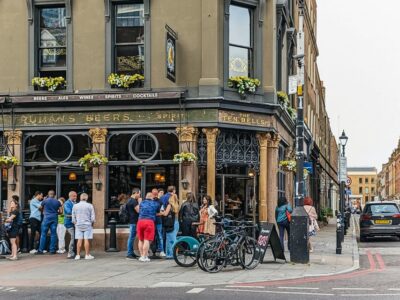
The group stops opposite the Ten Bells, often linked with Mary Kelly, and looks toward Christchurch Graveyard. The graveyard was known as Itchy Park, where homeless people slept during the day.
The Ten Bells is still a pub, but the visit is from outside. Do not expect a pub stop or included drink. The value here is the connection between a familiar London building, the victims, and the poverty of the neighborhood.
The reference to Itchy Park adds another piece of social context. The area was not simply a place where crimes happened. It was also a place where people without secure housing tried to sleep, gather, and survive.
This is one of the tour’s more human moments. The guide’s strongest material is not only about the killer. It is about the people living in the district and the harsh conditions that shaped their choices.
Old Spitalfields Market and the Whitechapel Vigilance Group
Near Old Spitalfields Market, the route pauses at the entrance to the London Fruit and Wool Exchange. Here the guide discusses a letter sent to George Lusk, head of the Whitechapel Vigilance Group.
Lusk and the local vigilance effort show how residents responded when official policing seemed unable to stop the murders. The group’s involvement adds another layer to the story, with local people trying to patrol streets and protect their neighborhood.
The market area also makes a useful pause before the final section. You are still walking, but the route has moved from individual locations toward the larger public reaction to the crimes.
The final stop and Mary Kelly
The tour ends in the square behind the London Fruit and Wool Exchange. The final story concerns Mary Kelly, presented here as Jack the Ripper’s last victim, murdered on November 9, 1888.
The ending is deliberately grim. It does not finish with a ghost story or a neat solution. Instead, it leaves you with the unresolved nature of the case and the human cost behind the legend.
From the end point at 66 to 68 Bell Lane, it is about a five-minute walk to Liverpool Street Station. Your guide directs you to the station, where several Underground lines are available.
How the guiding style shapes the experience
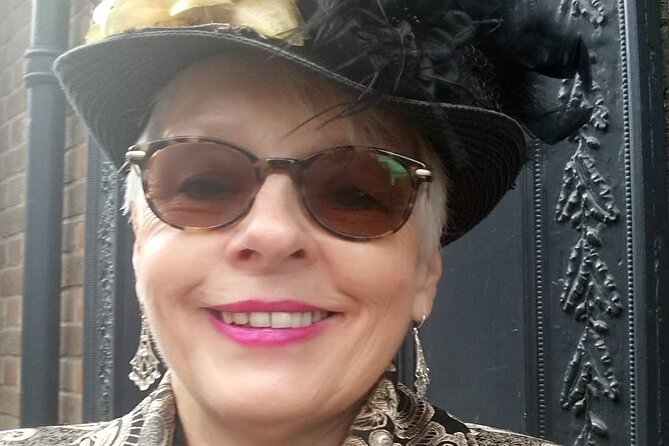
The guide is central to this walk. Lindsey is praised for combining strong research with an upbeat, occasionally witty manner. Jenny is described as punctual, clear, and good at correcting the Hollywood version of the case. Paul is also singled out for an engaging presentation.
Costume adds a little theater without turning the tour into a stage show. That balance matters. The subject is grim, and excessive performance would quickly become distasteful.
The most important strength is the focus on the victims. The guide presents the women as people caught in difficult circumstances, not just names in a murder puzzle. That approach gives the walk more weight.
You will also hear some discussion of suspects, especially near the end. If your main interest is a detailed examination of every suspect theory, you may find that the tour spends more time on the victims, the neighborhood, and the investigation. A private tour is available if you want more individual attention or a different balance of topics.
Price, group size, and practical comfort
At $23.61 per person, the tour offers good value for a two-and-a-half-hour guided walk in central London. You get a full route, a specialist guide, visual material, and a clear connection between locations. There are no admission fees built into the route, but most stops are viewed from public streets.
The group can reach 30 people. That is not ideal for a narrow-lane walking tour, especially if you want to ask many questions. The microphone helps, and the guide’s tablet makes the material visible, but you should stay close enough to see and hear.
You need a moderate level of fitness. Expect to walk and stand for more than two hours, with very limited toilet access. Wear comfortable shoes and plan accordingly before starting.
The tour is offered in English and accepts mobile tickets. It is near public transport at both ends, which makes it easy to fit into a day in London. No children under 15 are allowed, and anyone aged 16 or 17 must be accompanied by an adult.
Free cancellation is available up to 24 hours before the start time. If the minimum number of participants is not reached and the tour is canceled, you are offered another date or experience, or a full refund.
Should you book this Jack the Ripper walk?
Book it if you want a serious, location-based look at the murders, the victims, and the social conditions of Whitechapel. The route is strongest when the guide connects a street corner to a timeline, a police boundary, or a woman’s final movements.
It is also a good choice if you only know the case through popular culture. The walk adds police procedure, local poverty, competing theories, and lesser-known victims such as Martha Tabram.
Skip it if you dislike graphic images, cannot stand and walk for two or more hours, or want a small group with a long discussion of suspects. For most dark-history fans, though, the clear visuals, strong guides, and direct route through Whitechapel make this a worthwhile London evening activity.
FAQ
How long does the Jack the Ripper Walking Tour last?
The tour lasts approximately two hours and 30 minutes.
Where does the tour start?
It starts at Aldgate Station on Aldgate High Street, London EC3N 1AH.
Where does the tour finish?
It finishes at 66 to 68 Bell Lane, in the square behind the London Fruit and Wool Exchange. Liverpool Street Station is about a five-minute walk away.
Is the tour offered in English?
Yes. The tour is offered in English.
Are children allowed on the tour?
Children under 15 are not allowed. Participants aged 16 or 17 must be accompanied by an adult.
How large can the group be?
The maximum group size is 30 people. A microphone is used to help the group hear the guide.
Is the tour suitable for people with limited mobility?
The tour is not recommended for people who cannot walk and stand for more than two hours. There are also very limited toilets along the route.
More Jack the Ripper Tours in London
- London Jack the Ripper Guided Tour with Ripper-Vision
★ 4.5 · 4,840 reviews - London: Jack the Ripper Small Group Tour
★ 4.7 · 3,159 reviews - London: Jack the Ripper Tour with Immersive Ripper Vision
★ 4.5 · 1,840 reviews - German Language : Original Jack the Ripper Tour
★ 4.6 · 1,805 reviews
Freshly reviewed haunts around London
- Ghosts, Gore & Other Ghasty Stories in the City of London★ 5.0 · 7 reviews
- Visit Jack the Ripper in French★ 5.0 · 33 reviews
- The Haunted Pubs of Old London: Small Group Tour★ 5.0 · 38 reviews
- Afternoon Jack the Ripper : Guided Tour★ 5.0 · 183 reviews
- Wicked Whitechapel: Where Now’s Jack The Ripper Audio Tour★ 5.0 · 2 reviews
- The Fading Light London Ghost Walk★ 5.0 · 35 reviews
- The Ghosts of the secret alleyways of old London town★ 5.0 · 2 reviews
- Dark History of the Tudors: Private Tour of Hampton Court Palace★ 5.0 · 10 reviews
London Ghost Tours, compared.
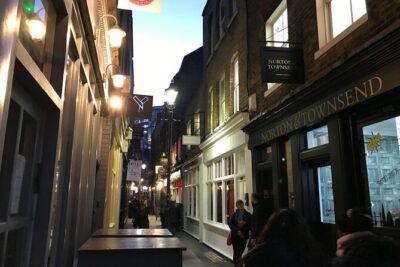
London: The Original Jack the Ripper Walking Tour
Read our review →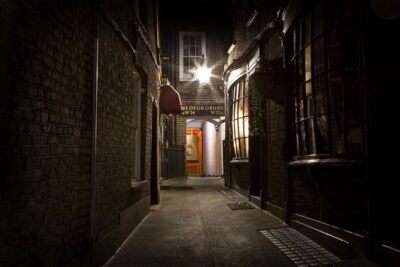
London Jack the Ripper Guided Tour with Ripper-Vision
Read our review →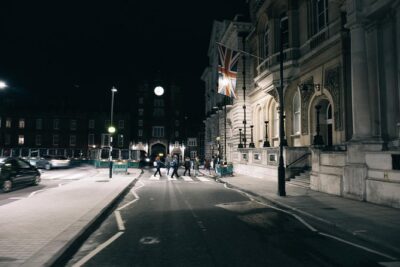
Ghost, Ghouls and Gallows Tour : Guided Tour with Boat Ride
Read our review →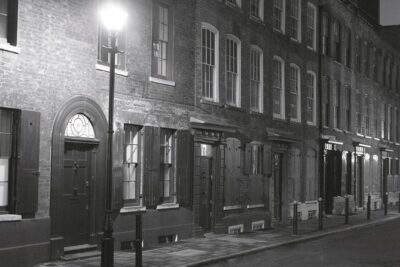
London: Jack the Ripper Tour with Immersive Ripper Vision
Read our review →
German Language : Original Jack the Ripper Tour
Read our review →Browse the lists this tour appears in