
Review · LONDON
Jack The Ripper Walking Tour of London
Jack the Ripper’s crimes are still wrapped in mystery, but this Whitechapel walking tour does more than chase a famous killer. It places the murders in the poverty-stricken East End of 1888 and gives needed attention to the women who were killed.
I like two things right away: the route links real locations with clear clues, and the guides keep the tone thoughtful rather than turning murder into cheap entertainment. Guides such as Carolina and Adam are praised for their context, energy, and lesser-known facts. The main drawback is the subject itself. This is a serious walk involving murder and prostitution, and the pace and uneven city streets may not suit children, prams, or anyone with limited mobility.
Key points to know before you book
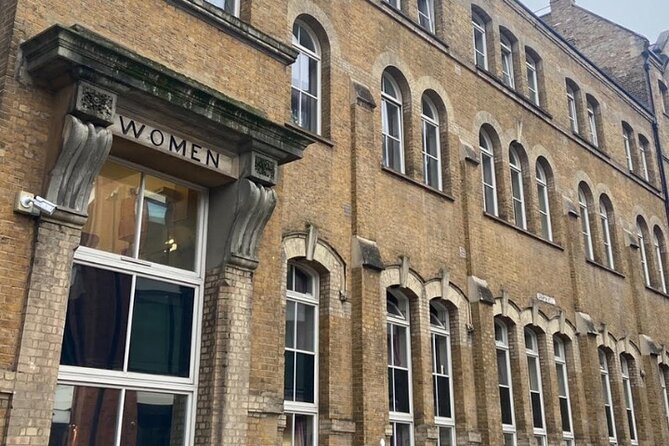
- Real Whitechapel locations: Visit Goulston Street, the Ten Bells, Spitalfields, Brick Lane, and other places tied to the 1888 crimes.
- Victim-focused storytelling: The tour gives attention to the women killed, their lives, and the difficult conditions of Victorian East London.
- Strong guide-led discussion: Carolina and Adam are noted for clear explanations, respectful delivery, humor, and lesser-known facts.
- A compact London walk: The experience lasts about 2 to 3 hours and ends at the Ten Bells pub.
- Good value at $19.41: You get a guided history walk, crime scenes, theories, and East End landmarks without extra admission charges.
- Plan for mature themes: The content includes murder and prostitution, and the walk is not suitable for prams or people with walking difficulties.
Why this tour works better than a crime story alone
The Jack the Ripper story is easy to reduce to suspects, coded letters, and grisly crimes. That approach can be entertaining, but it misses the setting. Whitechapel in 1888 was marked by poverty, overcrowding, and social unrest. The tour uses the streets to explain how difficult daily life was in the East End.
That context matters. The murders did not happen in an empty historical backdrop. They happened near homes, pubs, churches, markets, and busy streets used by working people. Seeing those places helps you understand why the crimes caused such fear and why the case drew attention far beyond London.
I also appreciate the attention given to the victims. The women are not treated only as names in a murder puzzle. Their connection to the area, the places they visited, and the conditions around them form an important part of the story.
The guide-led format is useful here. A good guide can separate known evidence from later speculation, explain the leading theories, and point out where the mystery becomes uncertain. Carolina is described as quick-speaking but easy to follow, while Adam is praised for friendly conversation, energy, and strong historical context. The exact guide may vary, but the experience depends heavily on this personal storytelling.
More Ghost Walking Tours in London
- London: The Original Jack the Ripper Walking Tour
★ 4.7 · 7,833 reviews - London Jack The Ripper Guided Walking Tour
★ 5.0 · 3,131 reviews - London: Jack the Ripper Evening Walking Tour
★ 4.9 · 1,449 reviews
Starting at Aldgate Station
The meeting point is Aldgate Station, not Aldgate East. That distinction matters, since the two stations are close enough in name to cause confusion. Meet next to Hotel Saint at 9 Aldgate High Street, with the guide identified by a yellow umbrella.
This is a practical starting point. Aldgate places you close to the eastern edge of the main story, and the route then moves through Whitechapel and Spitalfields. You do not need to spend time finding scattered locations on your own.
The group can include up to 25 people. That is not a private tour, but it is still a manageable size for a walking talk. Stay close to the guide, especially around city streets and busy public areas. The tour uses a mobile ticket, and confirmation is provided when you book.
Wear comfortable shoes. The walk lasts around two to three hours, and the experience is not suitable for people with walking or mobility difficulties. Prams, buggys, and strollers are also not suitable for this route.
Whitechapel and the East End in 1888
The main portion of the walk takes place in Whitechapel, the area most closely linked with the Ripper crimes. The tour explains the district as a densely populated part of London shaped by poverty, overcrowding, and unrest.
This opening section takes about two hours, so expect Whitechapel to receive much more attention than the shorter stops listed along the route. That is a good thing. The setting deserves time, and the story makes little sense without it.
You will hear about the unidentified killer who murdered at least five women in the area. The guide also covers the fear that spread through Victorian London and the clues that still fuel debate over the killer’s identity.
The strength of this section is the balance between place and story. Instead of rushing from one address to another, you get a picture of the neighborhood and the people who lived and worked there. The guide may use photographs and other visual material to clarify the period and the case.
If you already know the basic story, do not assume there is nothing new to learn. One review describes the tour as adding facts even after the participant had watched two documentaries about Jack the Ripper. That suggests the walk works for both newcomers and people who have already spent time with the case.
The Ten Bells and the pub connection
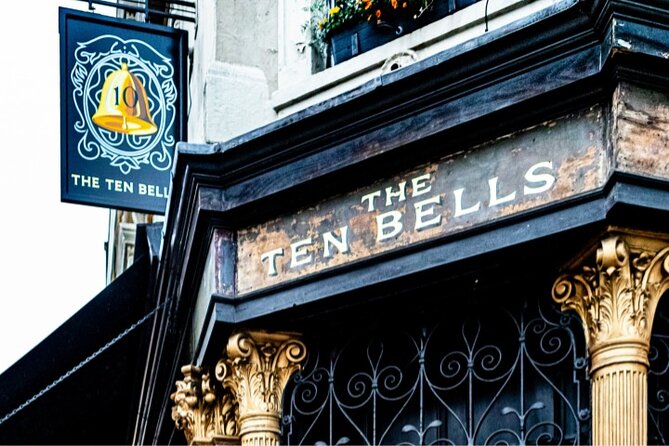
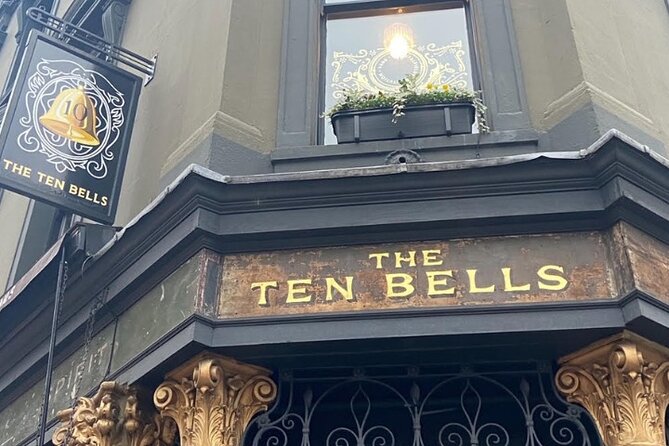
The Ten Bells is the most famous stop on the route. You spend about 10 minutes learning about the women who visited the pub before their deaths and considering the question of whether Jack the Ripper may also have been there.
The Ten Bells is the final destination, so the walk returns to it at the end. This gives the tour a clear shape. You hear about the pub as part of the case, then finish at the actual building.
The experience does not include a drink, and admission is free. You can choose to stay afterward for a pint, but that is separate from the tour. The pub is described as warm and lively rather than gloomy, which can be a welcome change after two hours of dark material.
That contrast is useful. The modern Ten Bells is a working pub, not a preserved crime scene frozen in time. Its present-day atmosphere helps you see how London places can carry a serious past while continuing to serve ordinary daily life.
More Ghost Walking Tours in the UK
- London: Ghost Walk and River Thames Boat Ride
★ 4.5 · 1,251 reviews - London Jack The Ripper Small-Group Walking Tour
★ 5.0 · 1,013 reviews - Ghastly Ghost Walking Tour in London
★ 5.0 · 878 reviews - London: Ghastly Ghosts 2-Hour Walking Tour
★ 4.9 · 794 reviews
Goulston Street and the apron clue
Goulston Street is linked to one of the case’s best-known pieces of evidence. After Catherine Eddowes was murdered in 1888, part of her bloodied apron was found in a doorway on this street.
The stop lasts about 10 minutes. The guide explains why the clue mattered and how it became part of the wider mystery. This is a good place to listen carefully, since the value lies less in the street itself than in the evidence connected with it.
Goulston Street also shows one limitation of any historical crime walk. The surrounding city has changed, and you are not stepping into 1888. The guide’s explanation is what links the present-day location to the past.
Brick Lane and Spitalfields Market
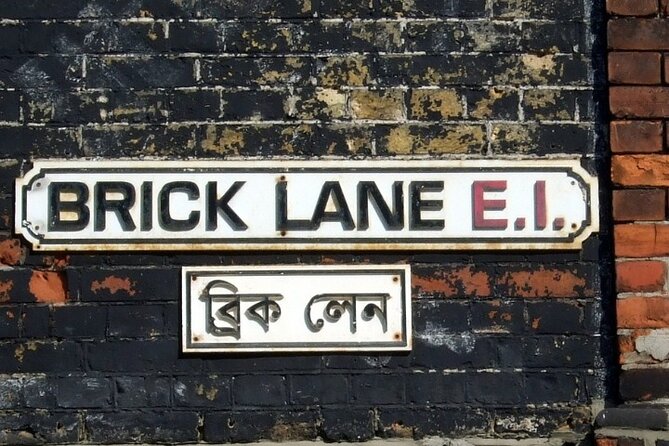
Brick Lane adds a broader East End setting to the walk. During the Ripper’s 1888 reign of terror, it formed part of the impoverished district and was associated with places visited by the victims.
The stop is brief, around 10 minutes, but it gives you a chance to see one of the area’s best-known streets. The modern street is far removed from the conditions of Victorian Whitechapel, so the guide’s historical explanation is essential.
Spitalfields Market is another short stop. The market’s surrounding streets were close to places where several victims lived or were last seen. Its location near Whitechapel placed it inside the same difficult urban setting shaped by poverty and crime.
These stops are valuable because they widen the story beyond the most famous crime sites. You are not only following murders. You are seeing the East End as a network of streets, markets, pubs, and churches.
If you want a long visit inside Brick Lane or Spitalfields Market, this tour will not provide it. The stops are part of a walking narrative, not separate sightseeing sessions. Save food shopping and browsing for after the walk.
Christ Church Spitalfields and St Botolph’s Aldgate
Christ Church Spitalfields is a major landmark near the former crime sites. During the Ripper era, it overlooked the poor streets of Whitechapel, and some victims were last seen nearby.
The church gives the guide another way to explain the physical scale of the area. A prominent religious building could be close to streets marked by poverty and fear. That contrast says a great deal about Victorian London without needing an elaborate display.
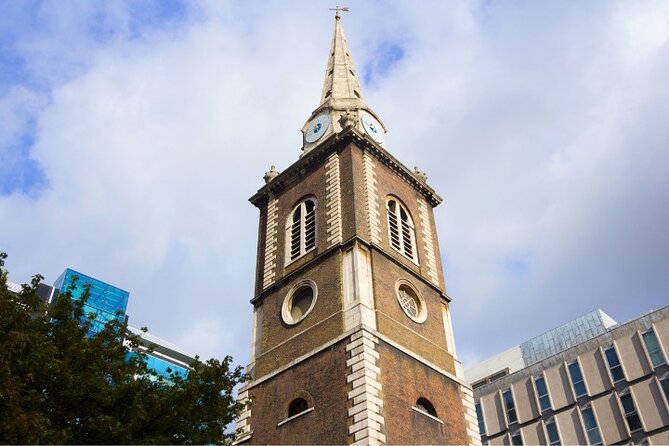
St Botolph’s Aldgate brings the route back toward its starting area. The church is associated with the case because of its proximity to the crime scenes. Women often gathered nearby for safety, leading to the nickname Church of Prostitutes, and several victims frequented the area.
This part of the tour also helps correct a common problem with crime stories. The women are not presented only through their final hours. Their movements through local streets and public places become part of the account, giving you a fuller sense of their lives and surroundings.
The guide makes or breaks the experience
A walking tour about an unsolved murder case needs a guide who can control the tone. Too much drama makes the victims into props. Too little energy turns the walk into a list of dates and addresses.
The strongest feedback here points to guides who handle that balance well. Carolina is described as respectful, engaging, and good at using photographs to explain the people and suspects. Adam is praised for friendly humor, thoughtful delivery, historical context, and facts that are not widely known.
That combination matters. You want enough atmosphere to keep the walk interesting, but you also want clear limits between fact, theory, and guesswork. The best moments are likely to come during the discussion of clues and suspects, when the guide can explain why the case remains unresolved.
The tour is offered in English. If you enjoy asking questions and discussing competing theories, you will get more from the experience than someone who wants a silent stroll past old buildings.
What $19.41 gets you
At $19.41 per person, this is a low-cost way to spend an afternoon or evening in East London. There are no admission fees at the stops, and the price covers a professional guided walk focused on the case, the victims, and the neighborhood.
The value comes from interpretation, not paid entry. You are paying someone to connect Goulston Street, the Ten Bells, Brick Lane, Spitalfields Market, Christ Church, and St Botolph’s Aldgate into one understandable story.
I would not book it simply to see famous buildings. Most of the places are viewed from the streets, and the tour does not include a museum visit or a formal interior program. Book it if you want the guide’s explanation and the chance to discuss the evidence while walking through the actual area.
The tour is often reserved well ahead of time, with bookings averaging 48 days in advance. That does not guarantee every departure will sell out, but it is a useful reason to reserve early if your London dates are fixed.
Who should book this walk
This experience suits you if you enjoy unsolved mysteries, London social history, and guided city walks. It works particularly well for someone who wants more than a sensational killer story and is interested in how poverty and overcrowding shaped the East End.
It is also a good pick if you have already watched documentaries or read about the case. The guide adds local geography, visual material, and additional facts that can give familiar names and clues more meaning.
Families should think carefully. The tour includes mature themes involving murder and prostitution, and children are recommended to be at least 14. The guide will not change the content for younger children.
You should also be comfortable walking for up to three hours. The tour is not suitable for people with walking or mobility difficulties, or for prams, buggys, and strollers.
Free cancellation is available up to 24 hours before the start time for a full refund. The experience depends on good weather and a minimum number of participants. If poor weather or insufficient bookings cancel the walk, you are offered another date or experience, or a full refund.
Should you book the Jack the Ripper Walking Tour?
Book this tour if you want a respectful, place-based look at the Ripper case rather than a theatrical scare show. The route covers the key East End locations, the price is modest, and the guide’s role adds far more value than the free street access alone.
Skip it if murder stories make you uncomfortable, if you need a fully accessible route, or if you want a broad tour of London’s major sights. For the right audience, though, this is a focused way to understand Whitechapel, remember the victims, and consider a mystery that London has never quite left behind.
FAQ
Where does the Jack the Ripper walking tour start?
The tour starts at Aldgate Station on Aldgate High Street, next to Hotel Saint at 9 Aldgate High Street, London EC3N 1AH. Go to Aldgate Station, not Aldgate East, and look for the guide holding a yellow umbrella.
Where does the tour end?
The walk ends at the Ten Bells pub at 84 Commercial Street, London E1 6LY.
How long does the tour last?
The tour lasts approximately 2 to 3 hours. The Whitechapel portion takes about two hours, with shorter stops at the Ten Bells, Goulston Street, Brick Lane, Spitalfields Market, Christ Church Spitalfields, and St Botolph’s Aldgate.
How much does the tour cost?
The listed price is $19.41 per person.
Is the tour offered in English?
Yes. The tour is offered in English.
Is the tour suitable for children?
The tour includes mature themes involving murder and prostitution. Children may participate at a parent or guardian’s discretion, but an age of 14 or older is recommended. The guide will not adjust the tour for children.
Is the walk suitable for people with mobility difficulties or prams?
No. The tour is not suitable for people with walking or mobility difficulties, prams, buggys, or strollers.
Can I cancel for a refund?
Yes. You can cancel at least 24 hours before the start time for a full refund. Cancellations or changes made less than 24 hours before the experience are not refunded or accepted.
More Jack the Ripper Tours in London
- London Jack the Ripper Guided Tour with Ripper-Vision
★ 4.5 · 4,840 reviews - London: Jack the Ripper Small Group Tour
★ 4.7 · 3,159 reviews - London: Jack the Ripper Tour with Immersive Ripper Vision
★ 4.5 · 1,840 reviews - German Language : Original Jack the Ripper Tour
★ 4.6 · 1,805 reviews
Freshly reviewed haunts around London
- Visit Jack the Ripper in French★ 5.0 · 33 reviews
- Ghosts, Gore & Other Ghasty Stories in the City of London★ 5.0 · 7 reviews
- The Haunted Pubs of Old London: Small Group Tour★ 5.0 · 38 reviews
- Afternoon Jack the Ripper : Guided Tour★ 5.0 · 183 reviews
- Wicked Whitechapel: Where Now’s Jack The Ripper Audio Tour★ 5.0 · 2 reviews
- The Fading Light London Ghost Walk★ 5.0 · 35 reviews
- The Ghosts of the secret alleyways of old London town★ 5.0 · 2 reviews
- Dark History of the Tudors: Private Tour of Hampton Court Palace★ 5.0 · 10 reviews
London Ghost Tours, compared.
London: The Original Jack the Ripper Walking Tour
Read our review →
London Jack the Ripper Guided Tour with Ripper-Vision
Read our review →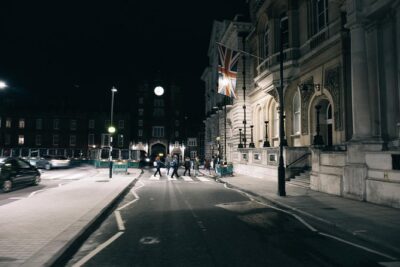
Ghost, Ghouls and Gallows Tour : Guided Tour with Boat Ride
Read our review →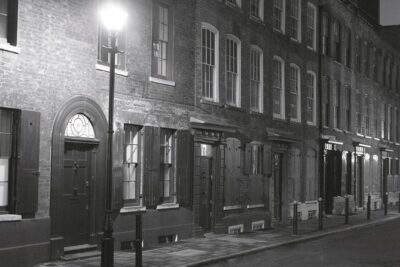
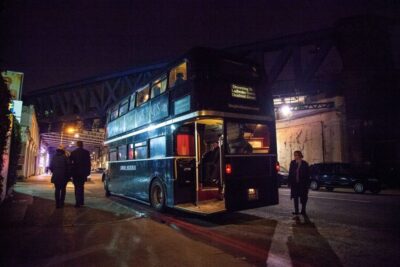
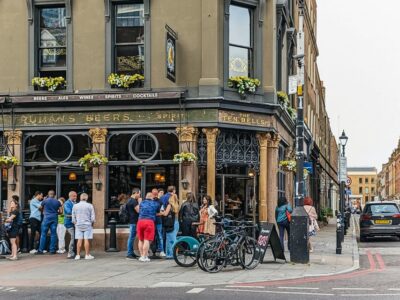
London: Jack the Ripper Tour with Immersive Ripper Vision
Read our review →
German Language : Original Jack the Ripper Tour
Read our review →Browse the lists this tour appears in