
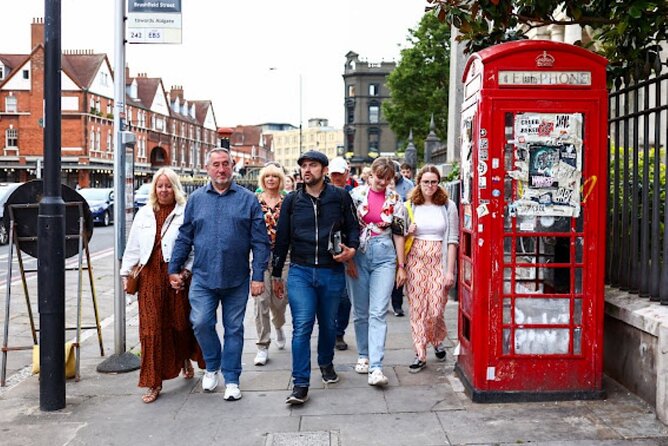
Review · LONDON
Jack the Ripper and Victorian London: Beyond the Shadows
Jack the Ripper and Victorian London: Beyond the Shadows is less a scare walk than a moving history lesson with crime at its center. You follow the route from Braham Street through Brick Lane, Hanbury Street, Goulston Street, and Mitre Square, while the guide explains what is known, what is guessed, and how Victorian London shaped the story.
I like the clear focus on the women whose lives were cut short, rather than treating them as props in a murder mystery. I also like the way Nick brings humor, acting skill, and sharp historical context to a grim subject. The main drawback is simple: you’ll be walking outdoors for nearly two and a half hours, and the subject matter includes murder, poverty, and hardship.
Key points
- Nick’s lively storytelling: His delivery feels more like a small performance than a list of dates and names.
- A wider East End story: Brick Lane, Spitalfields, and the surrounding streets reveal Victorian poverty, work, migration, and social divisions.
- Myth checking: You are encouraged to separate documented evidence from later newspaper drama and popular legend.
- Important crime locations: The route includes Hanbury Street, Goulston Street, and Mitre Square.
- A useful finish: The tour ends at Spitalfields Market, a handy place to continue exploring or find food.
- Good value for time: At $24 per person for 140 minutes, the tour offers a substantial walking experience at a modest London price.
Why this is more than a Jack the Ripper scare walk
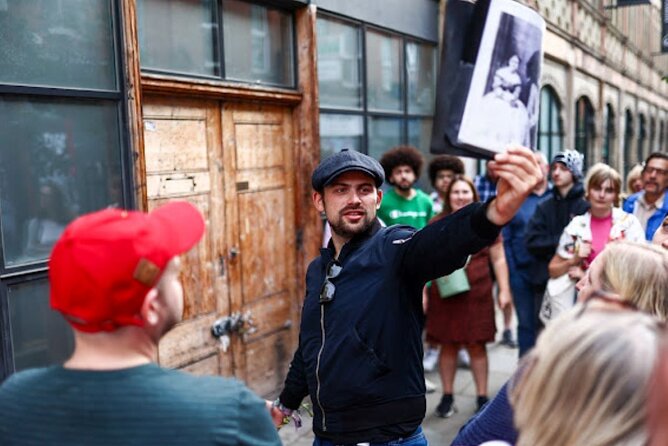
Many tours built around Jack the Ripper lean hard on fog, blood, and theatrical fear. This one takes a more thoughtful route. The murders remain central, but the guide uses them to explain the people and pressures of late 19th-century East London.
That matters because the case is often told as a puzzle about an unknown killer, while the women involved disappear behind the nickname Jack the Ripper. Here, you spend more time considering who they were, how they lived, and why later accounts misunderstood or simplified their lives.
You also get a look at the social gap between poverty-stricken streets and the institutions that held power. The East End was not just a backdrop for crime. It was a working district shaped by low wages, overcrowding, cultural change, and limited choices. The tour places the murders inside that setting.
I find that approach far more useful than a string of gruesome anecdotes. If you want a haunted-house mood with constant shocks, this may feel restrained. If you want a serious, lively account of the era, it should suit you well.
More Jack the Ripper Tours in London:
- London: The Original Jack the Ripper Walking Tour
★ 4.7 · 7,833 reviews - London Jack the Ripper Guided Tour with Ripper-Vision
★ 4.5 · 4,840 reviews - London: Jack the Ripper Small Group Tour
★ 4.7 · 3,159 reviews
Braham Street and Brick Lane: starting in the East End
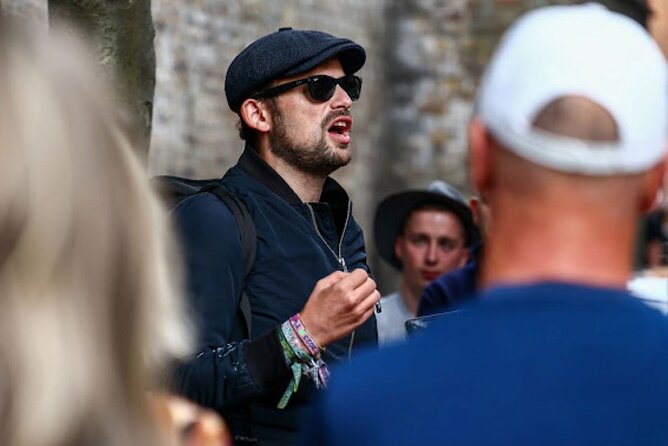
The tour begins on Braham Street and moves toward Brick Lane. This opening helps set the tone before the most difficult material arrives. You are introduced to the East End as a lived-in part of London, not just a crime scene.
Brick Lane is an especially fitting early stop. Today, it is known for food, street life, and changing neighborhoods, but the tour uses the area to explain the social and cultural forces that shaped Victorian East London. You begin to picture the streets as places where people worked, rented rooms, sold goods, and tried to get by.
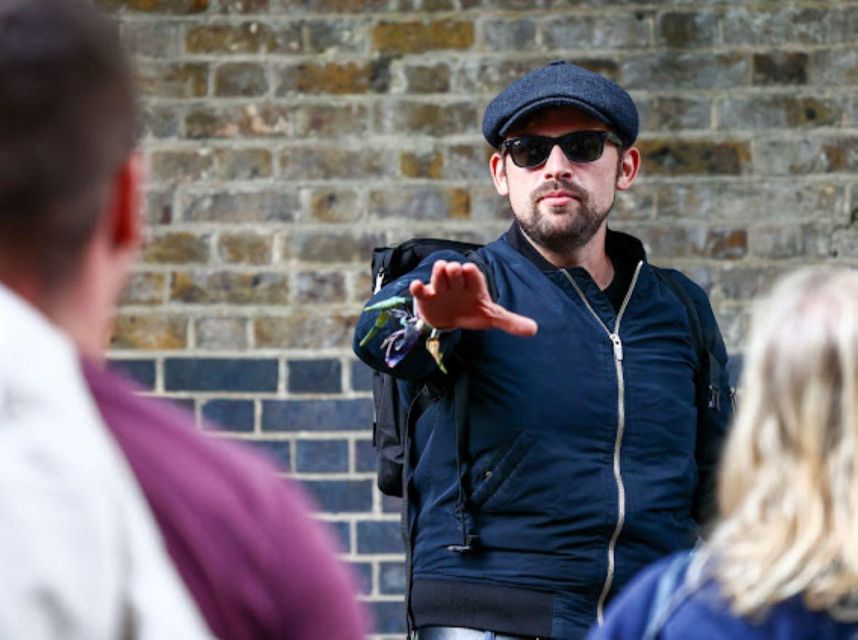
Nick’s role is important here. His style is direct and theatrical without turning every detail into a fright. His background in the musicals industry comes through in the way he delivers the story, giving the walk a strong sense of pace and character.
That does not mean the tour is a staged show. The better comparison is a good storyteller who knows how to hold a group’s attention outdoors. Nick also leaves room for questions, which helps if you want to examine the evidence rather than simply absorb a prepared script.
Hanbury Street and the people behind the headlines
At Hanbury Street, the tour moves closer to the known crime narrative. This is where the balance between facts and later storytelling becomes especially important.
You will hear about the events associated with the case, but the stated aim is not to reduce the victim to the location of her death. The guide gives attention to the women involved and to the misunderstandings that have gathered around their lives over time.
That approach is one of the tour’s strongest features. Crime stories often turn real people into names on a map. This walk works against that habit by asking you to think about circumstances, social standing, and the limits placed on women living in Victorian London.
The tone can still be grim. You are not being promised a sanitized version of the subject. But the material is presented without needless gore, which makes the tour more suitable for older teenagers and adults who want context instead of shock tactics.
The walk itself also changes how you read the streets. Modern London continues around you, while the guide points out how the same area can carry several different periods at once. You may find that this contrast, rather than dark decoration, supplies the real atmosphere.
Old Spitalfields Market and Victorian East London
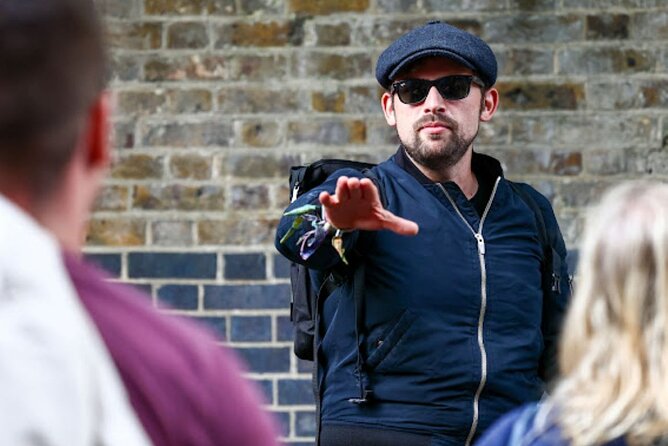
The route continues through Old Spitalfields Market. This stop broadens the story again, shifting attention from individual crimes to the commercial and social life of the district.
Markets help explain how people earned money, bought food, met others, and moved through the city. Spitalfields also gives you a useful pause from the most serious parts of the story. The tour remains focused, but it is not trapped in a single mood.
You should expect walking and guided commentary here rather than a private visit to a museum or a formal indoor presentation. The value comes from connecting the streets to the period being discussed.
The modern market is also practical for your evening plans. Since the tour finishes at Spitalfields Market, you can continue looking around after the guide says goodbye. The attraction is not simply a final photo stop. It gives you an easy place to extend your time in the area.
Same old streets, another story to hear:
- Ghost, Ghouls and Gallows Tour : Guided Tour with Boat Ride
★ 4.5 · 3,212 reviews - London Jack The Ripper Guided Walking Tour
★ 5.0 · 3,131 reviews - London: Comedy Horror Ghost Tour on a Bus
★ 4.4 · 2,084 reviews - London: Jack the Ripper Tour with Immersive Ripper Vision
★ 4.5 · 1,840 reviews
Goulston Street: evidence, rumor, and uncertainty
Goulston Street is one of the places where the tour’s critical approach becomes most useful. Jack the Ripper stories have been repeated for generations, and repetition can make speculation sound like fact.
The guide helps you consider the difference between what was recorded at the time and what was added later. That does not remove the mystery, but it gives the mystery proper boundaries.
I like this part of the experience because it asks you to think along with the guide. You are not just handed a tidy answer. Instead, you are encouraged to weigh the information, question the reports, and notice how newspapers and later writers shaped the public image of the case.
This interactive quality has been a major strength of Nick’s tours. He uses questions and discussion to keep the group involved, and his humor gives everyone a break from the grim subject. The result is serious without becoming heavy from start to finish.
Still, remember that an outdoor discussion depends on conditions. If it is raining or cold, listening for long stretches can become tiring. One particularly wet outing included a beer-tasting break to help the group warm up, but you should not treat that as a standard part of the advertised tour.
Mitre Square and the central crime story
Mitre Square is one of the most important stops on the route. Here, the tour returns to the core events and places them within the larger East End setting you have been building throughout the walk.
The strength of the stop is not simply that you are standing at a famous crime location. It is that you arrive with more context. You have already considered work, poverty, social divisions, and the lives of the women involved. That makes the site feel less like a macabre photo opportunity and more like part of a complex historical account.
The area has changed, of course. You should not expect a perfectly preserved Victorian scene. Modern buildings, traffic, and city noise are part of the experience. The guide’s job is to help you understand the location through explanation rather than visual preservation.
This is also where people seeking a traditional true-crime tour will likely feel satisfied. The case itself is not pushed aside. You still follow the known route and examine the questions that have kept the story alive, but the tour avoids pretending that every mystery has a neat answer.
London Fruit & Wool Exchange and the changing city
The London Fruit & Wool Exchange adds another useful layer to the walk. Its name points to the commercial world that helped shape this part of London.
The district was not defined only by crime. It was connected to trade, markets, warehouses, labor, and the daily movement of goods. This commercial background helps explain why the East End was crowded and active, and why people from different backgrounds crossed paths there.
For you, this stop gives the tour a better sense of scale. The murders were shocking, but they happened within a much larger city system. People were working, trading, traveling, and trying to survive around the same streets.
That wider view is what separates this experience from a simple list of locations. You leave with a clearer picture of Victorian London as a city of sharp contrasts, where hardship and wealth existed close together.
Spitalfields Market: a practical finish
The walk ends at Spitalfields Market, returning you to a lively modern setting after the darker material of Mitre Square and Goulston Street.
I like this ending because it gives you options. You can stop for food, continue exploring, or simply take a few minutes to reset after the tour. The finish is also convenient if you are planning an evening in the East End.
The contrast can feel striking. A market full of modern activity is not the same world as the one described during the tour, but that difference makes the history easier to consider. London’s streets keep changing, while traces of older lives remain in their names, routes, and buildings.
Nick’s guiding style and the role of humor
Nick is the guide most closely associated with the experience, and his style is a major reason to book it. He has been praised for combining strong subject knowledge with warmth, humor, and a sense of performance.
That combination matters on a 140-minute walking tour. A guide can know every date and still lose a group after twenty minutes. Nick keeps the pace alive and uses jokes carefully, giving you relief without making light of the victims.
His local connection also adds another angle. He has lived in the area with his family and can talk about East London beyond the standard Jack the Ripper material. He also offers practical London tips, which can be helpful if this is your first visit.
You should expect an English-language tour with a guide who may ask questions and invite your thoughts. The experience is not designed as a silent audio walk. It works best if you enjoy listening, asking questions, and thinking through uncertain evidence.
Is $24 good value for 140 minutes?
At $24 per person, this is a strong value for a guided London walk lasting 140 minutes. You are paying for nearly two and a half hours of live storytelling, historical explanation, and access to several significant East End locations.
The price is especially reasonable if you want more than a short photo stop at one famous site. The tour covers Brick Lane, Hanbury Street, Old Spitalfields Market, Goulston Street, Mitre Square, and the London Fruit & Wool Exchange before finishing at Spitalfields Market.
There are limits. This is not a museum ticket, a private tour, or an indoor activity with guaranteed comfort. The value depends on how much you enjoy walking and listening outdoors. Weather can affect your comfort, so dress for conditions and wear sensible shoes.
The booking terms also keep the decision flexible. You can reserve now and pay later, and cancellation is allowed up to 24 hours before the tour for a full refund. That is useful when your London schedule is still moving around.
Who should book this East End walk?
I would recommend it to:
- History fans who want Victorian social context, not just a killer’s identity.
- True-crime followers who enjoy questioning evidence and popular myths.
- Visitors interested in East London, markets, trade, and changing neighborhoods.
- Families with older teenagers and adults who can handle serious subject matter.
- First-time London visitors looking for a guided introduction to Brick Lane and Spitalfields.
- People who prefer a lively guide and discussion over a recorded audio tour.
I would think twice if you want a purely frightening evening, dislike walking outdoors, or prefer a polished indoor exhibit. The tour is thoughtful and often funny, but the subject remains murder and poverty. It also spends real time on Victorian society, so anyone interested only in the killer may find the wider discussion too broad.
The tour is wheelchair accessible, though the experience still involves walking between several outdoor stops. The stated age restriction is people over 95, so the activity is not designed for that group.
Final verdict: book it if you want the people, not just the mystery
Book Jack the Ripper and Victorian London: Beyond the Shadows if you want the famous case placed inside the lives and pressures of Victorian East London. The murders receive serious attention, but the women, the streets, the market culture, and the social divide receive attention too.
Nick’s energetic delivery keeps the 140 minutes moving, while his humor prevents the subject from becoming relentlessly bleak. At $24, the tour offers good value, especially if you want a guided walk that leaves you thinking rather than simply startled.
Skip it if your main goal is a graphic scare show. Choose it if you want an engaging, questioning, and human account of one of London’s darkest stories.
FAQ
How long does the Jack the Ripper and Victorian London tour last?
The tour lasts 140 minutes, or about two hours and 20 minutes.
Where does the tour start?
The tour starts on Braham Street.
Where does the tour finish?
The tour finishes at Spitalfields Market.
Which places are included on the walking route?
The route includes Brick Lane, Hanbury Street, Old Spitalfields Market, Goulston Street, Mitre Square, and the London Fruit & Wool Exchange.
What language is the tour conducted in?
The live tour is conducted in English.
Is the tour wheelchair accessible?
Yes, the activity is listed as wheelchair accessible. It involves walking between several outdoor locations.
How much does the tour cost?
The price is $24 per person.
Can I cancel the booking?
Yes. You can cancel up to 24 hours in advance for a full refund. You can also reserve now and pay later.
Freshly reviewed haunts around London
- Ghosts, Gore & Other Ghasty Stories in the City of London★ 5.0 · 7 reviews
- Visit Jack the Ripper in French★ 5.0 · 33 reviews
- The Haunted Pubs of Old London: Small Group Tour★ 5.0 · 38 reviews
- Afternoon Jack the Ripper : Guided Tour★ 5.0 · 183 reviews
- Wicked Whitechapel: Where Now’s Jack The Ripper Audio Tour★ 5.0 · 2 reviews
- The Fading Light London Ghost Walk★ 5.0 · 35 reviews
- The Ghosts of the secret alleyways of old London town★ 5.0 · 2 reviews
- Dark History of the Tudors: Private Tour of Hampton Court Palace★ 5.0 · 10 reviews
London Ghost Tours, compared.
London: The Original Jack the Ripper Walking Tour
Read our review →
London Jack the Ripper Guided Tour with Ripper-Vision
Read our review →
Ghost, Ghouls and Gallows Tour : Guided Tour with Boat Ride
Read our review →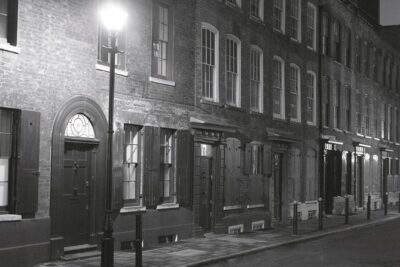
London: Jack the Ripper Tour with Immersive Ripper Vision
Read our review →
German Language : Original Jack the Ripper Tour
Read our review →Browse the lists this tour appears in