Review · LONDON
Jack the Ripper: Night Murder Mystery Walking Tour in London
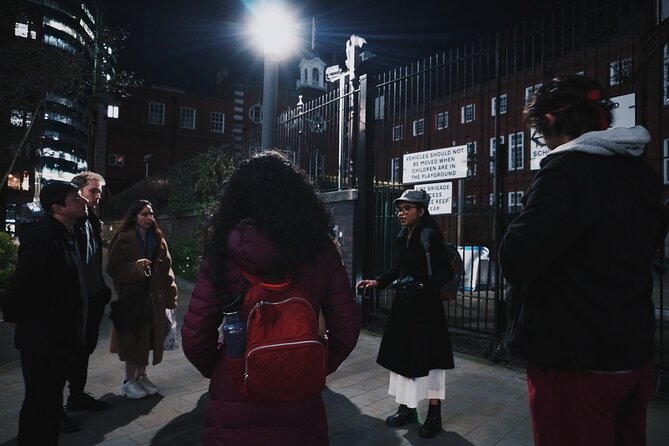
Jack the Ripper’s crimes are still wrapped in mystery, but the most striking part of this night walking tour is the setting: narrow streets, old lanes, and dim corners of Whitechapel where the story unfolded. You move from site to site instead of hearing the case in a pub or lecture room, which gives the evening a stronger sense of place.
I like two things right away. First, the tour follows the murders in a mostly chronological order, so the case is easier to understand. Second, it gives real attention to the women who were killed, not just the unknown man who became famous. The main caution is simple: this is a long walk with little chance to sit, and one review noted that the guide was sometimes hard to hear.
Key points to know before booking
- Seven Whitechapel locations: Brick Lane, Princelet Street, Puma Court, the Ten Bells, Gunthorpe Street, Goulston Street, and St Botolph without Aldgate.
- A serious look at the victims: The tour places the murders within the poverty and hardship of Victorian London.
- A night setting: Darkness and cool weather can make the streets feel closer to the period, though rain can make the walk harder.
- Strong guide-led storytelling: Tyson, Kory, Korey, Hadi, Dougal, Lisa, Anahita, Korhan, and other guides have led sessions, with personal theories and extra detail often added.
- Good value at $22.93: You get about two and a half hours of guided walking for a modest London price.
- Small enough to follow: The group limit is 25, though the guide’s voice may be harder to catch when the group gathers on a busy street.
Why Whitechapel works better at night
The Jack the Ripper story is tied to place. It is not only a list of dates, names, and grisly details. It is also a story about crowded housing, poor lighting, precarious work, and women trying to survive in a part of London where many people had very little protection.
That is why the evening timing matters. You are walking after dark through streets that now feel very different from Victorian Whitechapel, yet the narrow lanes and surviving buildings help you picture how confusing the area could have been. A cold, cloudy night can add to the mood. Heavy rain, as one tour party discovered, can also test your patience.
I would not book this as a casual stroll before dinner. The subject is violent, and the tour deals with murder, poverty, and the vulnerability of the victims. A good guide keeps the tone respectful, and the strongest sessions appear to give the women more than a passing mention.
More Dark History Tours in London
- Interactive Jack the Ripper Night Walk: London’s Murder Mystery
★ 5.0 · 171 reviews - Jack the Ripper Tour: Murder, Mystery, & the Women of Whitechapel
★ 5.0 · 40 reviews - Jack the Ripper: Solve the Crime Walking Tour (Kids Free!)
★ 4.5 · 36 reviews
Starting near St Mary’s Whitechapel
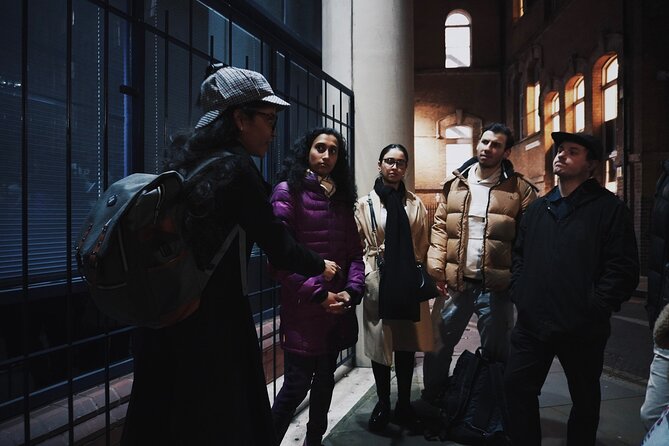
The tour begins at the St Mary’s Whitechapel Church Memorial, on an unnamed road in London E1 1FE. Check the exact meeting point on your mobile ticket before setting out, since the meeting location is more specific than simply saying Whitechapel.
The opening section sets up the area. You learn about the overcrowding, poverty, and social desperation that shaped daily life in Victorian London. This context is important because it prevents the case from becoming a theatrical story about a clever killer alone.
Your guide also introduces the main theories. Jack the Ripper was never conclusively identified, and the tour treats that uncertainty as part of the mystery. The better approach is to separate what is known from what is guessed. Guides such as Tyson, Kory, Korey, Hadi, and Dougal have been praised for adding newspaper details, photographs, and their own carefully explained theories.
The group can include up to 25 people. That is large enough to create energy but small enough for a guide to keep an eye on the whole party. Still, you will want to stay close. On a city sidewalk, a group can spread out quickly.
Brick Lane and the hard facts of Victorian poverty
Brick Lane is now one of East London’s best-known cultural streets, but the tour first presents it as part of the old slum district. The focus is not only on the murders. You hear about overcrowded housing, poverty, and the pressure placed on people living at the edge of society.
This is one of the most useful parts for anyone who knows only the famous names. It explains why the victims could be exposed to danger and why the police struggled to control the area. The tour uses the street itself to connect social conditions with the case.
You spend about 17 minutes here. That is long enough for a proper explanation without turning the stop into a lecture. Since admission is free at every location, your cost goes toward the guide and the organization of the walk, not entrance tickets.
Brick Lane can be busy, so it may not feel especially eerie. That contrast is useful. You see a normal, active London street while hearing about a far harsher past.
Princelet Street and the lives behind the names
Princelet Street is narrower and quieter. Here the guide turns toward the women affected by the murders, including Annie Chapman. The discussion considers where women lived, how they worked, and the difficult choices forced on them by poverty.
I like this change in focus. Jack the Ripper tours can easily become too fascinated with the killer. This stop helps restore some balance by asking who these women were before they became names in a criminal case.
The street’s quiet character makes it easier to listen, but you are still outdoors and standing. If you have trouble hearing in a group, move toward the guide before the explanation begins. One visitor specifically found that commentary became difficult to catch when the guide looked away, so your position in the group can make a real difference.
More Dark History Tours in the UK
- Jack The Ripper Tour : Solve The Crime
★ 4.5 · 28 reviews - Dark History of the Tudors: Private Tour of Hampton Court Palace
★ 5.0 · 10 reviews - Jack the Ripper Walking Tour: Murder, Mystery, & the Women
★ 4.2 · 6 reviews - The murders of Jack the Ripper with a pub
★ 5.0 · 2 reviews
Puma Court and the power of a narrow lane
Puma Court is described as one of the places that has changed very little since the 19th century. Its narrow form gives the guide a chance to explain how easily someone could disappear into the shadows.
This is less about a single dramatic clue and more about visual understanding. You can see how a confined passage affects movement, sight lines, and the feeling of safety. The stop makes the urban setting part of the evidence.
The guide may also compare the present street with old photographs or news reports. Korey, for example, has been praised for studying reports from the time and showing images of the neighborhood as it appeared during the murders.
Keep your expectations sensible. You are not entering a preserved crime scene. The value comes from seeing the street and hearing how it fits the case.
The Ten Bells, pub stories, and a necessary warning
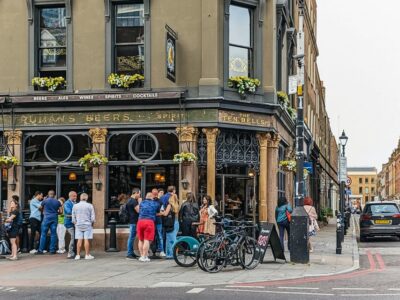
The Ten Bells is one of the most famous names connected with Jack the Ripper. Several victims are believed to have visited the pub shortly before their deaths, which gives the building a powerful place in the story.
The tour stops outside the pub to discuss those final hours and the reasons the Ten Bells became linked with the case. This is not presented as a standard pub visit. The itinerary finishes at a different location, and you should not assume that a drink or reserved table is included.
The Ten Bells can feel like the most theatrical stop, but a careful guide keeps the attention on the women rather than turning the pub into a prop. You may hear competing theories about what happened and how strong the evidence really is.
This is also a good point to remember that the case contains uncertainty. Phrases such as believed to have visited matter. The tour is strongest when it makes clear where the record ends and speculation begins.
Gunthorpe Street and Martha Tabram’s disputed place in the case
Gunthorpe Street is linked with the murder of Martha Tabram, who some experts consider a possible early Ripper victim. The tour examines the evidence and the reasons other experts do not include her in the usual victim list.
This stop adds a useful layer to the mystery. You are not simply given a fixed list of victims and told that every detail is settled. Instead, you see how investigators and later writers weigh dates, methods, locations, and possible links.
The lane is narrow and carries much of the visual force of the stop. You can picture how quickly a person might be out of sight. At the same time, the subject is disturbing, and this part may feel especially heavy for some people.
The guide’s role matters here. A strong presenter explains the competing ideas without pretending that an unsolved case has a clean answer. Tyson and Kory have both been praised for keeping the story lively while still explaining the facts in sequence.
Goulston Street and the apron clue
Goulston Street brings the group to one of the case’s most debated pieces of evidence: a bloody section of apron associated with Catherine Eddowes. Nearby, a chalk message was found, creating a long-running argument over what it meant and who wrote it.
This stop works well for people who enjoy the evidence side of true crime. You are not only hearing about a murder. You are considering how a clue was found, how it was interpreted, and why the message created so much controversy.
The guide may present theories rather than one final answer. That keeps the mystery alive without claiming certainty. It also shows how easily a small piece of evidence can become larger than the facts support.
Goulston Street is another place where the group may need to gather tightly. London traffic and passing pedestrians can make it hard to hear from the back. I would arrive early, stay near the front, and ask the guide to repeat a point if needed.
St Botolph without Aldgate and the social story
The stop at St Botolph without Aldgate shifts the mood again. The church was known as a place where vulnerable women could seek refuge, and the guide uses it to discuss the limited support available to women at the time.
This is where the tour’s human focus matters most. The victims were not merely figures in a mystery. They were women living in a society that offered few safe choices to those without money or stable housing.
A pause here also gives the group a chance to reflect. The tour is still a walking experience, but not every stop needs a new shock or clue. Some of the best material asks you to consider why the women were vulnerable and why their stories were later overshadowed by the killer’s nickname.
Ending at Mitre Square
The route ends at Mitre Square in London EC3A 5DE. The final stop connects the walk to the last victim named in the tour information, Mary Jane Kelly. The ending gives the evening a clear destination rather than leaving you in the middle of the case.
You finish with the main theories and the question of why Jack the Ripper remains more famous than other killers active in Whitechapel at the same time. One guide has also used the ending to discuss who Jack might have been and why this particular case gained such lasting attention.
Do not expect a long seated finale. The tour is built around standing outdoors and walking between locations. If you want to continue the evening at the Ten Bells, you can make your own plans, but the tour itself does not promise a pub stop with a drink included.
Guide quality makes the biggest difference
The experience depends heavily on the person leading it. The guides named in the feedback include Tyson, Kory, Korey, Hadi, Dougal, Doogle, Lisa, Anahita, Korhan, and Kody. The exact guide varies by departure.
The strongest qualities are clear storytelling, command of dates and names, and care with the subject. Hadi was noted for greeting people personally, managing the serious material with respect, and adding gentle humor at suitable moments. Dougal and Doogle were praised for painting a detailed picture of 19th-century London and giving the victims a human voice.
Kory and Korey were especially associated with extra information about London, old news reports, neighborhood photographs, and personal theories. Tyson received praise for keeping spirits up in bad weather and for making the story entertaining without losing its educational purpose.
There is one practical weakness to keep in mind: audibility. Outdoor tours have traffic, other groups, and city noise. Stay close, face the guide when possible, and speak up if you miss a key detail.
Price, pace, and who gets good value
At $22.93 per person, this is a reasonably priced way to spend an evening in London. The tour lasts about two hours and 30 minutes, visits seven locations, and includes a guide rather than only an audio route.
I see the price as good value if you already enjoy crime history, old London, or guided walks. You get a clear route, background on the area, and a chance to ask about competing theories. Group discounts may make it more appealing if you are booking with friends or family.
The cost is less convincing if you dislike dark subject matter or prefer museums and indoor attractions. There are no admission tickets included because the stops are public streets and outdoor sites. Much of what you are buying is the guide’s preparation and delivery.
The walking demand is moderate but real. One stop is followed by another, and there are few places to sit until the end. Wear shoes you can walk in, dress for the forecast, and bring rain protection. The tour can run in poor weather, and one group completed it through torrential rain, but that does not mean you will enjoy doing so.
The activity is offered in English. Service animals are allowed, and most people can participate, but the long outdoor walk may not suit everyone. Confirmation arrives at booking, and the mobile ticket is useful for keeping the meeting details with you.
Should you book the Jack the Ripper night walk?
Book it if you want dark London history with a real sense of place, especially if you enjoy unresolved cases, old streets, and guide-led storytelling. The 4.9 rating from 80 reviews and 99 percent recommendation figure fit the main strengths: strong guides, chronological explanation, and a respectful focus on the victims.
I would choose this over a shorter, more sensational tour if you want context. You get poverty, policing, neighborhood history, and competing theories along with the murders.
Skip it if you do not want graphic subject matter, cannot comfortably walk and stand for two and a half hours, or need a very quiet presentation. For everyone else, $22.93 is a fair price for an evening that shows you a side of Whitechapel you would not easily piece together alone. Free cancellation is available up to 24 hours before the start time. Inside that window, the payment is not refunded.
FAQ
How long does the Jack the Ripper walking tour last?
The tour lasts approximately two hours and 30 minutes.
How much does the tour cost?
The listed price is $22.93 per person. Group discounts are available.
Where does the tour begin?
It begins at the St Mary’s Whitechapel Church Memorial, on an unnamed road in London E1 1FE, United Kingdom.
Where does the tour end?
The walk ends at Mitre Square, London EC3A 5DE.
Which places does the tour visit?
The route includes Brick Lane, Princelet Street, Puma Court, the Ten Bells, Gunthorpe Street, Goulston Street, and St Botolph without Aldgate.
Is the Ten Bells pub visit included?
The tour stops outside the Ten Bells to discuss its connection with the case. The information provided does not say that a drink or indoor pub visit is included.
How many people can join the tour?
The maximum group size is 25 people.
Is the tour offered in English?
Yes. The tour is offered in English and includes a mobile ticket.
Can I cancel for a refund?
Yes. You can cancel at least 24 hours before the start time for a full refund. Cancellations or changes made less than 24 hours before the experience are not refunded or accepted.
More Ghost Walking Tours in the UK
- London Jack The Ripper Small-Group Walking Tour
★ 5.0 · 1,013 reviews - Ghastly Ghost Walking Tour in London
★ 5.0 · 878 reviews - London: Ghastly Ghosts 2-Hour Walking Tour
★ 4.9 · 794 reviews - London: Jack the Ripper Walking Tour
★ 4.2 · 410 reviews
More Ghost Walking Tours in London
- London: The Original Jack the Ripper Walking Tour
★ 4.7 · 7,833 reviews - London Jack The Ripper Guided Walking Tour
★ 5.0 · 3,131 reviews - London: Jack the Ripper Evening Walking Tour
★ 4.9 · 1,449 reviews - London: Ghost Walk and River Thames Boat Ride
★ 4.5 · 1,251 reviews
Freshly reviewed haunts around London
- Ghosts, Gore & Other Ghasty Stories in the City of London★ 5.0 · 7 reviews
- Visit Jack the Ripper in French★ 5.0 · 33 reviews
- The Haunted Pubs of Old London: Small Group Tour★ 5.0 · 38 reviews
- Afternoon Jack the Ripper : Guided Tour★ 5.0 · 183 reviews
- Wicked Whitechapel: Where Now’s Jack The Ripper Audio Tour★ 5.0 · 2 reviews
- The Fading Light London Ghost Walk★ 5.0 · 35 reviews
- The Ghosts of the secret alleyways of old London town★ 5.0 · 2 reviews
- Self-Guided Audio Tour-Behind the shadow of evil: Jack the Ripper★ 4.0 · 2 reviews
London Ghost Tours, compared.
London: The Original Jack the Ripper Walking Tour
Read our review →
London Jack the Ripper Guided Tour with Ripper-Vision
Read our review →
Ghost, Ghouls and Gallows Tour : Guided Tour with Boat Ride
Read our review →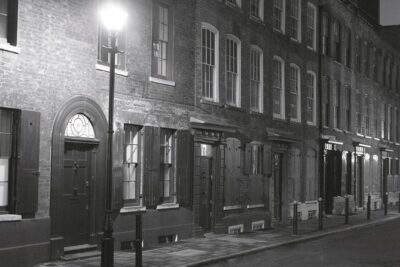
London: Jack the Ripper Tour with Immersive Ripper Vision
Read our review →