
Review · MALTA
The Dark History of Valletta – Walking Tour
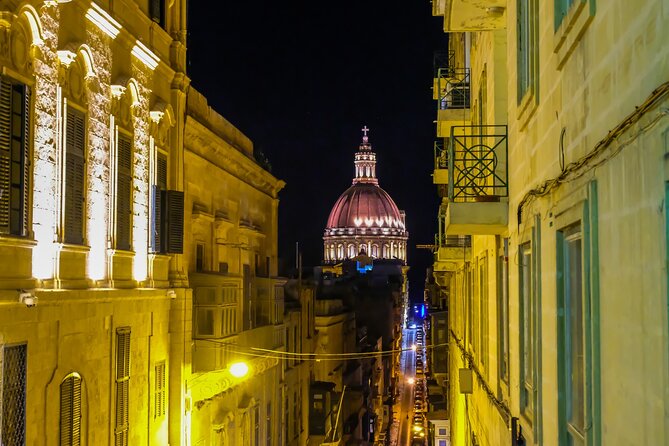
Valletta’s grand streets have a darker side, and this tour brings it out with stories of ghosts, murder, missing boys, and strange symbols carved into the city. You’ll hear how the ghost of 16th-century knight Oliver Starkey held noisy parties in the 1990s, and why the neighbors finally got some peace.
I like the way the tour uses specific human stories instead of a long list of dates. I also like the route, which starts at Tritons’ Fountain and ends near the Grand Master’s Palace, leaving you in the center of Valletta with bars and restaurants close by. The main drawback is the hilly walk, including a descent to the bottom of the city and a climb back up.
Key points at a glance
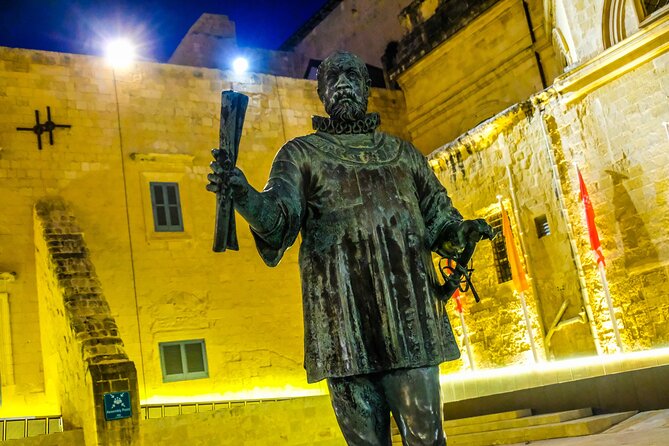
- Oliver Starkey’s ghost: Hear how a 16th-century knight supposedly caused trouble centuries after his death, even throwing parties in the 1990s.
- A murder told through a letter: The tour examines a shocking message sent by a lovesick man shortly before he killed his lover.
- A disturbing church mystery: Learn why more than 100 boys entered a church but never came out.
- Valletta’s famous founder: The guide separates the truth about Jean de Valette from the legend surrounding him.
- A statue with a hidden meaning: Look above the streets to understand the grotesque figure watching over the people of Valletta.
- A practical city route: Meet at Tritons’ Fountain, walk through Valletta, and finish by the Grand Master’s Palace after about two hours.
A different way to read Valletta’s grand streets
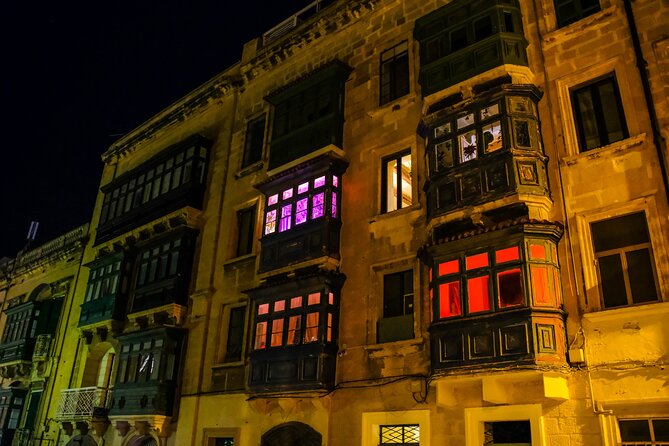
Valletta is often presented through its fortifications, churches, palaces, and role in the Knights of St. John. Those subjects matter, but they can make the city feel polished and noble. This walking tour looks beneath that surface.
You’ll hear about people who lied, loved badly, frightened their neighbors, vanished into a church, or left behind stories that grew stranger with time. The result is not a standard sightseeing walk. It is a tour built around the unsettling incidents that official plaques and grand historical summaries tend to leave out.
That approach works well in Valletta because the city is compact. A narrow street, a church doorway, or an oddly shaped statue can become the setting for a story. You are not simply moving from one famous monument to another. You are being asked to look up, look closer, and question what you think you know about Malta’s capital.
The tour lasts about two hours and is offered in English. The price is $24.03 per person, which I consider fair if you enjoy guided storytelling and want more than a basic introduction to Valletta. It is less useful if you prefer quiet wandering or want a conventional tour focused on architecture.
More Dark History Tours in the world:
- Adults-Only New Orleans Ghost, Crime, Voodoo, and Vampire Tour
★ 5.0 · 6,545 reviews - Edinburgh: Dark Secrets of the Old Town Ghost Walking Tour
★ 4.6 · 1,671 reviews - New Orleans Adults-Only True Crime and Ghost Walking Tour
★ 5.0 · 1,666 reviews
Meeting at Tritons’ Fountain
The walk begins at Tritons’ Fountain in Floriana, outside Valletta’s main city gate area. This is a useful starting point because it gives you a clear landmark and places you just outside the historic center before the stories begin.
You should allow time to reach the fountain without rushing. The meeting point is listed at Vjal Nelson in Il-Furjana, and the tour ends in Valletta itself. Since the route is on foot, arriving ready to walk is more important than bringing special equipment.
The guide leads the group from the fountain into Valletta and through its streets. The group can include up to 35 people. That is not a tiny private walk, so you may not get much personal time with the guide, but a larger group can create a lively atmosphere when the story reaches its more dramatic moments.
The guide’s storytelling style matters here. A guide named Mario is singled out for keeping a family connected with the group after traffic delayed them. He called to check where they were, held the start for them, and filled the waiting time with other stories. More important for the tour itself, he was praised for linking each tale to the next and saving key details until the group reached the right location.
That structure is a good fit for this subject. A ghost story works better when the ending is held back. A murder story has more force when the setting appears before the full account is revealed.
Oliver Starkey and Valletta’s ghostly afterlife
One of the tour’s most unusual stories concerns Oliver Starkey, a knight from the 16th century. The strange part is not simply that he is associated with a ghost. It is that his ghost was said to throw parties in the 1990s.
That detail gives the tour a playful edge. Dark history does not have to mean two hours of solemn tales about death. The idea of a long-dead knight disturbing modern neighbors is odd enough to make you look at Valletta’s old buildings in a new way.
You’ll also hear how the ghost was eventually persuaded to stop disturbing the neighbors. The exact method is part of the story, and the point is less about proving a haunting than understanding how local stories survive and change.
I like this kind of tale because it connects Valletta’s distant past with recent memory. The city can feel like a museum after dark, but stories about noise, neighbors, and unwanted parties make it feel like a lived-in place. You may not believe every supernatural detail, yet the story still tells you something about the way Malta handles legend.
The fatal letter and a darker side of love
The tour also tells the story of a lovesick man who sent a shocking letter to his lover shortly before murdering her. This is one of the more serious parts of the walk, and the subject is not treated as a harmless ghost tale.
A letter gives the story a personal center. Instead of hearing only that a crime occurred, you are shown the words or message that came before it. The written evidence makes the crime feel immediate, and it raises the uncomfortable question of how affection, obsession, and violence can be confused.
You should know that this tour is genuinely dark in places. The material includes murder and disturbing events, so it may not suit young children or anyone looking for a light evening stroll. The description does not set a minimum age, but parents should use their judgment before booking.
For adults who like serious true-crime stories, this section gives the walk more weight. It prevents the experience from becoming a parade of spooky legends. Valletta’s past is presented as a mix of folklore, crime, belief, and human weakness.
More Ghost Walking Tours in the world:
- New Orleans Premier Ghost, Voodoo and Vampire Walking Tour
★ 4.5 · 12,856 reviews - Chicago: Gangsters and Ghosts Walking Tour
★ 5.0 · 7,155 reviews - Prague: Ghost Walking Tour Where Legends Come To Life
★ 4.4 · 5,253 reviews - Savannah History and Haunts Candlelit Ghost Walking Tour
★ 5.0 · 3,235 reviews
The church where more than 100 boys vanished
The most haunting mystery involves a church that more than 100 boys entered but never came out of. The question is simple and chilling: what happened to them?
This story gives the guide a chance to use the city itself as part of the narrative. A church is not just a building in this setting. Its doorway, interior, and place in Valletta’s street plan become part of a puzzle.
The account is especially effective because it is so stark. You do not need a long explanation to understand why the story has survived. A group of boys enters. None emerges. The unanswered gap does the work.
You should expect the guide to connect the tale with the location rather than simply deliver it as a detached lecture. That is one reason a walking tour can be more memorable than reading a list of strange facts. You hear the story while standing in the city where its details have meaning.
Still, this is an experience built around stories, not a formal investigation. The tour promises the tale and its context, but it does not promise to resolve every mystery to your satisfaction. If you need firm answers and documented conclusions, some parts may feel too legendary.
Jean de Valette without the usual polish
Valletta carries the name of Jean de Valette, the founder of the city. Most introductions present him as a major figure connected to the city’s creation and Malta’s military past.
This tour promises to examine the truth about him. That wording matters. You are not getting only the heroic version found in a quick city introduction. The guide takes a closer look at the person behind the name and at the stories that have gathered around him.
That makes the stop useful even if you have already seen Valletta’s main sights. One of the strongest comments about the tour came from someone who visits Malta often and still learned new information. That is an important point for repeat visitors. You do not need to be seeing Valletta for the first time to get value from this walk.
The tour is also a good reminder that city history is rarely clean. Founders become symbols, symbols become legends, and later generations choose which parts to repeat. The guide’s job is to pull those layers apart in a way that stays interesting rather than turning into a dry lecture.
The grotesque statue above the street
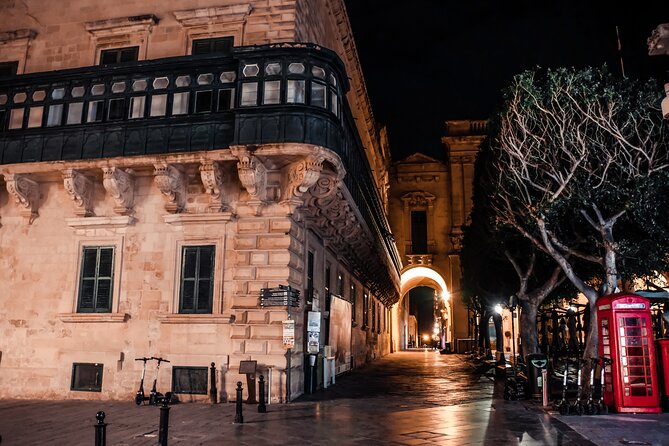
At some point, you’ll look up at a grotesque statue that watches over people in Valletta. The tour explains what the figure means and why it was placed where it is.
This is the sort of detail you could easily miss while walking between major sights. Valletta rewards anyone who pays attention to the upper parts of its buildings, but most visitors naturally look ahead at doors, churches, and street signs. A guide gives you a reason to stop and study something strange overhead.
The statue adds a visual moment to a tour that depends heavily on spoken stories. You are not only listening to a description. You are looking at the object itself and considering why such an unsettling figure has a place in the city.
Since the tour description does not identify the statue, you should not book this walk expecting a full art-history explanation of a named work. The appeal is the hidden meaning and the surprise of discovering it in the streets.
Valletta’s hills are part of the experience
The walk covers Valletta on foot and includes a route down to the bottom of the city before climbing back up. That physical detail deserves attention.
Valletta is not flat. A two-hour stroll through the city can feel easy for someone used to hills, yet tiring for anyone with limited mobility or a dislike of stairs and steep streets. One person who enjoyed the tour specifically advised that you need to be mobile and fit because of the hills.
You should wear comfortable shoes and plan for a steady walk. The tour does not describe a special vehicle, rest stop, or shortened route. Most people can participate, and service animals are allowed, but the route itself still demands reasonable fitness.
The climb also gives the tour a useful sense of place. You are not hearing stories in a room and then being driven between them. The changes in level help you understand Valletta’s layout. Going down and back up takes effort, but it makes the city feel three-dimensional.
If hills are a serious concern, ask before booking about the exact route and possible alternatives. The stated information confirms that the walk includes the descent and return climb, so you should treat that as a central part of the experience rather than a minor detail.
A two-hour evening plan with a useful finish
The tour takes about two hours and ends at the Grand Master’s Palace in the heart of Valletta. That makes it easy to fit into an evening plan.
You can schedule dinner or a drink afterward without needing to cross the island. Bars and restaurants are close to the finish, so you can continue the evening while the stories are still fresh in your mind.
The timing also suits people who have already spent the day seeing churches and museums. A dark-history walk offers a different way to use the evening without committing to a full night activity. The route is long enough to feel worthwhile but short enough to leave room for dinner.
The experience requires good weather. If poor weather cancels the walk, you will be offered another date or a full refund. That is useful to know when planning around a short stay in Malta, especially if you have only one evening available.
The tour is currently booked an average of 19 days ahead. That does not guarantee that every date sells out, but it does suggest that booking well before your visit is sensible if the schedule matters to you.
Is $24.03 a fair price?
At $24.03 per person, the tour sits in a reasonable range for a two-hour guided walk. You are paying for the guide’s preparation, storytelling, route planning, and local subject matter rather than admission to a monument.
Admission to the walking tour itself is free, so the price is not tied to entry tickets. That means the value depends almost entirely on the quality of the guide and the stories. A strong guide can make a compact city feel full of clues. A weak guide would leave you with a list of spooky facts that you could have read elsewhere.
The available feedback points to strong storytelling as the main strength. Mario, in particular, is described as engaging and able to connect one story to the next with cliffhangers. The tour also received a 4.9 rating from 50 reviews, with 100 percent recommending it. Those figures suggest a high level of satisfaction, though your experience will still depend on the guide leading your date.
I would consider the price good value for repeat visitors, people who enjoy true crime and local legends, and anyone who has already seen Valletta’s standard sights. First-time visitors can also benefit, but I would pair it with a daytime tour focused on the city’s major history and architecture.
Who should book this Valletta walk?
I would book this tour if you enjoy stories with a dark edge and prefer learning about a city through people and incidents. It is especially well suited to adults, repeat visitors, and anyone who finds ordinary sightseeing too predictable.
It also works for families with older children who can handle stories about murder, ghosts, and disturbing mysteries. The guide’s storytelling format may hold attention better than a conventional history talk, but the subject matter is not gentle.
You should think twice if you have limited mobility, dislike steep streets, or want a tour with guaranteed historical detail and little folklore. The route is hilly, and the content mixes crime, legend, mystery, and historical interpretation.
English is the only listed tour language. The group can reach 35 people, so this is not the right pick if you want a private, quiet walk. For a shared tour, though, the group size remains manageable enough for a guide to tell stories at specific locations.
Should you book The Dark History of Valletta?
Book it if you want to see Valletta through its stranger stories rather than only its grand buildings. The ghost of Oliver Starkey, the fatal letter, the missing boys, Jean de Valette, and the grotesque statue give the walk a clear identity.
I would make this a strong choice for an evening in Valletta, especially because it finishes near places to eat and drink. Just wear good shoes, allow for steep streets, and remember that the tour’s value rests on storytelling rather than monument admission.
With free cancellation up to 24 hours before the start, you have some flexibility. If the weather turns bad, the operator offers another date or a full refund. For a compact, English-language walk with a memorable subject, $24.03 is a sensible price.
FAQ
How long does The Dark History of Valletta walking tour last?
The tour lasts approximately two hours.
Where does the tour begin?
The tour begins at Tritons’ Fountain, at Vjal Nelson in Il-Furjana, Malta.
Where does the tour end?
The walk ends at the Grand Master’s Palace in Valletta, close to bars and restaurants.
What language is the tour offered in?
The tour is offered in English.
How many people can join the tour?
The maximum group size is 35 people.
Can I cancel for a full refund?
Yes. You can cancel at least 24 hours before the experience start time for a full refund. Changes or cancellations made less than 24 hours before the start are not accepted for a refund. If poor weather causes the tour to be canceled, you will be offered another date or a full refund.
Ghost walks heavy on history around the world
- Stockholm: Ghost Walk and Historical Tour
★ 4.7 · 2,685 reviews - New Orleans Small-Group Haunted History Carriage Tour
★ 4.5 · 2,289 reviews - New Orleans Haunted History Ghost Tour
★ 4.5 · 2,084 reviews - Genteel and Bard’s Savannah Dark History and Ghost Encounter Walking Tour
★ 5.0 · 1,546 reviews
Freshly reviewed haunts around the world
- New Orleans French Quarter Dark History, Haunts, and Laughs Tour★ 5.0 · 30 reviews
- New Orleans’ Finest Haunted Pub Tour★ 4.5 · 38 reviews
- Cheers New Orleans! Cocktails, History, Voodoo & Paranormal Tour★ 4.0 · 4 reviews
- Haunted Drunken History Tour from New Orleans★ 5.0 · 135 reviews
- The Original Asbury Park Ghost Tour★ 4.5 · 29 reviews
- Destrehan Plantation Haunted Night Tour★ 4.5 · 100 reviews
- New Haven’s Ghost Walk★ 3.5 · 69 reviews
- Ghosts of Tonopah Haunted History GPS/APP Smartphone guided Walking Tour outside★ 4.5 · 7 reviews
Dark History & True Crime Tours, compared.
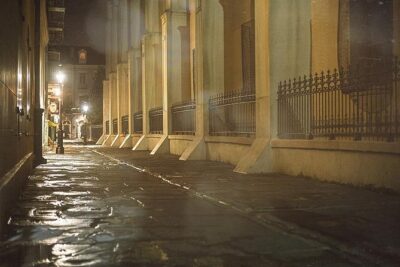
Adults-Only New Orleans Ghost, Crime, Voodoo, and Vampire Tour
Read our review →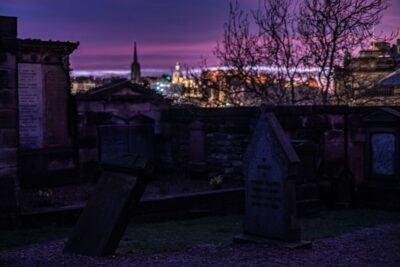
Edinburgh: Dark Secrets of the Old Town Ghost Walking Tour
Read our review →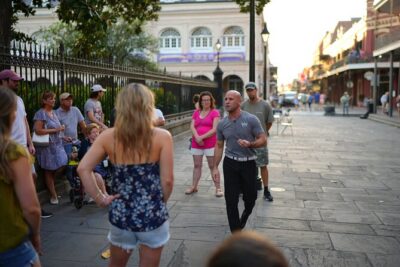
New Orleans Adults-Only True Crime and Ghost Walking Tour
Read our review →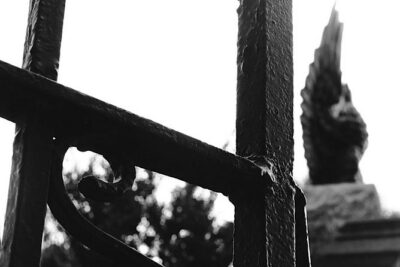
Genteel and Bard’s Savannah Dark History and Ghost Encounter Walking Tour
Read our review →
Buda Castle District Dark History, Legends and Vampire Night Tour
Read our review →
Paris: Dark History and Ghostly Guided Walking Tour
Read our review →
Edinburgh Ghost Tour: Mysteries, Legends and Murders
Read our review →Browse the lists this tour appears in