
Review · SEVILLE
Seville: City of Queens, Nuns, Sex Work & Witches
Seville’s grand monuments look different when you ask who was left out of the official story. This two-hour walk shifts attention to queens, cigar girls, nuns, sex workers, and women branded as witches, linking their lives to famous squares, palaces, parks, and narrow lanes.
I like the small maximum of eight people, which gives Abby, Nico, or another guide room to answer questions and adjust the pace. I also like the route itself: it mixes the grand Plaza de España and Maria Luisa Park with tucked-away corners of Santa Cruz. The main consideration is price. At $105 per person for two hours, this is costly unless you care strongly about social history and want a very small group.
Key points at a glance
- A female view of Seville: Hear about powerful queens and women whose work and reputations rarely receive equal attention.
- A compact but varied route: Move from the 1929 Exposition buildings and Maria Luisa Park to the Tobacco Factory and Jewish quarter.
- Small groups matter: The tour accepts a minimum of two and a maximum of eight participants.
- Memorable local stories: Learn about the cigar girls, the Costurero de la Reina, Susona, and the literary Doña Inés.
- Guides who connect with families: Abby and Nico are praised for clear English, humor, and including teenagers.
- Useful extras: You receive a city map and local tips, with a short stop at an atmospheric bar.
Why Seville’s women change the way you see the city
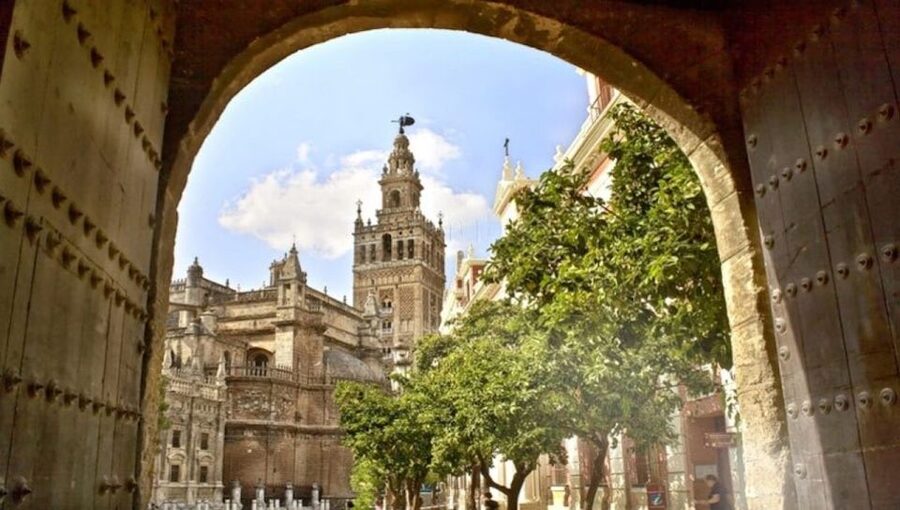
Most first walks through Seville focus on kings, explorers, archbishops, and grand buildings. This one uses the buildings as a backdrop for women who lived, worked, ruled, sinned, suffered, or fought for room in a male-run society.
That approach gives familiar sights a second layer. The Costurero de la Reina is no longer just a charming little building beside the park. The old Tobacco Factory is not only an impressive landmark. A lane in Santa Cruz becomes part of a story about loyalty, betrayal, love, and punishment.
I find this kind of tour most useful early in a Seville stay. It gives you a set of stories to carry into later visits to the cathedral, palace, parks, and old quarter. You do not need a specialist interest in women’s history, but you should enjoy storytelling and be comfortable with subjects such as sex work, social control, and women being judged by different rules than men.
The tone appears conversational rather than academic. Abby is praised for being informative, funny, and able to hold a teenager’s attention. Nico is described as responsive, good-humored, and strong in English. Those details matter because a themed walk succeeds or fails on the guide’s ability to make connections, not on the number of monuments checked off.
More Witch Tours in Spain
- Inquisition, The Executioner, Witches, Expulsion Jews and Muslims
★ 5.0 · 85 reviews - Gran Canaria: Green Witchcraft in the Magic Island
★ 4.9 · 26 reviews - Tour of the Inquisition and Witchcraft in Toledo
★ 3.3 · 13 reviews
Starting beside the Costurero de la Reina
The meeting point is the Costurero de la Reina monument at Paseo de las Delicias, 3. This is a useful place to begin because the building itself introduces the tour’s interest in women and public life.
The name means the Queen’s Sewing Box. You hear about the role women played here and how the building’s appearance connects to ideas of queenship, domestic work, and the public image of royalty. It is a small stop, listed at about ten minutes, so do not expect a full interior visit or a long architectural lecture.
The guide then takes you toward the nearby buildings connected with the 1929 Ibero-American Exposition. This opening section is fairly easy to walk, with short stretches of four, three, and two minutes between several points. That makes the route manageable for anyone who prefers a gentle city walk rather than a long march.
The 1929 Exposition and Maria Luisa Park
The Pabellón de Estados Unidos introduces the architecture of the 1929 Exposition. The buildings from this event are among Seville’s most distinctive modern-era sights, and they help explain how the city presented itself to the world.
On this tour, the point is not simply to admire façades. You hear how women fit into the social and cultural life surrounding these public displays. The women’s perspective keeps the conversation grounded in work, status, appearance, and access to public spaces.
Maria Luisa Park provides a welcome change from streets and stone walls. You spend about ten minutes here, with the guide connecting the park to women associated with Seville and to the city’s changing public identity. I like this pause because the setting gives the discussion breathing room.
Bring water, especially in warm weather. One family’s guide bought drinks on a hot day, but you should not assume that refreshments are included in the tour price. The published route also mentions a stop at a local bar, so you may want a little cash or a payment card for anything you order there.
Doña Sol and the grand stage of Plaza de España
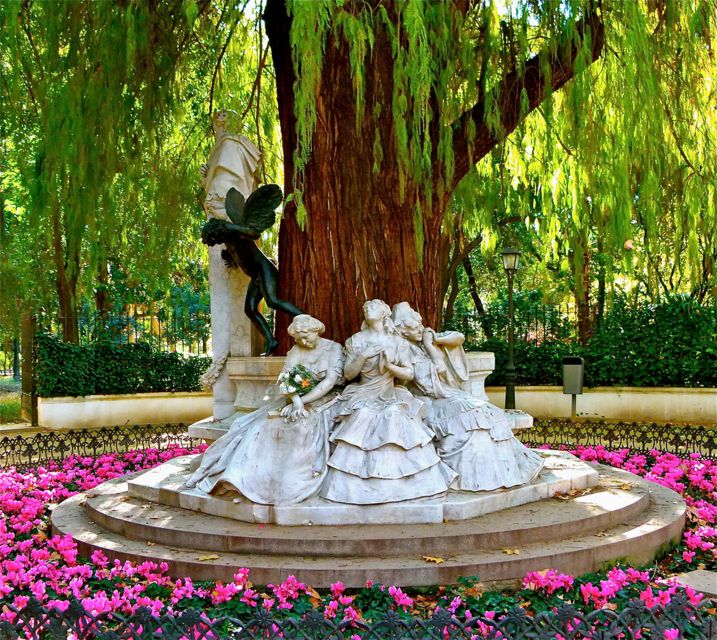
The Glorieta de Doña Sol is a brief stop, around five minutes, but it keeps the tour’s focus on women in literature and public memory. The route then continues to Plaza de España, where the guide spends about ten minutes on a guided visit.
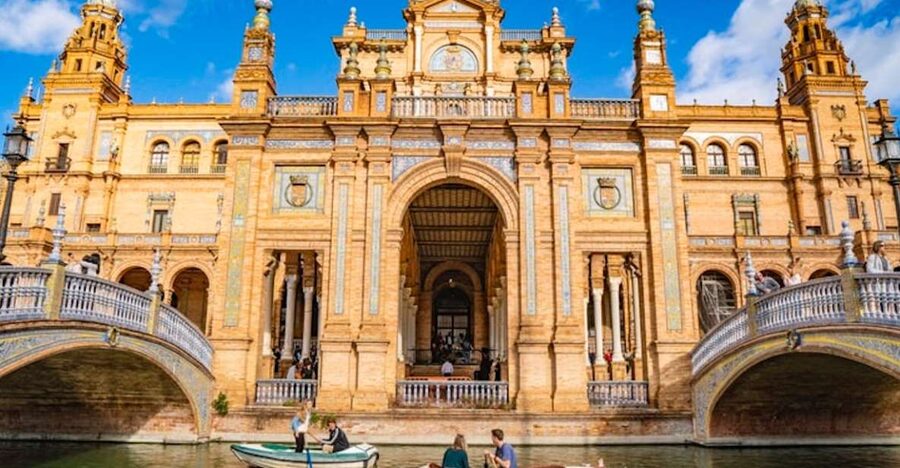
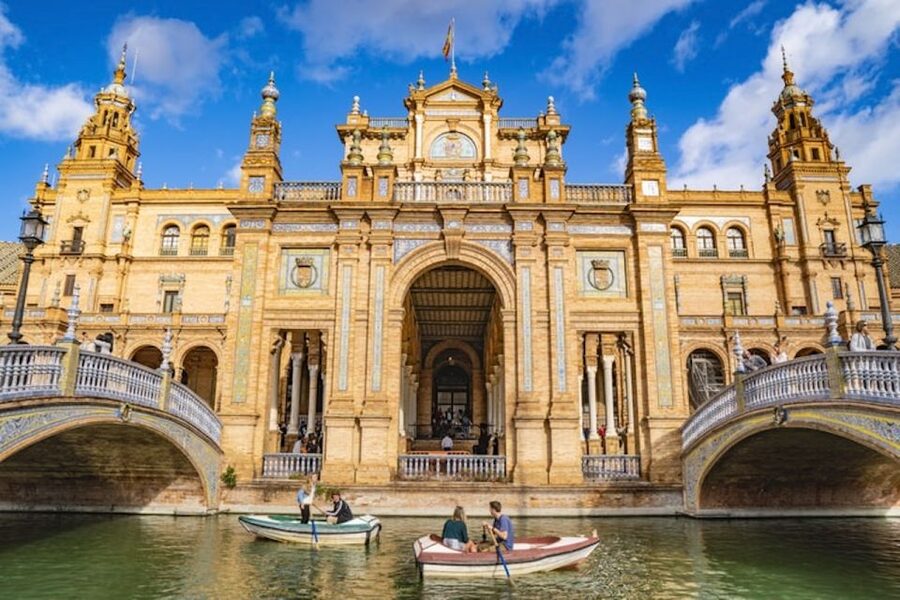
Plaza de España can easily become a quick photo stop. Its tiled alcoves, curved form, and monumental scale tend to dominate attention. A good guide helps you look beyond the postcard view and consider what the place says about national identity, regional imagery, and the people whose labor made such displays possible.
The timing here is short, so this is not a detailed architectural tour. If Plaza de España is high on your list, return later on your own. That lets you take photos, walk beside the canal, and study the tiles without holding up a small group.
The route next reaches the Pabellón de Portugal, another Exposition building, for about ten minutes. This adds variety to the architecture and prevents the park section from feeling like a single long stop. You see how different countries were represented and hear more about the women connected to the period and its social ideals.
Same old streets, another story to hear:
- Barcelona: Gothic Quarter Ghosts and Legends Walking Tour
★ 4.7 · 1,443 reviews - Madrid Oscuro: Torture, Ghosts, Crimes and Legends
★ 5.0 · 1,363 reviews - Seville Evening Historical Tour with Haunted History
★ 5.0 · 626 reviews - Barcelona Ghosts & Legends Tour
★ 4.5 · 548 reviews
The old Tobacco Factory and the cigar girls
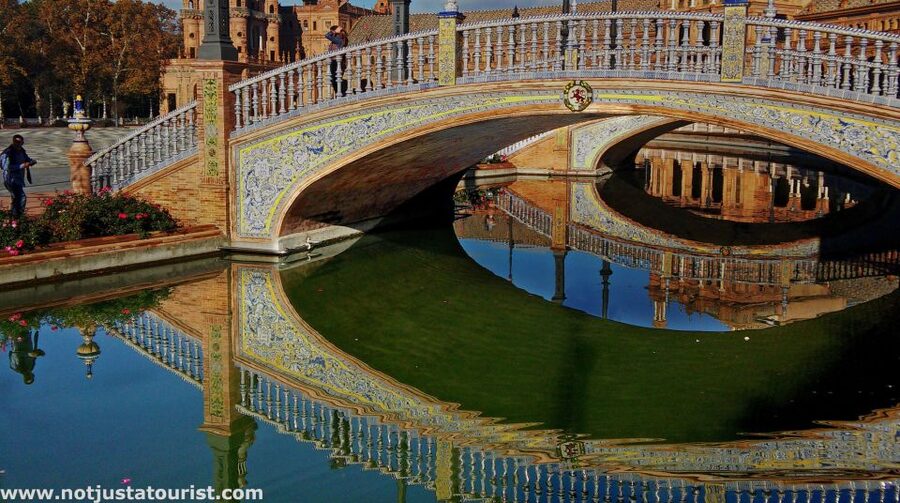
The Antigua Fábrica de Tabacos is one of the most important stops for understanding working women in Seville. Here, the famous cigar girls become central to the story.
The building is imposing, but the human account is what makes it useful. You learn about women who worked in cigar production and how their labor shaped the city’s economy and public image. The story also helps correct the habit of viewing historic women only as queens, saints, or romantic figures. Many women’s lives were defined by paid work, strict rules, and limited choices.
This stop lasts about ten minutes. Again, it is a focused introduction rather than a full museum visit. The value lies in the link between the building and the women who worked there.
The literary connection is also important. The tour eventually ends at Plaza Nueva, where the guide discusses the famous Don Juan story and Doña Inés. That means the walk does not treat women only as historical figures. It also examines how literature has shaped the way Seville imagines women, desire, honor, and punishment.
Susona, witches, and the darker side of Santa Cruz
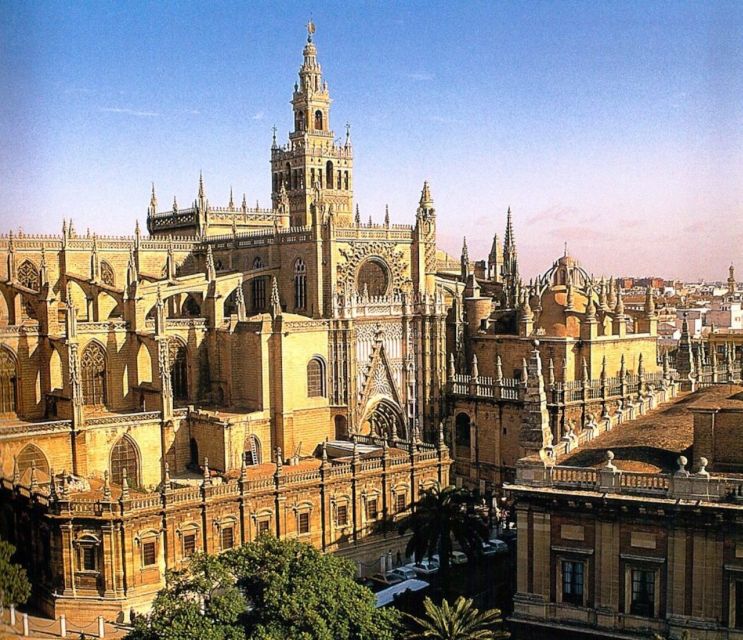
From the Tobacco Factory, the walk moves into Santa Cruz. Calle Susona is a short stop, about five minutes, tied to one of the old quarter’s best-known stories about a woman named Susona.
This part of the route takes you away from broad avenues and into the narrow lanes that make Santa Cruz so atmospheric. The setting suits stories of secrecy, family loyalty, betrayal, and public judgment. The route description also points to witches and women involved in sex work, so expect the conversation to move beyond polished royal history.
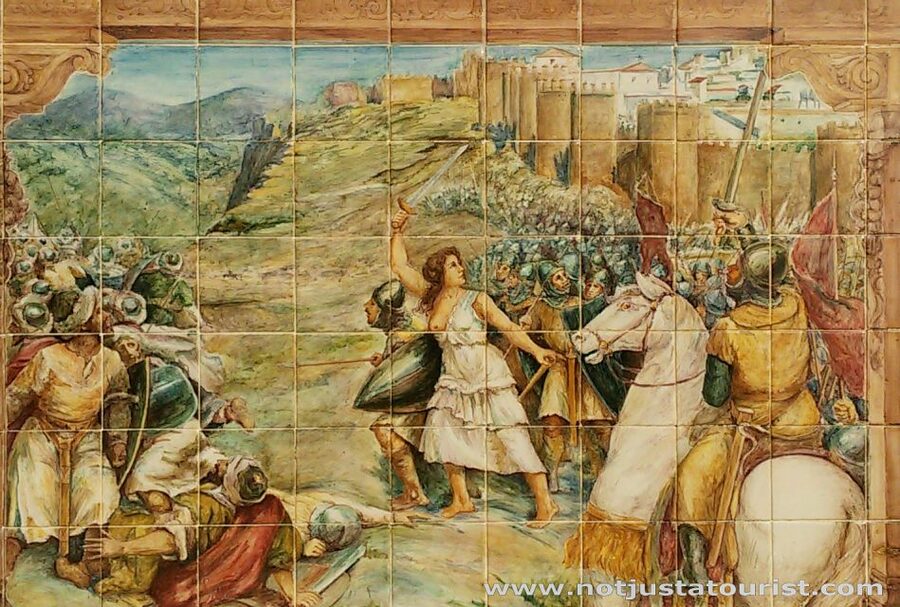
The term witches can cover many different realities in old stories. A woman might be feared, accused, or pushed outside accepted society. The tour’s value is in showing how labels could shape a woman’s fate, even when the surviving story tells us more about social fears than about the woman herself.
This is also where you should expect the most sensitive material. The subject is not presented as a light collection of romantic legends only. If you want a tour limited to architecture or royal history, this one may feel too focused on social control and scandal.
Callejón del Agua and the lanes of Santa Cruz
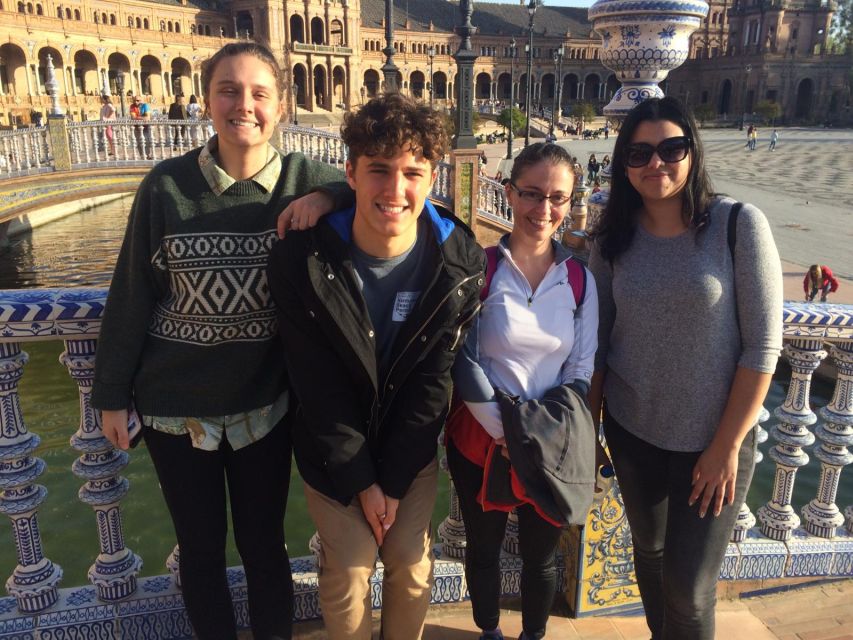
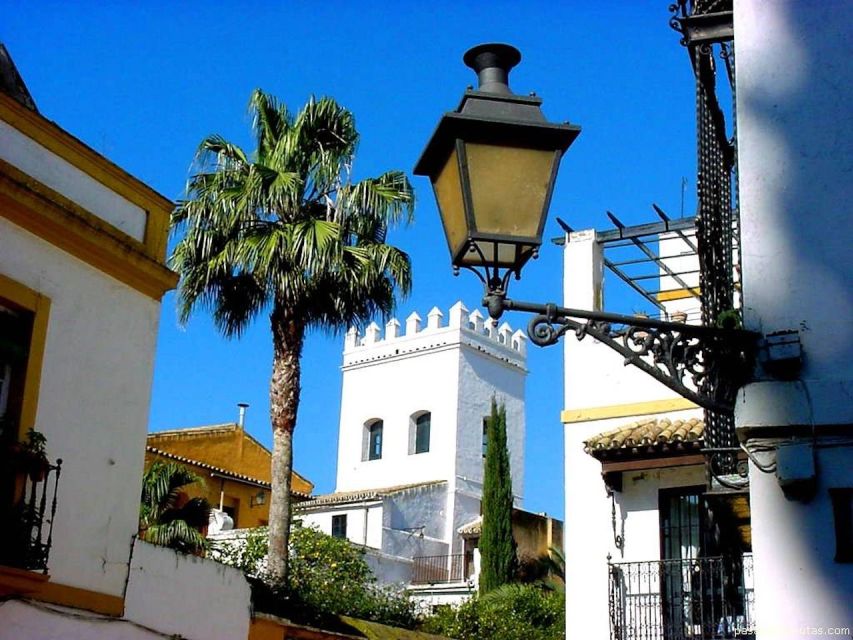
Callejón del Agua is one of the route’s atmospheric corners. The name and narrow passage help you picture how different the old quarter feels from the open spaces of the park and Exposition grounds.
The stop lasts about five minutes, followed by a short walk into Santa Cruz. You will pass through lanes associated with the old Jewish quarter and hear how women’s lives fit into this dense urban setting. The route does not promise entry to major monuments here, so the experience depends on the guide’s narration and the details you notice along the way.
I like this part because it puts the stories in a real street setting. A woman’s social position was not an abstract idea. It affected where she could work, whom she could marry, how she was spoken about, and how much freedom she had to move through public life.
The walking distance is reasonable, but the surface and width of old-town lanes can make the route feel less direct than the time sheet suggests. Wear comfortable shoes. The walk lasts two hours, yet the route covers several districts and includes a number of brief stops.
Finishing with Doña Inés in Plaza Nueva
The tour ends at Plaza Nueva, in central Seville. This is where the guide returns to the literary Don Juan and the moment when he lays hands on Doña Inés.
Ending here gives the walk a clear final question: who gets to control the story? Doña Inés is not simply a character in a famous tale. Her place in the story reflects long-running ideas about purity, romance, male power, and female virtue.
Plaza Nueva is also a practical endpoint. You are in a central part of Seville and can continue to other sights, find food, or make your way back toward the old town. The tour does not include a cathedral or palace visit, so plan separate time for those major attractions.
The finish is especially useful if you want the guide’s help with the rest of your day. One guide helped a family arrange a carriage ride from the cathedral after the tour. That kind of assistance is not guaranteed, but it shows why a small group and a responsive guide can be helpful beyond the formal route.
What $105 means for a two-hour walk
At $105 per person, this is not a bargain walking tour. The price is easier to justify if you value a group of no more than eight, a focused subject, an English or Spanish-speaking professional guide, a city map, and local tips.
You are paying for interpretation rather than admission tickets. The listed experience is a walking tour, and no paid monument entries are included. That keeps the route moving, but it means you should not compare this directly with a longer palace or cathedral tour that includes entrance fees.
The tour makes more financial sense for a pair or small family that wants conversation and a tailored feel. The provider accepts as few as two participants, so you might receive a very personal experience if the group is small. If the price feels high, compare it with a standard city walk and ask yourself whether the female-focused subject is the main reason you want a guide.
Free cancellation up to 24 hours before the start and the option to reserve now and pay later reduce the risk of booking. Starting times vary, so check availability before building the rest of your day around it.
Who will get the most from this experience
I would choose this tour if you enjoy history told through individual lives rather than dates and rulers. It suits couples, solo visitors, and families with older children or teenagers who might lose interest in a conventional monument lecture.
The guide’s ability to include a reluctant teenager is a real strength. Abby and Nico are both praised for clear English, humor, and a personal approach. You can request a more customized tour or ask about combining it with other activities or workshops offered by the provider.
The tour is less suitable if you want long visits inside buildings, extensive architectural detail, or a fast list of Seville’s biggest sights. Several stops last only five or ten minutes, and the main purpose is to connect places with stories.
It is also worth checking the language when you book. Tours are offered in English and Spanish. The minimum group size is two and the maximum is eight, so the experience depends partly on how many people join your date.
Should you book the women’s history walk?
Book it if you have already seen Seville’s headline monuments and want a different way to understand them, or if you prefer social stories to standard sightseeing facts. The cigar girls, the Costurero de la Reina, Susona, and Doña Inés give the route a clear identity.
Think twice if $105 feels steep for a two-hour walk or if you want substantial interior visits. You are buying a small-group conversation with a strong theme, not a full survey of Seville.
For the right reader, that focus is the point. Abby and Nico bring the humor and human detail that keep the subject moving, while the route gives you both famous sights and quieter corners. I would book it early in a Seville visit, carry water, wear good shoes, and leave time afterward to revisit Plaza de España or explore Santa Cruz at your own pace.
FAQ
Where does the tour begin?
The meeting point is the Costurero de la Reina monument at Paseo de las Delicias, 3, 41001 Seville.
Where does the tour finish?
The tour finishes at Plaza Nueva, 41001 Seville.
How long does the walking tour last?
The tour lasts two hours.
What languages are available?
The live guide can conduct the tour in English or Spanish.
How many people can join the group?
The minimum group size is two participants, and the maximum is eight.
What is included in the tour?
The package includes the walking tour, a professional guide, a city map, and local insider tips. The tour description also includes a stop at an atmospheric local bar, but it does not state that drinks are included.
Freshly reviewed haunts around Spain
- Self-Guided Audio Tour – Ghosts of Madrid: History and terror★ 3.5 · 9 reviews
- Ghosts of Madrid: Exploration Game and Tour★ 5.0 · 4 reviews
- Walking Tour Mysteries and Legends of Barcelona and its Ghosts★ 5.0 · 3 reviews
- Witch Hunt on Montjuïc: Self-Guided Puzzle Quest in Barcelona★ 4.5 · 9 reviews
- The Gothic Trail – Ghosts of Barcelona Exploration Game★ 4.5 · 33 reviews
- Barcelona Ghosts of a Dark Past Gothic Walking Tour★ 5.0 · 55 reviews
- Dark History and Legends Night Walk of Gothic Quarter★ 5.0 · 2 reviews
- Barcelona Ghosts and Legends Gothic Quarter Tour★ 5.0 · 152 reviews
Seville Ghost Tours, compared.
Seville Evening Historical Tour with Haunted History
Read our review →
Seville: Paranormal and Legends Guided Walking Tour
Read our review →
Browse the lists this tour appears in