
Review · VIETNAM
Ho Chi Minh City: Ghost, Belief & Culture Tour on Motorbike
Ho Chi Minh City’s haunted places are tied to real religious beliefs, funeral customs, and painful history, not just cheap spooky thrills. This motorbike tour takes you from a Buddhist pagoda to a funeral house, an abandoned Chinatown building, and the monument to Thich Quang Duc, the monk who burned himself in protest in 1963.
I like the way the tour joins local culture with personal storytelling, and I like that a guide such as Vincent, Danny, or Wibu can show you parts of the city that are easy to miss on a standard sightseeing circuit. The main drawback is the motorbike itself: the ride is exciting but not ideal for anyone with back problems, and the tour is not suitable for people over 70.
Key points
- A motorbike view of Saigon: Ride behind an English-speaking driver and see several districts during a two to four-hour outing.
- Belief beyond Buddhism: Learn how local people worship different gods and understand the circle of life.
- A working funeral house: Walk inside and learn about Vietnamese funeral customs, with the possibility of seeing ceremonies taking place.
- Chinatown’s Ghost Building: Visit an abandoned structure left unused because of Feng Shui concerns.
- History with moral weight: Stop at the Thich Quang Duc monument and learn about the 1963 Buddhist persecution protests.
- A very good-value snack stop: The $16 price includes Banh Mi and Vietnamese coffee, juice, or a smoothie.
Why this motorbike tour feels different
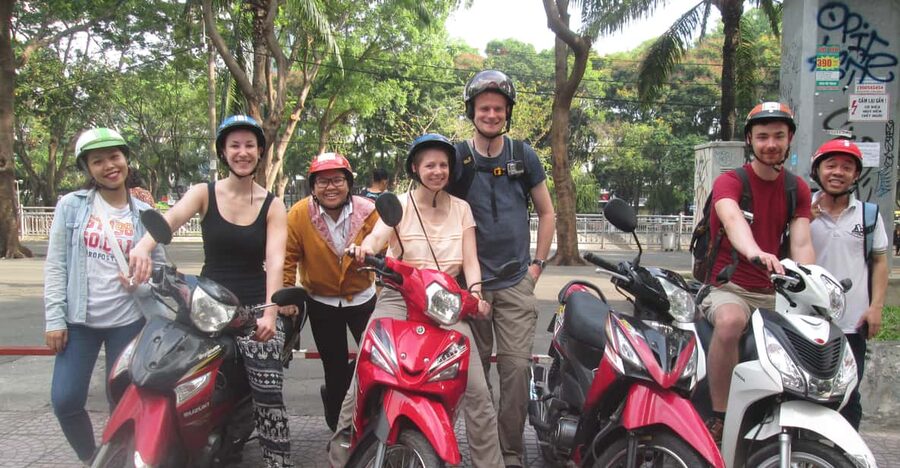
Most city tours in Ho Chi Minh City focus on famous colonial buildings, markets, museums, and food. This one takes a stranger route. You are asked to think about spirits, gods, death, luck, and public memory while moving through ordinary city streets.
That mix gives the tour its character. The ghost stories are part of a wider belief system, rather than a separate horror show. At the pagoda, your guide explains how local worship can include Buddhist practice and respect for different kinds of gods. You also hear about the circle of life, a useful idea for understanding why religious customs remain part of daily life.
I would not book this as a conventional history tour. The tone is more personal and conversational. Guides share ghost stories and their own experiences, so the quality depends partly on the person riding with you. Vincent, Danny, and Wibu are named guides associated with particularly strong experiences, and English is provided throughout.
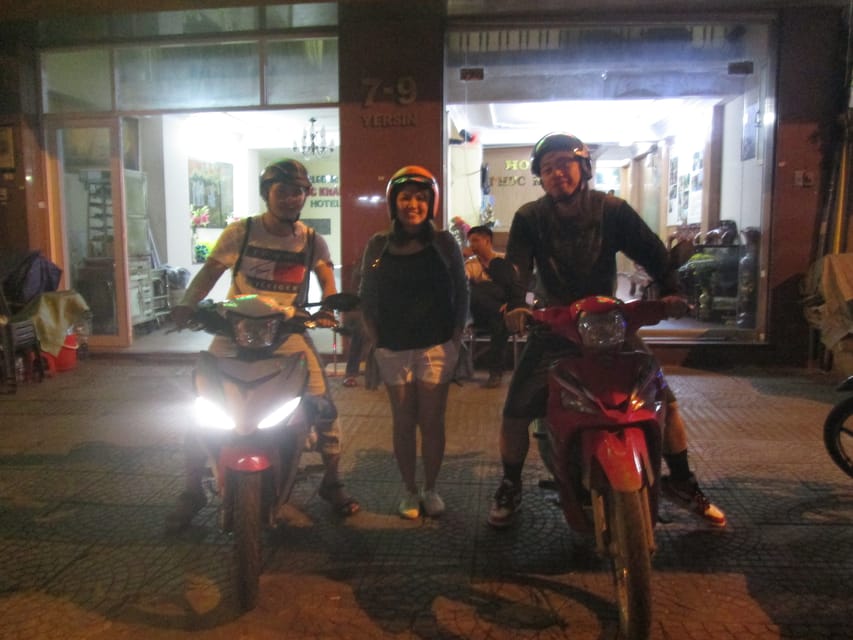
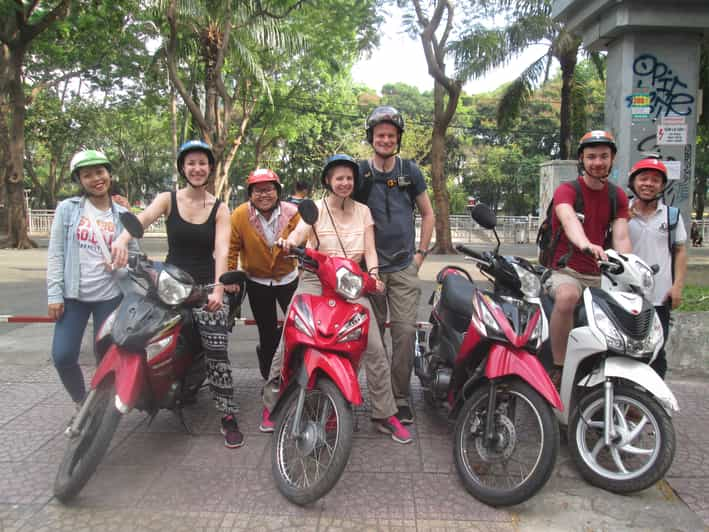
The ride matters, too. Ho Chi Minh City is easier to understand from a motorbike than from the back seat of a car. You move between neighborhoods, observe the city at street level, and avoid spending the whole tour inside one attraction. It is a practical way to cover several unusual stops in a short time.
Other ghost walks and hunts we rate around the world
- New Orleans Premier Ghost, Voodoo and Vampire Walking Tour
★ 4.5 · 12,856 reviews - The World Famous Underground Ghost Tour
★ 4.5 · 9,272 reviews - Chicago: Gangsters and Ghosts Walking Tour
★ 5.0 · 7,155 reviews
Starting at a pagoda and learning how belief works
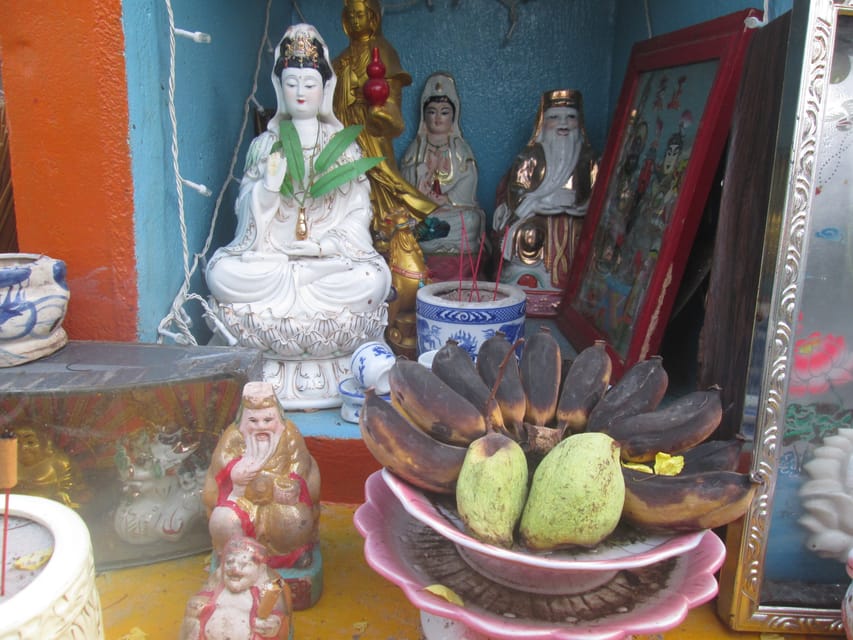
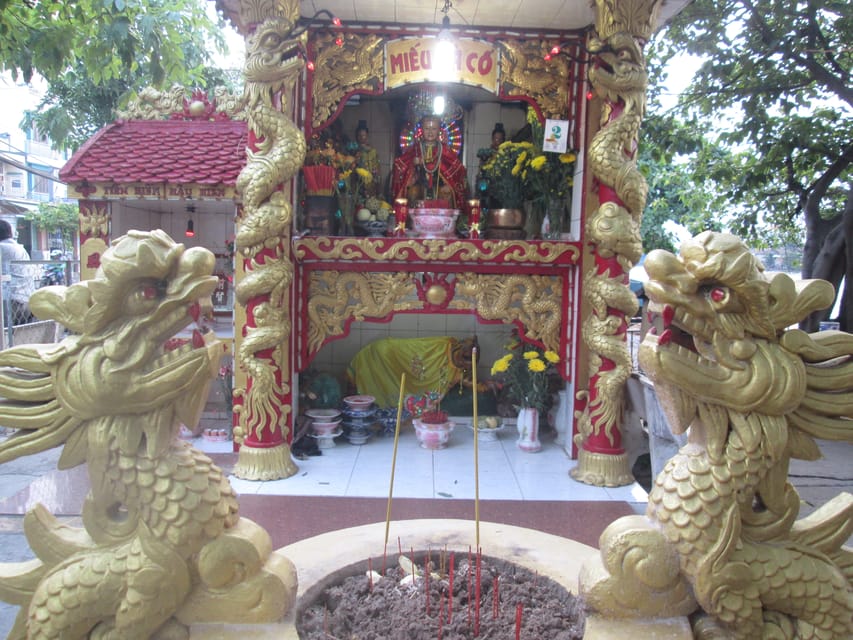
The first stop is a pagoda, where the tour establishes its cultural base. Instead of treating ghosts as isolated scary tales, the guide explains Buddhist ideas and local worship practices.
You learn about the different gods people may honor and how belief in the circle of life shapes customs around death and remembrance. This context is important. Without it, the later visit to the funeral house could feel like a staged fright stop. With it, you have a better chance of seeing the customs as part of family and community life.
The pagoda visit is also useful for readers who want a quick introduction to Vietnamese religious culture but do not have time for a full temple tour. Your guide can explain what you are seeing in plain English, which makes the stop more accessible than simply walking through and guessing at the meaning of the objects and rituals.
Keep your expectations reasonable. The activity information does not promise a long guided study of the pagoda, so this is likely an introductory stop rather than a specialist Buddhist lesson. Its value comes from preparing you for the rest of the route.
Inside the funeral house
The funeral house is the most unusual stop on the tour. You walk inside and learn about funeral customs, while the guides share stories connected with the place and their own experiences.
This is where the tour needs a little sensitivity. A funeral house is not a theme-park attraction. Ceremonies may be taking place, and the people present are dealing with loss. You should follow your guide closely, keep your voice low, and treat the setting as a place of worship and mourning.
For me, this stop gives the tour more substance than a standard ghost walk. Funeral traditions reveal what a society believes about family, death, the afterlife, and responsibility. The guide’s stories may make the visit eerie, but the customs are the lasting point.
The stop may not suit everyone. If you prefer your sightseeing to avoid funerals or places connected with death, choose another city tour. If you are open to learning about local customs in a respectful way, this is likely to be one of the most memorable sections.
Chinatown and the abandoned Ghost Building
The motorbike then heads toward Ho Chi Minh City’s largest Chinatown, where you stop at the so-called Ghost Building. The structure is abandoned because of Feng Shui concerns, according to the tour explanation.
This stop works well because it links a physical building with the way people understand luck, direction, energy, and harm. You are not simply looking at an empty structure. You are hearing why a building can be avoided even in a city where space and property are valuable.
The description does not promise entry into the building, so expect to visit the site and hear its story rather than explore every room. That is a useful distinction when deciding how much actual ghost-hunting you want.
Chinatown also gives the ride a change of pace. After the pagoda and funeral house, you are back among a major urban district. The contrast helps you see that these beliefs are not kept in a remote village. They exist alongside shops, traffic, homes, and everyday city life.
Same old streets, another story to hear:
- Edinburgh: Haunted Underground Vaults and Graveyard Tour
★ 4.6 · 6,607 reviews - Adults-Only New Orleans Ghost, Crime, Voodoo, and Vampire Tour
★ 5.0 · 6,545 reviews - Prague: Ghost Walking Tour Where Legends Come To Life
★ 4.4 · 5,253 reviews - Prague: Ghosts, Legends, Medieval Underground & Dungeon Tour
★ 4.3 · 5,104 reviews
Banh Mi and a local drink
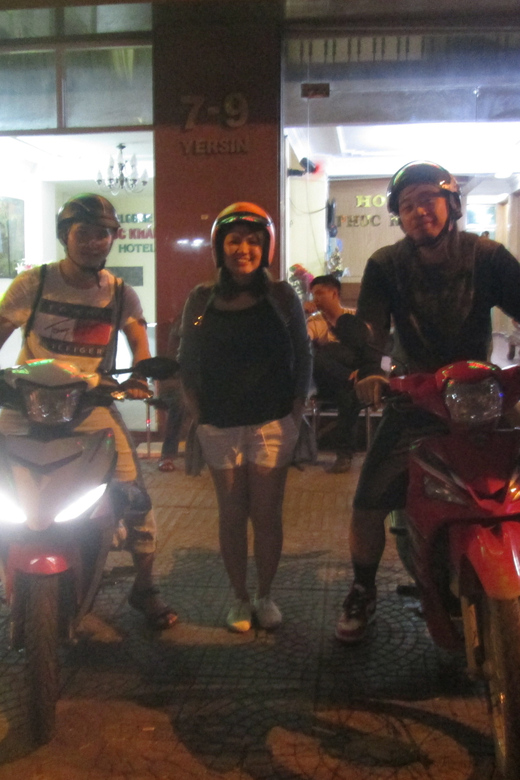
The food stop is simple, but it adds real value. You get a Vietnamese Banh Mi, along with coffee, juice, or a smoothie at a local coffee shop.
Banh Mi is one of Vietnam’s great quick meals: a baguette filled with savory ingredients and served as an easy street-side lunch or snack. The tour does not specify the exact filling, so do not book it expecting a particular recipe. You can choose from coffee, juice, or a smoothie for the drink.
I like this part because it lets you pause and do something locals do. The break also gives you a chance to ask your guide about the earlier stories without trying to talk over traffic or engine noise.
At $16 per person, including the food, drink, motorbike, fuel, helmet, poncho if needed, insurance, and hotel pickup in selected districts, the price is strong. You are paying less for a polished attraction and more for access to a guide, a vehicle, and a point of view. Personal expenses beyond the included items are not covered.
The Thich Quang Duc monument
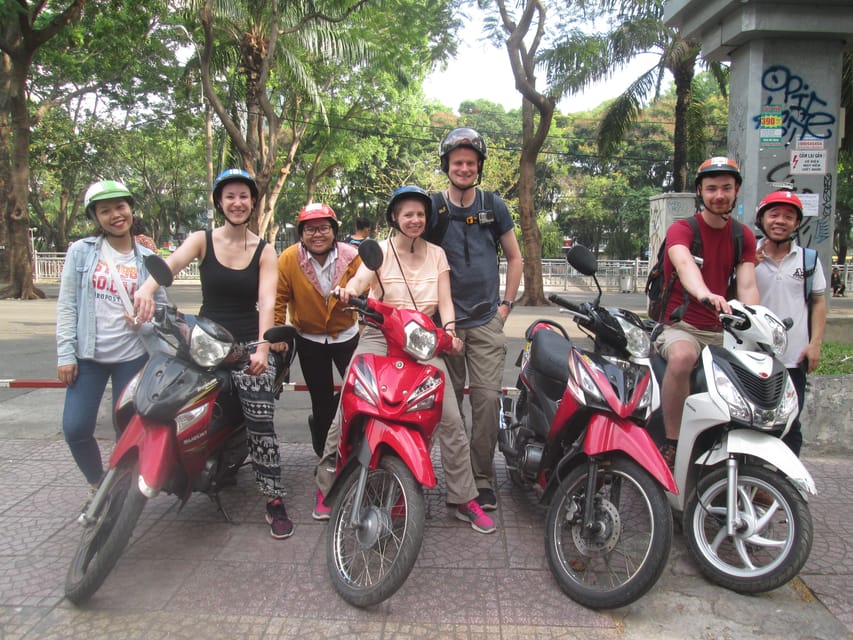
The final major stop is the Thich Quang Duc monument. In 1963, Thich Quang Duc burned himself in protest against the persecution of Buddhists.
This is the point where the tour moves from ghost stories into modern political and religious history. The monument is not just another photo stop. It represents an act of extreme protest and the pressure placed on Buddhist communities at that time.
Your guide provides the setting for the monument, but the supplied details do not promise a long historical lecture. If this event matters deeply to you, plan to do additional reading before or after the tour. Even with a short explanation, the stop gives the route a serious ending.
I appreciate this final contrast. The tour begins with religious belief and supernatural stories, then ends with a documented act of human protest. It reminds you that ideas about faith are not only private matters. They can shape public life, politics, and history.
What the motorbike ride is really like
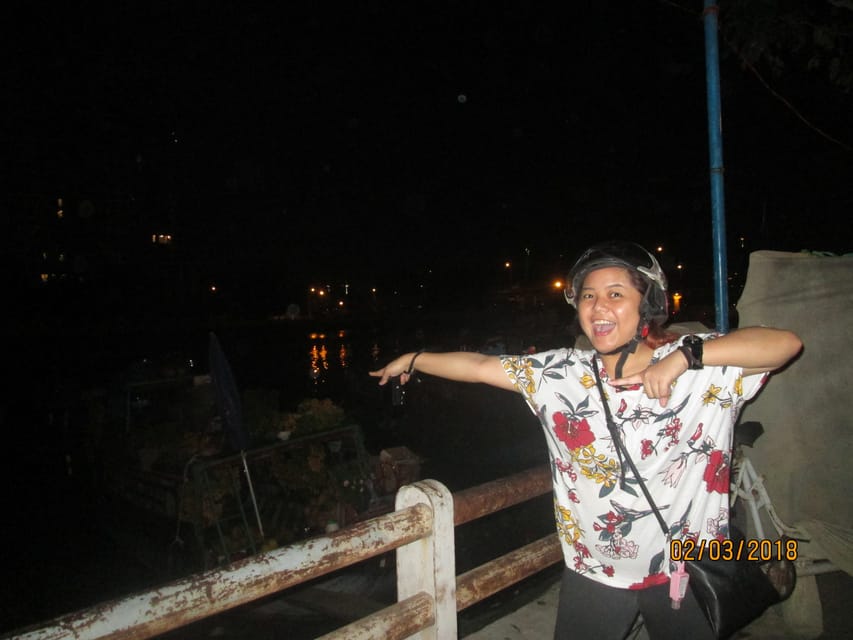
You ride on the back of a motorbike with an English-speaking driver and guide. The tour includes the motorbike, fuel, helmet, and a poncho if required.
This format is efficient. Ho Chi Minh City has several districts and the route includes a pagoda, funeral house, Chinatown, a coffee stop, and the monument. A motorbike lets you move between these locations without arranging separate taxis.
It is also more exposed than a car. You are in the traffic, weather, and noise of the city. That is part of the fun, but it can be tiring if you are uncomfortable on two wheels or have back problems.
The standard tour can be upgraded to a female Ao Dai rider for an additional $10 per person. A car is also possible, but the surcharge is substantial: $50 for a seven-seat car or $70 for a 16-seat van. Those vehicle options must be arranged at least 24 hours in advance, and holiday pricing can change.
For most people, the motorbike is the better value and the more fitting way to experience the city. Choose the car if comfort, weather protection, or group transport matters more than the street-level ride.
Timing, pickup, and group choices
The tour lasts between two and four hours. The exact length likely depends on the selected departure and how much time is spent at each stop, so check the available starting times before booking.
Free hotel pickup and drop-off are offered in Districts 1, 3, and 4. If you stay elsewhere, you can meet at the Saigon Opera House at 07 Quang Truong Lam Son in District 1, or pay a $5 per person surcharge for hotel pickup.
Private and small-group options are available. A private tour costs $5 extra per person. The private format may suit you if you want more time for questions or prefer a quieter conversation during the religious and funeral stops.
The tour operator applies additional charges on listed Vietnamese public holidays. The stated dates include Lunar New Year from January 27 to February 9, April 7, April 30 to May 1, September 1 to 2, and December 31 to January 1. The surcharge is 100 percent for the two-hour tour and 50 percent for other tours, payable on site.
You can cancel up to 24 hours ahead for a full refund, and the reserve now, pay later option keeps your plans flexible. Those terms are useful if your Ho Chi Minh City schedule is still changing.
Who should book this experience
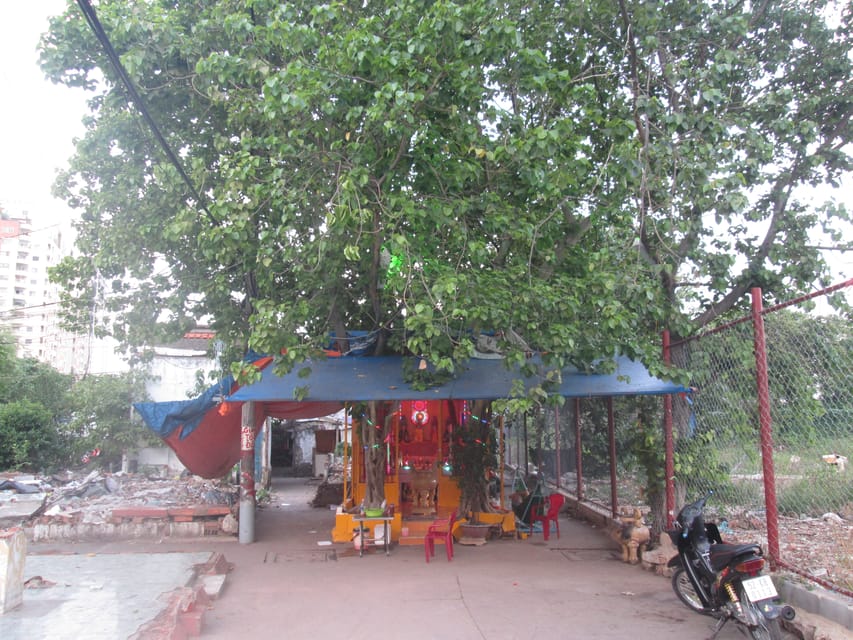
This tour suits you if you want something beyond the usual city landmarks. It is especially good for visitors who enjoy hearing personal stories, learning how belief shapes everyday life, and seeing places that are not normally part of a first-time sightseeing route.
It also suits repeat visitors. One strong point from Sally’s experience with Vincent was seeing a side of Ho Chi Minh City she had not encountered on earlier trips. That is a valuable clue: this is not designed as a basic introduction to the city’s famous buildings.
You should be comfortable with a motorbike, short periods of traffic exposure, and a visit to a funeral house. You should also be willing to listen respectfully when religious or personal subjects come up.
It is less suitable for anyone with back problems, people over 70, or anyone who wants an air-conditioned vehicle and a carefully scripted presentation. Children are not specifically addressed in the information provided, so ask the operator before booking for a younger passenger.
How the guides shape the experience
The guide is central here. A motorbike can get you from place to place, but the stories and explanations give the route its meaning.
Vincent is described as fun, with strong English and a well informed approach. Danny and his team are associated with interesting stories and an exhilarating motorbike ride. Wibu is described as friendly and well informed, with an ability to make the outing enjoyable and memorable.
Those details suggest a relaxed style rather than a formal lecture. That will appeal to you if you like asking questions and hearing personal accounts. It may be less appealing if you want dates, academic references, and a fixed script at every stop.
The tour has received a top rating from five verified bookings, which is encouraging but still a small sample. I would treat the guide names as useful information, not a guarantee that every departure will feel identical. Ask who will lead your tour if a particular guide matters to you.
Is $16 a fair price?
Yes, for the standard motorbike option, the price is very reasonable. For $16, you receive two to four hours of guiding, transport during the tour, fuel, helmet, poncho if needed, insurance, hotel transfers within the free pickup districts, a Banh Mi, and a drink.
The strongest value is the combination of transport and access. You are not paying separate entrance fees for a chain of major attractions. Instead, you are paying for local interpretation and for a route that would be difficult to arrange efficiently on your own.
The price becomes less attractive when you add extras. A private booking adds $5 per person, a female Ao Dai rider adds $10 per person, and pickup outside Districts 1, 3, and 4 adds $5 per person. Car and van surcharges are much higher, so compare those costs with a regular private vehicle before deciding.
Should you book the Ghost, Belief & Culture Tour?
Book it if you want a lively, unusual introduction to the way Ho Chi Minh City connects religion, death, Feng Shui, memory, and history. The pagoda, funeral house, Ghost Building, Banh Mi stop, and Thich Quang Duc monument create a route with more variety than a standard ghost walk.
I would choose the normal motorbike option for the best value, meet at the Saigon Opera House if you are staying outside the free pickup area, and request a small group or private departure if you want plenty of time with the guide. Go with an open mind and respect the funeral house as a real place of mourning, not a spooky set.
Skip it if you have back problems, dislike motorbikes, or want only conventional sightseeing. For everyone else, this is a low-cost way to see a less familiar side of Ho Chi Minh City, with enough food, history, and local belief to make the stories feel grounded.
FAQ
How long does the Ghost, Belief & Culture Tour last?
The tour lasts between two and four hours. Starting times depend on availability.
What language is the tour offered in?
The tour includes a live English-speaking guide.
Where does free hotel pickup apply?
Free pickup and drop-off are available at hotels in Districts 1, 3, and 4.
Where is the meeting point?
The meeting point is the Saigon Opera House at 07 Quang Truong Lam Son in District 1.
What food and drink are included?
You receive a Vietnamese Banh Mi and one local drink, choosing from Vietnamese coffee, juice, or a smoothie.
Is a helmet provided?
Yes. The tour includes a motorbike and helmet. A poncho is also provided if required.
Can I book a private tour?
Yes. Private and small-group options are available. The private tour option has a surcharge of $5 per person.
Who should not take this tour?
The tour is not suitable for people with back problems or people over 70 years old.
Freshly reviewed haunts around the world
- New Orleans French Quarter Dark History, Haunts, and Laughs Tour★ 5.0 · 30 reviews
- New Orleans’ Finest Haunted Pub Tour★ 4.5 · 38 reviews
- Cheers New Orleans! Cocktails, History, Voodoo & Paranormal Tour★ 4.0 · 4 reviews
- Haunted Drunken History Tour from New Orleans★ 5.0 · 135 reviews
- The Original Asbury Park Ghost Tour★ 4.5 · 29 reviews
- Destrehan Plantation Haunted Night Tour★ 4.5 · 100 reviews
- New Haven’s Ghost Walk★ 3.5 · 69 reviews
- Ghosts of Tonopah Haunted History GPS/APP Smartphone guided Walking Tour outside★ 4.5 · 7 reviews
Vietnam Ghost Tours, compared.
HCM city Chinatown Landscape, Beliefs & ghost tour by scooter
Read our review →
Hue to Hoi An by Private Car via City of Ghost, Monkey Mountain
Read our review →
Saigon Ghost beliefs tour, Chinatown sightseeing by scooter
Read our review →
Hue : Private Car to Hoi An via HaiVan pass & City of Ghosts
Read our review →Browse the lists this tour appears in