
Review · STOCKHOLM
Bloody Stockholm 2h – ghosts, horror and Dark Folklore Tour
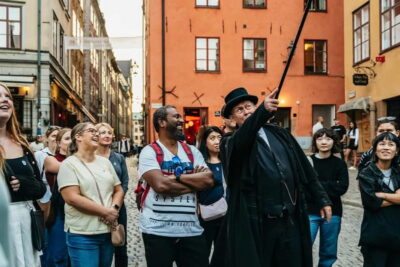
Stockholm’s prettiest streets hide some unpleasant stories. This walking tour turns Stortorget, Prästgatan, the waterfront, and Kungsträdgården into a map of executions, curses, restless spirits, trolls, and creatures that lure people into the water. The setting does much of the work: you walk through real Old Town streets while the guide explains the fears once attached to them.
I like the mix of grim social history and Swedish folklore, especially the talk of body parts used in magic and the many water spirits. I also like the small-group feel, which can make it easier to ask questions. Guides including Jonathan and Åsa have been praised for humor, clear storytelling, and strong local knowledge. The main caution is the title: this is more a dark history and folklore walk than a theatrical ghost hunt.
Key points before you book
- Stortorget sets the tone: Hear about roughly 90 executions linked to the Danish conquest of Stockholm, along with beliefs about blood, gallows, and magical body parts.
- Swedish folklore takes center stage: Learn about the Tomte, Näcken, Bäckahästen, Sjörå, Skogsrået, Huldra, and the eerie Myrling.
- The route crosses central Stockholm: You begin at the Nobel Prize Museum in Old Town and finish by Saint Jacob’s Church beside Kungsträdgården.
- The advertised time needs a little flexibility: The stated duration is about 90 minutes, but one tour ran for more than two and a half hours.
- The group can contain up to 30 people: Smaller groups may offer a more personal experience, but the maximum is not intimate.
- You get a guide, not a show: Expect spoken stories, outdoor stops, questions, and walking rather than actors or staged scares.
A grim start at Stortorget
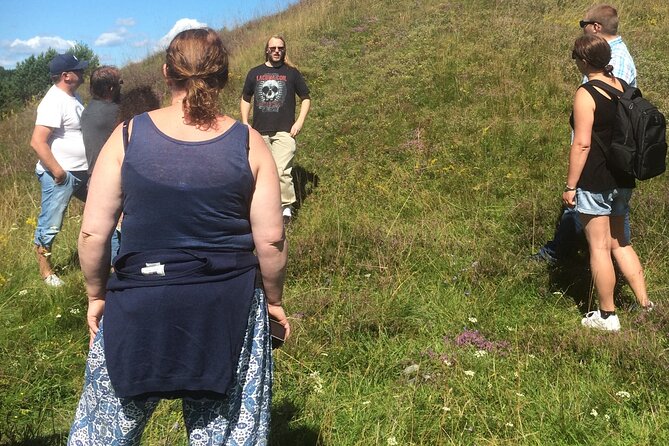
Meet outside the Nobel Prize Museum at Stortorget 2. This is a useful starting point because you are already in the heart of Gamla Stan, where narrow lanes and old facades make the stories feel close at hand.
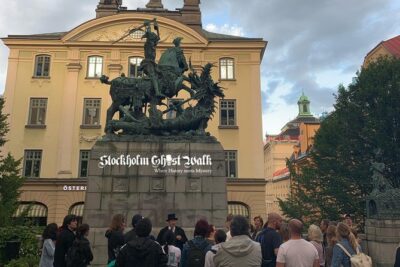
The first stop deals with death in a direct way. You hear about the execution of around 90 people during the period when the Danish King Kristian took Stockholm. The subject is not softened into a vague ghost story. It connects political violence, public punishment, and the way later folklore gave grim places an even darker afterlife.
The talk also moves into magical beliefs about the dead. Blood could be linked with curses, while parts of the gallows or the bodies of the dead were believed to have practical or magical uses. This is likely to be one of the more unusual sections of the walk, since it goes beyond familiar stories about haunted buildings.
I like this opening because it gives the tour a firm historical base. You are not simply told that a place is spooky. You learn why death mattered in the culture and how fear shaped stories about the body.
The stop is listed as about 10 minutes, so do not expect a long lecture at every location. The guide has to keep the pace moving, and that helps prevent the darker material from becoming too heavy. Still, anyone uncomfortable with executions or body-related folklore should know the tone from the start.
More Ghost Story Tours in the world:
- Prague: Ghost Walking Tour Where Legends Come To Life
★ 4.4 · 5,253 reviews - Prague: Ghosts, Legends, Medieval Underground & Dungeon Tour
★ 4.3 · 5,104 reviews - Prague: Ghosts and Legends of the Old Town Evening Tour
★ 4.5 · 3,091 reviews
Prästgatan and the old quarter called Hell
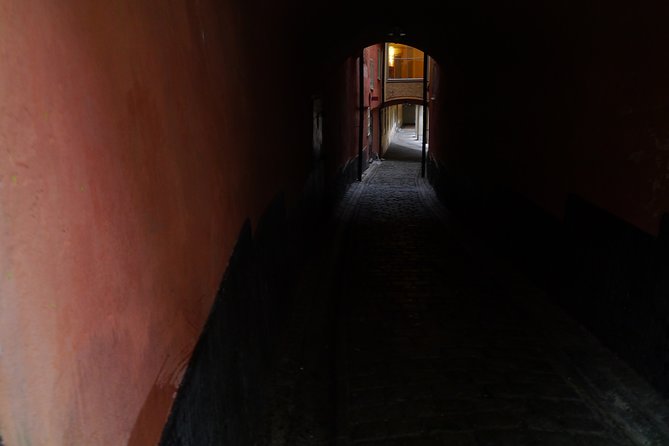
From Stortorget, the walk continues along Prästgatan. Part of this street was once known as Hell, a name that gives the guide an easy opening into the lives of the people who lived there and the way Old Town acquired its darker labels.
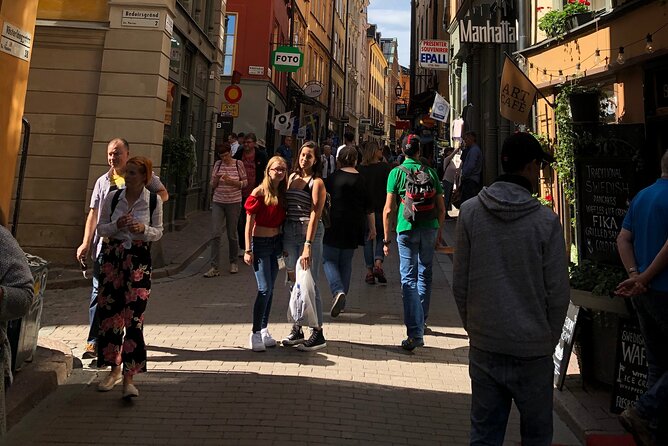
This section is brief, at around 10 minutes, but it helps you look at Gamla Stan differently. You are walking through a charming district full of cafés, shops, and polished facades. The tour asks you to picture the same lanes through the fears and hardships of earlier residents.
Do not expect every stop to reveal a documented haunting. The experience works better if you treat it as a walk through old beliefs and local memory. One of its pleasures is the contrast between the pleasant modern street and the uncomfortable stories attached to it.
The route is on foot through the Old Town, so wear shoes that feel secure on uneven city surfaces. The tour does not list transport between stops. Since the total time may stretch, it is sensible not to schedule a tightly timed dinner, museum entry, or evening show immediately afterward.
Iron, doors, babies, and the Swedish Tomte
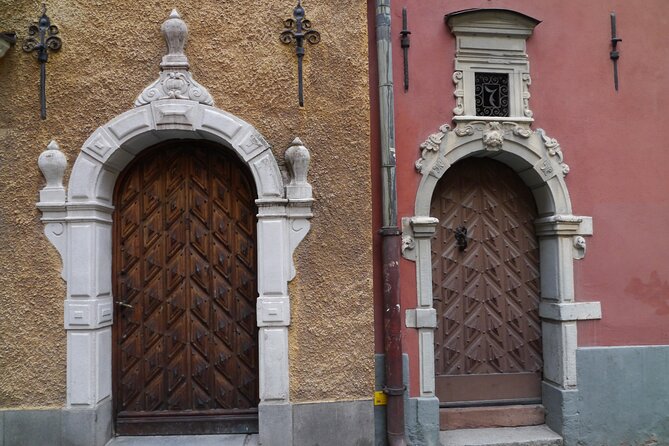
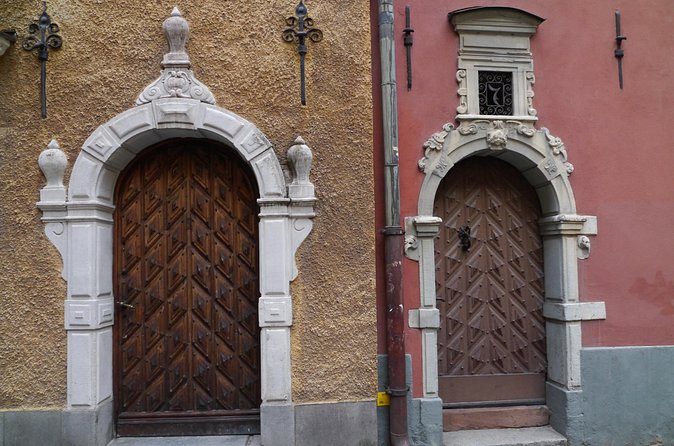
At a house in Stockholm’s Old Town, the guide turns to protective folklore. Iron was believed to guard against the vaesen, the supernatural beings of Scandinavian tradition. You hear about elves arriving with the mist, sometimes understood as souls unable to rest, and about the Swedish Tomte.
This is one of the most useful stops for anyone who wants more than murder stories. It explains how ordinary household features could take on a protective role. The door was not just an entrance. It was a weak point where unwanted forces might enter.
The guide also discusses newborn children before baptism. In the old belief system described on the walk, an unbaptized baby lacked full protection from trolls and the Devil. The tour explains what protective measures people were expected to use.
That material gives you a glimpse of how folklore worked in daily life. These were not only bedtime stories about monsters. They helped explain illness, death, strange weather, bad luck, and the dangers surrounding childbirth.
Families can find this section especially interesting, though parents should decide if the talk of the Devil and vulnerable babies suits younger children. One 10-year-old enjoyed the overall experience, but the tour is not designed specifically as a children’s attraction. The guide adjusts the tone through explanation and humor, yet the subject remains dark.
Water spirits at Logårdstrappan
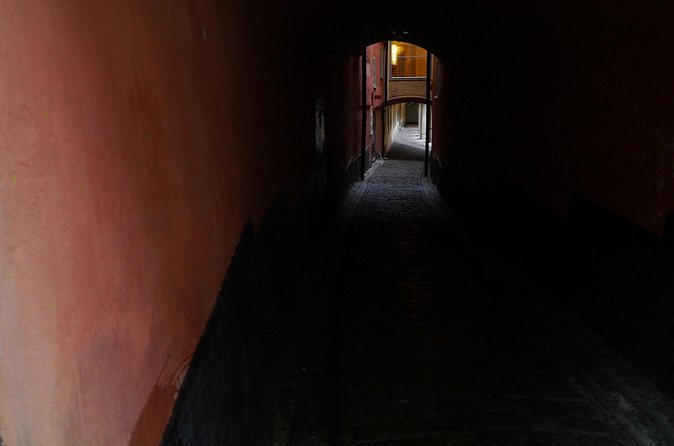
At Logårdstrappan, the focus shifts from streets and doorways to water. This is a strong change of pace. Stockholm is built around water, so stories about dangerous rivers, lakes, and shorelines fit the city particularly well.
You hear about Näcken, the Bäckahästen, Sjörå, and Skepps-rå, among other supernatural beings. The Bäckahästen is presented as the Swedish version of a kelpie, while the other spirits are connected with the sea, ships, and water itself.
The basic warning is simple: the water has intentions. These beings could lure people toward the deep or drown them. The tales turn a familiar waterfront into a place where beauty and danger sit side by side.
I like this part because it connects Swedish folklore with a real feature of Stockholm. You do not need a haunted house or a dark alley for the story to work. A shoreline can be frightening when a culture has long treated it as a place of risk.
The stop lasts about 10 minutes. The guide’s role is important here, since several names can come quickly. If you are curious about the difference between the spirits, ask. The tour is designed for questions, and the guides have been praised for responding openly and adding humor when appropriate.
Two-hour ghost walks around the world:
- Edinburgh: 2-Hour Ghost Tour in Italian
★ 4.6 · 1,624 reviews - 2 hour Extended Ghost and Haunt Tour of Gatlinburg
★ 4.5 · 1,171 reviews - London: Ghastly Ghosts 2-Hour Walking Tour
★ 4.9 · 794 reviews - New York City: Gangsters and Ghosts 2-Hour Walking Tour
★ 4.7 · 615 reviews
Kungsträdgården and the creatures of the forest
The walk continues to Kungsträdgården, where the subject broadens again. Here the guide discusses the Skogsrået, also called Huldra, along with the Myrling and other folklore beings.
The Skogsrået or Huldra is associated with the forest and is described as dangerous. The Myrling is an undead living child, a particularly unsettling idea that shows how folklore could express grief, guilt, and fear around death.
This section adds variety to the tour. You are no longer hearing only about human violence or household protection. The stories show how forests, children, sexuality, water, and the dead were given supernatural explanations.
The location also changes the mood. Kungsträdgården is an open public park rather than a cramped medieval lane. That makes the stories feel less like a haunted alley performance and more like a guided lesson in the creatures of Scandinavian tradition.
If your main goal is a classic ghost tour, this distinction matters. The walk does not promise actors jumping from shadows or special effects. It relies on the guide’s voice, the city around you, and the strange logic of old tales. One person who enjoyed the tour felt it was more an informative stroll than a traditional ghost tour. That is a fair way to set your expectations.
Saint Jacob’s Church and the final protections
The final stop is outside Saint Jacob’s Church on Västra Trädgårdsgatan. The tour examines the church door, vulnerable points in the building, and the ways people thought sacred spaces could be protected.
You also hear about an exorcism involving a child at baptism. The story continues the earlier theme of protection before baptism, but places it inside a religious setting. The guide also explains how someone might punish a worst enemy, moving the subject back toward curses and practical magic.
This ending ties together several ideas from the walk: doors as weak points, iron as protection, the danger of supernatural forces, and the role of churches in controlling fear. It is a fitting finish because the tour has moved from public executions to private household beliefs and finally to religious defenses.
The tour ends outside the church, just north of the Old Town beside Kungsträdgården. You are about a 10-minute walk from the starting point. That makes the finish convenient if you plan to continue around central Stockholm, but it is not the same place where you began. Keep that in mind if you have left something at a nearby hotel or need to meet a driver.
What the guides add to the experience
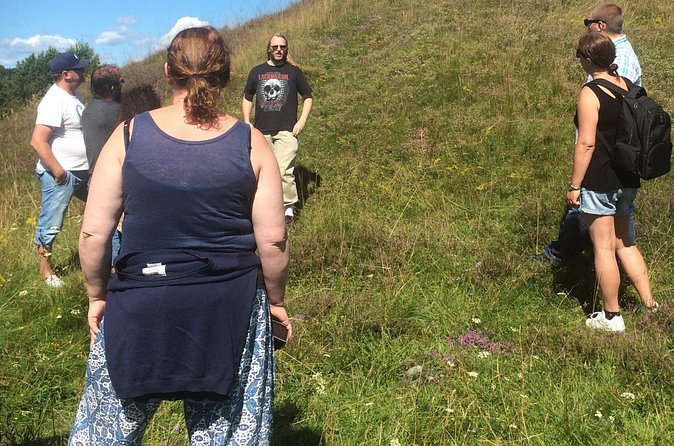
The guide is the main attraction here. The tour has been led by Jonathan and Åsa, and both have received strong praise for detailed explanations, enthusiasm, humor, and willingness to answer questions.
Jonathan’s approach appears to include plenty of background beyond the darkest tales. One tour went far beyond the stated time, lasting more than two and a half hours. That can be excellent value if you enjoy extended conversation and extra facts, but it may be less convenient if you planned the rest of your evening around a 90-minute walk.
Åsa has also led a small group of three people, which made the experience feel more personal. You cannot count on such a small group, since the maximum is 30, but the possibility matters. A group of 30 will feel different from a private walk, especially at narrow streets or busy public sites.
The guide also controls how frightening the tour feels. Some stops deal with death, murder, executions, and the Devil, while others are more cultural and explanatory. The best fit is someone who enjoys a good story with context, not someone seeking a pure scare attraction.
Timing, walking, and practical value
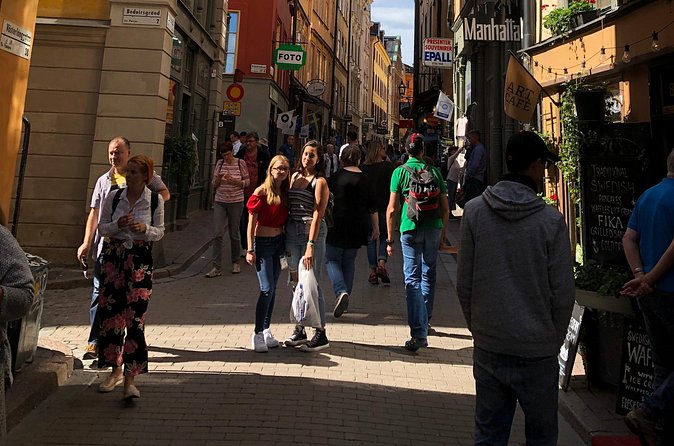
The experience is advertised as about 1 hour and 30 minutes, despite the title referring to two hours. In practice, allow more time. The route has six main stops, with suggested talks ranging from 10 to 20 minutes, and one guide let the conversation run for over two and a half hours.
That variation can be a benefit. You may receive more local detail and have time for questions. It can also affect your plans, so leave a buffer before anything that starts at a fixed time.
The meeting point is the Nobel Prize Museum at Stortorget 2. The endpoint is Saint Jacob’s Church at Västra Trädgårdsgatan 2A. The walk remains around the Old Town and central Stockholm, with the final stop outside the Old Town.
A mobile ticket is provided, and the tour is offered in English. Service animals are allowed, public transportation is nearby, and most people can participate. The group limit is 30. No admission fees are listed for the stops because the experience is an outdoor guided walk rather than a series of museum entries.
No tour price is provided in the supplied details, so I cannot judge the exact cost. In value terms, you are paying for the guide’s time, storytelling, and interpretation rather than tickets to attractions. It is a good use of money if you want local context and a focused route through central Stockholm. It is less compelling if you only want free wandering or a theatrical ghost show.
Free cancellation is available when you cancel at least 24 hours before the start time. Within 24 hours, the amount paid is not refunded, and late changes are not accepted.
Who will enjoy this dark folklore walk?
I would choose this tour if you enjoy:
- Dark episodes of city history, including executions, murder, and political violence
- Scandinavian folklore, especially supernatural beings tied to forests, water, homes, and churches
- A guide-led walk where you can ask questions instead of following a fixed audio recording
- Old Town atmosphere with stories attached to actual streets and buildings
- A flexible evening plan, since the tour may last longer than the stated time
- Family outings with older children, provided they are comfortable with death, curses, and frightening folklore
I would skip it if you want a fast route through Stockholm’s major sights, a fully scripted horror performance, or a tour limited to verified ghost encounters. The experience mixes documented history with traditional beliefs, and the folklore material is central.
Should you book Bloody Stockholm?
Book it if the thought of hearing about Stockholm’s executions, magical body parts, trolls, water spirits, undead children, and church protections sounds more appealing than another standard sightseeing loop. I especially like the way the walk makes ordinary places feel unfamiliar without needing props or actors.
Go in expecting an informative dark-history walk with folklore, not a haunted-house attraction. Allow at least two hours if your schedule permits, wear practical shoes, and remember that the end point is about a 10-minute walk from the start. If you want a guide who can add context, answer questions, and occasionally let the stories run long, this is a strong choice.
FAQ
How long does Bloody Stockholm last?
The stated duration is approximately 1 hour and 30 minutes. The title refers to two hours, and one tour lasted more than two and a half hours, so allow extra time.
Where does the tour begin?
It begins at the Nobel Prize Museum, Stortorget 2, 103 16 Stockholm, Sweden.
Where does the tour end?
It ends outside Saint Jacob’s Church at Västra Trädgårdsgatan 2A, 111 53 Stockholm, beside Kungsträdgården.
Is the tour conducted in English?
Yes. English is the listed tour language.
What places are included on the walk?
The route includes Stortorget, Prästgatan, Stockholm Old Town, Logårdstrappan, Kungsträdgården, and Saint Jacob’s Church.
Is this a traditional ghost tour?
The experience includes ghosts, horror, and dark folklore, but it is primarily a guided walk about history and supernatural beliefs. It does not present itself as a theatrical show.
What folklore creatures are discussed?
The tour covers the Swedish Tomte, Näcken, Bäckahästen, Sjörå, Skepps-rå, Skogsrået or Huldra, Myrling, elves, trolls, and other vaesen.
How large can the group be?
The maximum group size is 30 people. Smaller groups may occur, and a group of three has taken the tour.
Can I cancel for a refund?
Yes, if you cancel at least 24 hours before the experience starts. Cancellations within 24 hours are not refunded, and late changes are not accepted.
Freshly reviewed haunts around the world
- New Orleans French Quarter Dark History, Haunts, and Laughs Tour★ 5.0 · 30 reviews
- New Orleans’ Finest Haunted Pub Tour★ 4.5 · 38 reviews
- Cheers New Orleans! Cocktails, History, Voodoo & Paranormal Tour★ 4.0 · 4 reviews
- Haunted Drunken History Tour from New Orleans★ 5.0 · 135 reviews
- The Original Asbury Park Ghost Tour★ 4.5 · 29 reviews
- Destrehan Plantation Haunted Night Tour★ 4.5 · 100 reviews
- New Haven’s Ghost Walk★ 3.5 · 69 reviews
- Ghosts of Tonopah Haunted History GPS/APP Smartphone guided Walking Tour outside★ 4.5 · 7 reviews
Stockholm Ghost Tours, compared.
The Original Stockholm Ghost Walk and Historical Tour – Gamla Stan
Read our review →
Bloody Stockholm: ghosts, horror and dark folklore 2h
Read our review →Browse the lists this tour appears in