
Review · USA
Ghost Walking Tour in Minneapolis
Minneapolis reveals a darker side after sunset, when City Hall, old mills, bridges, and a former train depot become settings for stories about executions, industrial accidents, mysterious deaths, and restless spirits. This walking tour connects those tales across downtown and the Mississippi Riverfront, giving you more than a string of generic ghost stories.
I like the strong mix of local history and folklore, especially the stops tied to Minnesota’s last execution and the Mill Ruins tragedy. I also like the central route, which leaves you well placed to keep exploring downtown after the tour. The main drawback is that the walk can be tiring, and you may not get close to every exact spot said to be haunted.
Key points to know before you go

- Minnesota’s last execution: City Hall sets the tone with one of the tour’s most serious and memorable stories.
- Seven major stops: The route covers City Hall, Stone Arch Bridge, The Depot, Foshay Tower, Hennepin Avenue Bridge, the Guthrie Theater, Mill Ruins Park, and St. Anthony Main.
- A history-first ghost walk: Expect real Minneapolis events and buildings to anchor the supernatural tales.
- About 90 minutes to two hours: You will be on your feet outdoors, with walking between stops.
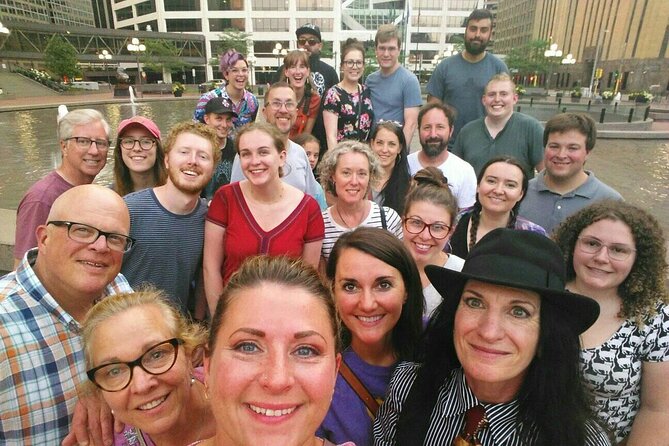
- A small maximum group of 30: The group may be much smaller, as it was for one tour led by Mad Tom, who guided 16 people.
- Good weather matters: The tour can be canceled in poor weather, with a new date or full refund offered.
Why Minneapolis works so well after dark
This is not a haunted-house attraction with actors jumping from behind doors. It is an outdoor storytelling walk through a city shaped by the Mississippi River, flour milling, rail travel, grand architecture, and sudden loss.
That setting gives the guide useful material. Minneapolis has old civic buildings, former industrial sites, river crossings, theaters, and commercial towers packed into a fairly central area. Each stop adds a different kind of story. Some concern death and disaster. Others focus on buildings where people claim the past has not quite gone away.
I appreciate that the tour does not rely only on vague tales about a spooky room. The stories are linked to identifiable places, including the site of Minnesota’s last execution and the ruins left by a mill explosion. Even if you remain skeptical about ghosts, you still get a short lesson in how Minneapolis grew and what happened when that growth went wrong.
The tour is offered in English and begins at 7 p.m. That timing gives the walk its proper mood without making it a late-night event. You can still have dinner afterward or continue looking around downtown, though the exact finish time depends on the pace of the group.
More Ghost Walking Tours in the USA
- New Orleans Premier Ghost, Voodoo and Vampire Walking Tour
★ 4.5 · 12,856 reviews - Chicago: Gangsters and Ghosts Walking Tour
★ 5.0 · 7,155 reviews - Savannah History and Haunts Candlelit Ghost Walking Tour
★ 5.0 · 3,235 reviews
City Hall and the story of Minnesota’s last execution
The tour begins at 102 Portland Ave S, by Minneapolis City Hall. This first stop introduces one of the heaviest subjects of the evening: the location of Minnesota’s last execution and the ghost stories connected with it.
City Hall is a smart opening point because it gives the tour a civic setting rather than starting with a random spooky tale. The story has a clear connection to Minnesota’s past, and it shows how public punishment, fear, and memory can continue to shape a place long after the event itself.
Allow the guide to set the pace here. The stop lasts about 15 minutes, which is enough time for context and storytelling without turning the opening into a long lecture. You will not pay a separate admission fee at any stop, since this is an outdoor walking experience.
This part may appeal most to you if you like historical crime stories and the darker side of civic history. It may be less comfortable if you prefer light, playful ghost stories. The tour includes spooky atmosphere, but not every subject is cheerful.
Stone Arch Bridge and the Mill Ruins tragedy
From City Hall, the route continues toward Stone Arch Bridge, one of the most recognizable places along the Minneapolis riverfront. Here, the focus shifts to the ghosts associated with the Mill Ruins tragedy.
This stop brings together the river, the old milling district, and the dangers of industrial Minneapolis. The bridge gives the guide a strong visual setting, while the nearby ruins help explain why the area carries so many stories of accidents and loss.
The stop lasts roughly 15 minutes. You will hear the story outdoors, so your view and comfort can depend on weather, darkness, and how close the group can stand to the relevant sites. That point matters because the walk is about telling the story from the surrounding area, not necessarily entering every building or standing at every exact location connected with a haunting.
I like this section because it links supernatural folklore to working-city history. You are not simply hearing that a ghost appears somewhere. You are hearing why this part of Minneapolis became associated with tragedy in the first place.
The Depot and Minneapolis’s railroad past
The next stop is The Depot Minneapolis, the old train depot. The question here is direct: who is haunting the former station?
Rail stations naturally make good ghost-story settings. They are places of arrival, departure, waiting, and farewell. The Depot also gives the walk a change of tone after the river and mill stories. Instead of focusing mainly on industrial accidents, the guide can turn toward a building connected with movement and human drama.
You will spend about 15 minutes here. Since the stop is part of an outdoor route, the guide’s storytelling does much of the work. Look at the building and its surroundings as you listen, but do not expect a museum visit or a separate tour inside.
This is a useful stop for understanding the tour’s method. It uses recognizable Minneapolis buildings as anchors, then layers local ghost lore over their public history. You get a sense of the city even when the supernatural claims are a matter of belief.
Same old streets, another story to hear:
- Adults-Only New Orleans Ghost, Crime, Voodoo, and Vampire Tour
★ 5.0 · 6,545 reviews - Salem’s Best Ghost Tour
★ 4.5 · 4,186 reviews - Haunted Evening Horse and Carriage Tour of Charleston
★ 4.5 · 3,678 reviews - New Orleans Adults-Only Ghost, Voodoo and Vampire Tour
★ 5.0 · 3,291 reviews
Foshay Tower and a shorter haunted stop
Foshay Tower receives about 10 minutes. The subject is the ghosts of this famous Minneapolis landmark.
The shorter timing makes sense here. The tower is an important visual marker, but the walk does not treat every stop as a full historical presentation. The guide needs to keep the group moving through downtown, and a compact story can work well when the building itself provides much of the atmosphere.
Foshay Tower also adds a different architectural mood to the evening. After the riverfront, bridge, depot, and mill district, you are looking at one of the city’s best-known towers. The change helps prevent the tour from feeling like one long version of the same haunted-mill tale.
If you enjoy city architecture, pay attention to how the guide connects the building to its ghost stories. If you want a long stop at each location, the 10-minute format may feel brief.
Hennepin Avenue Bridge and Mississippi River folklore
At Hennepin Avenue Bridge, the guide tells stories about people who died mysteriously in the Mississippi River and explains how those deaths connect with local folklore. This stop lasts around 10 minutes.
The bridge is less about one building and more about the river as a force in the city’s stories. Water can erase evidence, separate neighborhoods, and turn an ordinary crossing into a place of danger. Here, the tour moves from specific sites toward a broader set of legends tied to the Mississippi.
This is also one of the stops where the night setting matters most. You are standing outside near a major river crossing, listening to stories about people who vanished or died under unclear circumstances. The atmosphere comes from the location and the subject, not from special effects.
Stay aware of the walking surface and the pace of the group. The route involves several stops and continued movement, so this portion may be difficult for anyone with mobility limits. The tour allows service animals, and most people can participate, but the walking distance deserves serious thought before booking.
The Guthrie Theater and Minneapolis theater lore
The Guthrie Theater brings the tour into the world of performance. The guide explores whether the spirits associated with the old theater have followed Minneapolis’s theater tradition to the new location.
This stop lasts about 10 minutes. It offers a welcome change from stories about executions, industrial disasters, and river deaths. The topic is still eerie, but theater ghosts tend to raise different questions: Can a performance space keep the memory of people who worked there? Can a building carry a reputation from one location to another?
The wording of the story is part of the appeal. Rather than claiming a simple haunted-building fact, the tour asks you to consider the link between the old theater tradition and the current Guthrie location. That gives the guide room to tell a story about continuity, memory, and local belief.
The Guthrie stop is best for anyone who enjoys theater, buildings with a public identity, or ghost stories that rely more on atmosphere than on a single violent event.
Mill Ruins Park and the danger behind the ruins
Mill Ruins Park is another major point on the walk, with about 10 minutes devoted to the idea that the mill explosion left behind more than physical ruins.
This is one of the tour’s most fitting locations. The remains of the milling district already show how industry changed Minneapolis. The explosion adds a tragic layer, and the ghost stories give the ruins a second life after dark.
I like the way this stop can tie several parts of the tour together. Earlier, you hear about the Mill Ruins tragedy near Stone Arch Bridge. Here, the setting makes the consequences easier to picture. The story has a physical backdrop rather than relying only on the guide’s words.
Do not expect a lengthy exploration of the ruins. The stop is one piece of a moving walking tour, not a private archaeological visit. The most useful approach is to listen for the connection between the mill district’s working past and the supernatural stories that grew from it.
St. Anthony Main and the final stretch
St. Anthony Main, built in the 1850s, adds another historic district to the route. The area is described as full of history and haunts, making it a fitting part of the final stretch.
The supplied schedule does not give this stop a separate time, so the exact emphasis may vary with the group and guide. That flexibility can be helpful. If the guide has a strong story to tell, the group can give it room. If earlier stops run long, this section may be more compact.
St. Anthony Main also makes the tour useful beyond the ghost stories. You are introduced to one of the oldest parts of the route and can return later for more time in the area. Since the walk ends back at the meeting point, you can use the tour as an evening orientation before choosing where to eat or explore next.
What the guides bring to the walk
The guide matters greatly on a storytelling tour. One particularly memorable guide named in the tour material is Mad Tom, who led a group of 16. His role was praised for creating spooky atmosphere and telling fascinating local stories.
That does not mean Mad Tom will lead every departure. The experience is provided by American Ghost Walks, Minnesota, and the specific guide can vary. Still, the available details suggest that storytelling style is a major part of what you are paying for.
A good guide needs to do three things well: explain the real setting, keep the ghost tales clear, and maintain a pace that works for a walking group. The strongest part of this tour appears to be the blend of education and entertainment. You learn about Minneapolis while also getting the mood expected from a ghost walk.
The maximum group size is 30. That is large enough to create a social evening but smaller than a huge city crowd. One group of 16 had a guide who could give the walk a more personal feel. Your group may be different, so the exact atmosphere cannot be guaranteed.
Is $34.99 a fair price?
At $34.99 per person, this is not the cheapest way to spend an evening in Minneapolis. You are paying for a guided story walk rather than admission to an attraction, so the value depends on how much you enjoy local history, folklore, and guided interpretation.
I think the price is reasonable if you want a structured introduction to downtown and the riverfront. The route includes several recognizable places, and the guide ties them together instead of leaving you to find the stories on your own. You also get a ready-made evening plan with no separate admission fees at the stops.
The value is weaker if you only want to stand directly beside haunted locations or take a short stroll. A key limitation is that the guide may not get very close to every exact site said to be haunted. You are buying the stories and the route, not guaranteed access to restricted buildings or private areas.
The walk can also replace part of a regular city sightseeing outing. Afterward, you will already have seen City Hall, Stone Arch Bridge, The Depot, Foshay Tower, Hennepin Avenue Bridge, the Guthrie Theater, Mill Ruins Park, and St. Anthony Main from the outside.
Who should book this walk?
I would recommend it to you if you enjoy ghost stories but also want facts about the city behind them. It suits couples, friends, and families with older children who can manage an evening walk and stay engaged with spoken storytelling.
It is especially useful on a first Minneapolis visit because the downtown start and end point make it easy to fit into a larger plan. You can use the walk to learn which parts of the riverfront and central city deserve a return visit in daylight.
I would think twice if you have trouble walking for up to two hours, standing outdoors, or keeping pace with a group. One stop may be close to a public building, while another may involve a bridge or riverfront setting. The route is not presented as a short, stationary talk.
Bring clothing suited to the forecast, since the tour requires good weather and takes place outside. If poor weather forces a cancellation, you are offered another date or a full refund. However, your own cancellation is non-refundable and cannot be changed, so book only when your plans are firm.
Should you book the Minneapolis Ghost Walking Tour?
Book this tour if you want Minneapolis history served with a spooky edge. The best parts are the stories tied to City Hall, the mills, the Mississippi River, and the old theater tradition. The central route, English-speaking guide, and manageable 90-minute to two-hour length make it easy to add to an evening downtown.
Skip it if you need close access to every haunted site, dislike outdoor walking, or prefer a theatrical attraction with actors and special effects. For the right audience, the appeal is simpler: you walk through real Minneapolis places, hear the stories attached to them, and see how tragedy and folklore can shape a city’s memory.
FAQ
Where does the ghost tour begin?
The tour begins at 102 Portland Ave S, Minneapolis, Minnesota 55401.
What time does the tour start?
The scheduled start time is 7 p.m.
How long does the walking tour last?
The tour lasts approximately one hour and 30 minutes to two hours.
Where does the tour finish?
The activity ends back at the meeting point.
What language is the tour offered in?
The tour is offered in English.
How many people can join the tour?
The maximum group size is 30 travelers.
What happens if poor weather cancels the tour?
If poor weather causes the tour to be canceled, you can choose a different date or receive a full refund.
Freshly reviewed haunts around the USA
- New Orleans French Quarter Dark History, Haunts, and Laughs Tour★ 5.0 · 30 reviews
- New Orleans’ Finest Haunted Pub Tour★ 4.5 · 38 reviews
- Cheers New Orleans! Cocktails, History, Voodoo & Paranormal Tour★ 4.0 · 4 reviews
- Haunted Drunken History Tour from New Orleans★ 5.0 · 135 reviews
- Adults-Only True Crime, Mafia, Dark History Tour★ 5.0 · 22 reviews
- Destrehan Plantation Haunted Night Tour★ 4.5 · 100 reviews
- The Original Asbury Park Ghost Tour★ 4.5 · 29 reviews
- New Haven’s Ghost Walk★ 3.5 · 69 reviews
USA Ghost Tours, compared.
New Orleans Premier Ghost, Voodoo and Vampire Walking Tour
Read our review →

Adults-Only New Orleans Ghost, Crime, Voodoo, and Vampire Tour
Read our review →
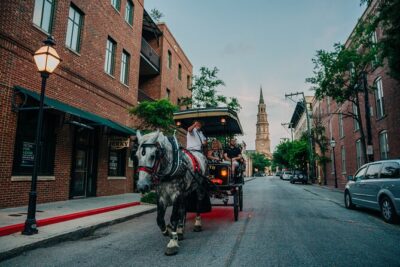
Haunted Evening Horse and Carriage Tour of Charleston
Read our review →
Savannah History and Haunts Candlelit Ghost Walking Tour
Read our review →
Ghosts of Charleston Night-Time Walking Tour with Unitarian Church Graveyard
Read our review →
Browse the lists this tour appears in