
Review · ISTANBUL, TURKEY
Istanbul Haunted Night Tour
Istanbul’s darkest stories unfold outdoors at night, among the ruins, tombs, and grand squares of the old city. This walk links Byzantine coups, Ottoman executions, grisly palace customs, and ghost lore instead of treating Istanbul as only a city of mosques and monuments. I like the way it turns familiar sights into places with sharper edges.
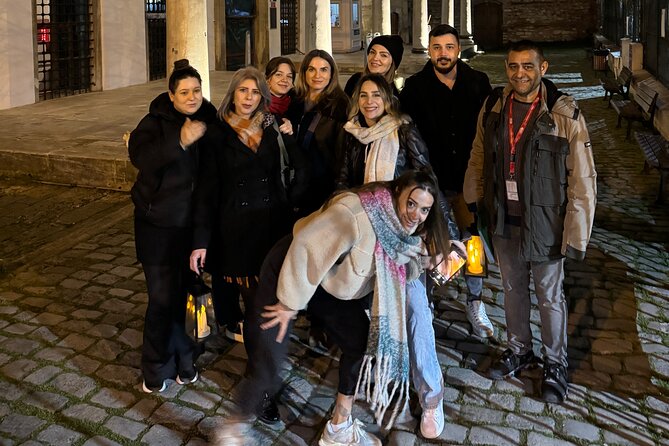
I also like the hands-on ghost-hunting equipment and the strong historical focus. Guides including Sara, Brent, and Mehmet bring different personalities to the evening, but the experience consistently aims for lively storytelling. The main caution is simple: this is more a history walk with spooky tools than a guaranteed ghost encounter. One person openly noted that no ghost appeared, though the evening still delivered plenty of atmosphere and dark tales.
Key things to know before you book
- The Hippodrome is the emotional center: Expect stories of chariot factions, public executions, imperial power, and the Nika Revolt massacre.
- The route visits overlooked corners: Sphendone’s ancient vaulted remains and Ahmet Tevfik Pasa Mezarı add quieter stops beyond the usual sightseeing circuit.
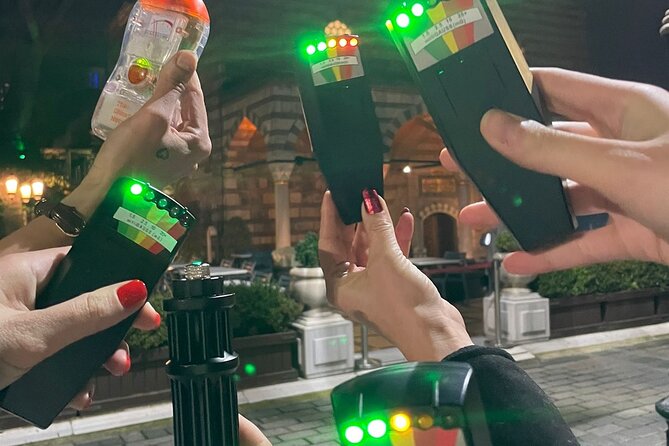
- You get real equipment to use: EMF detectors, dowsing rods, a green laser called Maddusa’s Web, and an EVP recorder are included.
- The walk begins at 8 p.m.: You meet at the Column of Constantine and finish near Topkapi Palace’s Imperial Gate.
- It suits history fans as much as ghost fans: The stories connect supernatural ideas with documented Byzantine and Ottoman events.
- The group is limited to 20 people: That should make it easier to hear the guide and take part in the equipment-based activities.
Why Istanbul’s old center works so well after dark
The tour begins at the Column of Constantine, where Constantine moved the Roman Empire’s capital in the year 330. The column and the old Forum of Constantine are not treated as lifeless stones. They become the opening setting for stories of power, fear, and the violence that shaped Constantinople.
That is a smart starting point. You are already in the historic core, but the subject changes your attention. Instead of simply admiring an ancient column, you begin asking what happened around it and who paid the price for imperial rule.
The route then threads through the Sultanahmet area, where major monuments sit close together. The walking distances are not given in detail, but the stops are compact, ranging from five to twenty minutes. The full experience lasts about two hours, so you should expect a steady evening walk with frequent pauses for storytelling.
The tour is offered in English and begins at 8 p.m. That timing matters. The old city takes on a quieter, more dramatic mood after the day’s sightseeing crowds have thinned. You will still be in central Istanbul, but the focus shifts from taking standard photographs to listening for the less comfortable stories behind the monuments.
Evening frights around the world:
- Haunted Evening Horse and Carriage Tour of Charleston
★ 4.5 · 3,678 reviews - Edinburgh: Evening Underground Ghost Tour
★ 4.4 · 3,092 reviews - Prague: Ghosts and Legends of the Old Town Evening Tour
★ 4.5 · 3,091 reviews
Constantine’s column and a nineteenth-century graveyard
The first stop, the Forum of Constantine, lasts about ten minutes. The column is tied to the foundation of Constantinople as the Roman Empire’s new capital, but the presentation moves quickly toward the site’s darker associations. This is less a formal archaeological lecture and more an introduction to the way imperial ambition, public spectacle, and violence overlapped.
Next comes Ahmet Tevfik Pasa Mezarı, a graveyard connected with a nineteenth-century Sultan and his advisers. Here the themes turn to betrayal and assassination. A cemetery is a good setting for this part of the walk because the stories concern people who lived close to authority, yet could still be destroyed by it.
You should not expect extended time at either stop. Each receives about ten minutes, which keeps the evening moving but also means the guide must choose details carefully. If you want long architectural explanations or a slow examination of every monument, this format may feel brisk. If you prefer a strong story with a clear setting, the pacing works well.
Sphendone and the prison beneath the Hippodrome
The Sphendone is one of the most interesting parts of the route. These vaulted remains formed the south side of the Hippodrome, and the tour visits the outside of an ancient prison that once held wild animals for the circus.
That detail changes how you read the Hippodrome. The great arena was not just a place for racing horses and cheering factions. It also depended on cages, punishment, and the controlled display of danger. The discussion includes torture methods and the disfigurement practiced in that period, so this section is not suitable for anyone seeking a gentle ghost story.
The first Sphendone stop lasts about ten minutes. Later, the tour returns to the back side for another eight-minute stop. That return visit focuses on the best seats in the house and the deaths connected with this part of the arena. It also covers a successful coup that removed a powerful emperor, along with what happened to him and his sons above these walls.
I like this two-part approach because it gives the remains a fuller role in the evening. You first hear about confinement and cruelty, then return to consider privilege, spectacle, and political overthrow. The drawback is that the structure may be difficult to picture without a guide’s explanation. What survives today is largely a set of heavy, curved walls, not a complete arena.
The Hippodrome, where sport and terror shared one stage
The main Hippodrome stop lasts about twenty minutes, making it the longest single pause on the route. That extra time is deserved. The Hippodrome was the sporting and social center of Constantinople for more than a thousand years and ranked just below Rome’s Circus Maximus in scale and importance.
Chariot racing gave ordinary citizens a way to see the emperor face to face. Rival factions could turn sporting loyalty into political pressure, and a crowd gathered for entertainment could quickly become a threat to the throne. The arena also hosted public executions and one of the most horrific massacres in human history.
This is where the tour’s history and ghost-story elements fit together best. The haunting quality comes less from cheap theatrics than from the number of lives lost in a place designed for public excitement. You can stand in a familiar square and understand it as a stage for imperial display, mob violence, and mass death.
The Hippodrome stop also helps explain why the tour is useful even if you are not committed to believing in ghosts. It gives you a different reading of the city. The stories are grisly, but they are tied to real political and social events rather than floating free from the site.
Other ghost walks and hunts we rate around the world
- New Orleans Premier Ghost, Voodoo and Vampire Walking Tour
★ 4.5 · 12,856 reviews - The World Famous Underground Ghost Tour
★ 4.5 · 9,272 reviews - Chicago: Gangsters and Ghosts Walking Tour
★ 5.0 · 7,155 reviews - Edinburgh: Haunted Underground Vaults and Graveyard Tour
★ 4.6 · 6,607 reviews
Little Hagia Sophia and an Ottoman execution
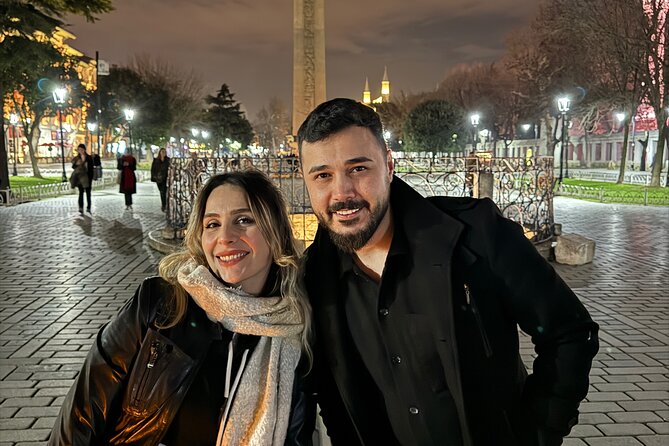
At Kucuk Ayasofya, also called the Little Hagia Sophia Mosque, the tour shifts from the Hippodrome to a building with several layers of identity. It began as the Church of Saints Sergius and Baccus and later became a mosque under Ottoman rule. Before that church was built, the area was connected with a palace used by Justinian before he became emperor in the sixth century.
The story here concerns a high-ranking eunuch in the sixteenth century who was embezzling money and avoiding taxes. He was eventually found and executed, with the tale focusing on a particularly personal form of punishment.
This stop lasts about ten minutes and includes admission. That is worth noting because most of the evening takes place outside and carries no separate admission charge. The building adds an interior or enclosed religious setting to a route otherwise centered on streets, ruins, and open squares.
The tale is blunt and unsettling. You should expect the tour to discuss bodily violence directly, not soften it for a broad family audience. The overall experience may suit older teenagers and adults who are comfortable with executions, torture, and murder as historical subjects.
The Serpent Column and a dangerous piece of war booty
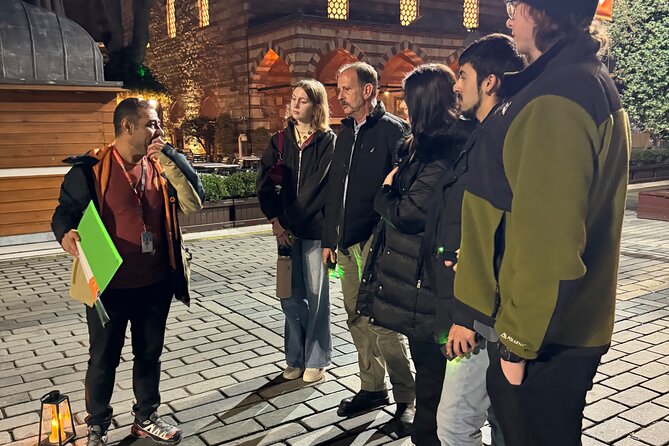
The Serpent Column receives about eight minutes. The monument came to Constantinople as spoils of war, and the guide connects it with the brutal execution of a Byzantine emperor.
It is an easy monument to pass without much thought. The tour’s strength is its habit of stopping at such objects and attaching them to a particular conflict or death. You will not just hear that the column is old. You will hear why an object taken through war can acquire a troubled reputation in its new home.
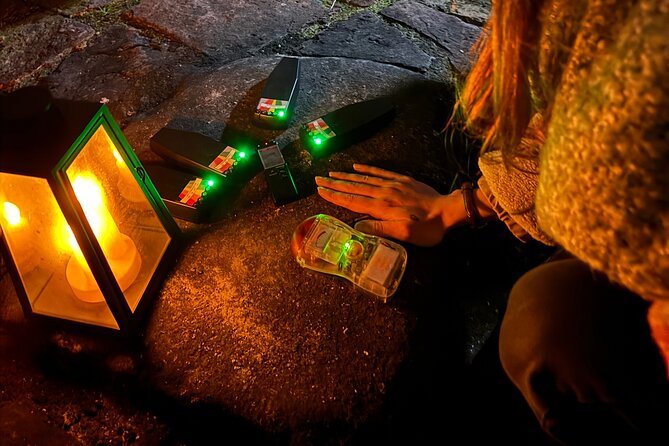
This is also a good point to use the supplied equipment. The EMF detectors, dowsing rods, green laser, and EVP recorder give you something to do beyond listening. Their presence makes the walk playful, but the tour still depends mainly on the guide’s ability to set the scene and explain the historical connection.
The German Fountain and an unpaid Ottoman army
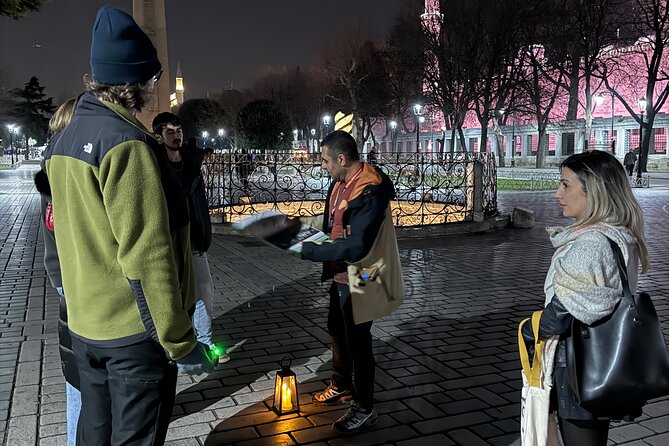
The German Fountain is a short ten-minute stop, but its location carries an older memory. The same area once served as the starting gates for chariot races in the Hippodrome.
The story then moves to the seventeenth century, when Ottoman soldiers returned from war without their pay. Their anger led to a deadly event at this site, where an old tree once stood. The tree is gone, but the story gives the square a human scale. Military policy and unpaid wages are not abstract problems here. They become a cause of violence in a specific public place.
This is one of the tour’s better examples of how the route connects Roman, Byzantine, and Ottoman periods without treating them as separate museum rooms. The same ground changed function many times, but public power and public anger kept returning.
Sultan Ahmet Tomb and the law of fratricide
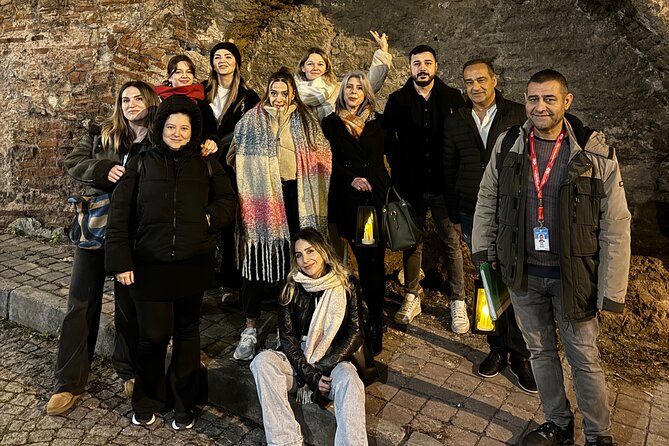
The Sultan Ahmet Tomb stop covers one of the most disturbing customs associated with Ottoman succession. Under the law of fratricide, Sultans could kill brothers and children who threatened their claim to the throne.
The tour connects those deaths with the mausoleum where their bodies lie. The idea that family members could become political enemies gives the stop its haunting force. You are not hearing about anonymous victims from a distant battlefield. You are hearing about brothers and children sacrificed to protect a dynasty.
Only about ten minutes are scheduled here, so the guide cannot cover every Ottoman ruler or explain the entire succession system. Still, the subject is clear and memorable. It also provides useful context for understanding why palace politics could be so deadly even when no army was present.
Coffee, punishment, and the Imperial Gate
Sultanahmet Square receives a short five-minute stop devoted to a ban on public coffee drinking in the early seventeenth century. The consequences were literally deadly. It is a compact story, but it shows how rulers could treat ordinary social habits as a threat to order.
The final stop is Bab-i-Humayun, the Imperial Gate of Topkapi Palace. This grand entrance was designed not only to welcome people but also to intimidate them. The scale and decoration made the authority of the palace clear before anyone crossed the threshold.
The guide also tells the story of the palace head gardener and a special race where the result was a matter of life and death. It is an fitting ending because the route finishes at a place built to display imperial control. The walk begins with Constantine founding a capital and ends at the gate of an Ottoman palace, with centuries of power, punishment, and fear between the two.
The end point is behind and beside Hagia Sophia. The guides can direct you from there, and they walk back close to the starting area. That is helpful if you are unsure where to continue after the tour, though the activity itself does not promise a particular restaurant, bar, or onward program.
What the ghost-hunting equipment adds
The included equipment gives the walk an interactive layer:
- EMF detectors for checking electromagnetic readings
- Maddusa’s Web, a green laser
- Dowsing rods
- An EVP recorder
These tools are not a substitute for the stories. They are best understood as a way to keep your group involved while the guide explains what happened at each location. You may enjoy the suspense even if you remain skeptical about supernatural evidence.
The equipment also helps prevent the tour from becoming a standard lecture delivered while everyone trails behind. You can take part, test a device, and compare impressions with the group. The experience is still guide-led, so the quality of the evening depends heavily on the person leading your date. Sara is described as passionate about Istanbul and fun to follow, while Brent and Mehmet are also named as guides connected with highly praised outings.
Price, group size, and practical value
At $48.06 per person, the price is not bargain-basement for a two-hour walk. The value comes from the mix of a live English guide, a carefully linked route, historical storytelling, and access to ghost-hunting equipment. You are not paying for entry to a major museum or a large attraction, since most stops are free outdoor sites.
I would see the cost as reasonable if you want an evening activity with a clear theme and a guide who can connect obscure incidents to places you might otherwise pass. It is less compelling if your priority is formal monument access, long architectural explanations, or a guaranteed paranormal event.
The group maximum is 20. That is large enough for social energy but small enough that the guide should be able to involve people with the equipment. You need to be comfortable walking and standing outdoors for roughly two hours. The activity requires good weather, and poor conditions can lead to a new date or a full refund.
You receive confirmation when booking, and service animals are allowed. The route is near public transportation, and most people can take part. Free cancellation is available up to 24 hours before the 8 p.m. start time. Cancellations or changes made inside that window are not refunded or accepted.
Who will enjoy this walk most
I would choose this tour if you have already seen Istanbul’s major sights and want to understand their less polished side. It is especially good for you if you enjoy Ottoman court intrigue, Byzantine politics, public punishments, and stories that make familiar monuments feel unsettling.
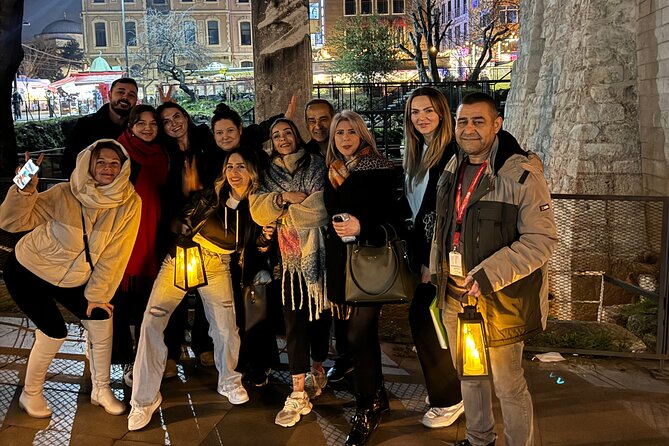
It also suits a group of friends. The equipment creates a shared activity, and the guides have a lively, personal approach. One evening even continued with a drink alongside the guide, though that is not presented as a scheduled part of the tour and should not be treated as included.
You may want to skip it if you dislike graphic subjects. The route covers torture, execution, assassination, massacre, disfigurement, and family murder. It also requires an open mind about the ghost-hunting side. The historical material is substantial, but paranormal proof is not guaranteed.
Should you book the Istanbul Haunted Night Tour?
Book it if you want a two-hour night walk that treats Istanbul as a place of power, betrayal, and death, not just beautiful buildings. The best parts are the Hippodrome, the two Sphendone stops, the Sultan tomb, and the final approach to Topkapi Palace’s Imperial Gate.
I would not book it solely because you expect to see a ghost. Book it for the chance to use unusual equipment, hear well-shaped stories from guides such as Sara, Brent, or Mehmet, and visit corners of the old city that can be easy to overlook. At $48.06, it offers fair value for a themed evening, provided you enjoy dark history and do not mind that the supernatural side is part of the fun rather than a promise.
FAQ
How long is the Istanbul Haunted Night Tour?
The tour lasts approximately two hours.
What time does the tour begin?
The starting time is 8 p.m.
Where does the tour start?
It starts at the Column of Constantine, at Molla Fenari, Vezirhan Cd. No:16 D:18, 34120 Fatih, Istanbul.
Where does the tour end?
It ends at Bab-i Humayun, the Imperial Gate of Topkapi Palace, at Cankurtaran, Topkapi Sarayi, 34122 Fatih, Istanbul.
What language is the tour offered in?
The tour is offered in English.
What equipment is included?
The experience includes EMF detectors, Maddusa’s Web green laser, dowsing rods, and an EVP recorder.
How many people can join the tour?
The maximum group size is 20 people.
Are the stops free to enter?
Most stops list free admission. Kucuk Ayasofya, also known as the Little Hagia Sophia Mosque, lists admission as included.
Is the tour suitable for most people?
Most people can participate, and service animals are allowed. You should be comfortable walking and standing outdoors for about two hours.
Can I cancel for a refund?
Yes. You can cancel at least 24 hours before the experience start time for a full refund. Cancellations or changes made less than 24 hours before the start are not refunded or accepted.
Freshly reviewed haunts around the world
- New Orleans French Quarter Dark History, Haunts, and Laughs Tour★ 5.0 · 30 reviews
- New Orleans’ Finest Haunted Pub Tour★ 4.5 · 38 reviews
- Cheers New Orleans! Cocktails, History, Voodoo & Paranormal Tour★ 4.0 · 4 reviews
- Haunted Drunken History Tour from New Orleans★ 5.0 · 135 reviews
- The Original Asbury Park Ghost Tour★ 4.5 · 29 reviews
- Destrehan Plantation Haunted Night Tour★ 4.5 · 100 reviews
- New Haven’s Ghost Walk★ 3.5 · 69 reviews
- Ghosts of Tonopah Haunted History GPS/APP Smartphone guided Walking Tour outside★ 4.5 · 7 reviews