
Review · IRELAND
Private Ennis Dark History Tour with Dr Jane O’Brien (1-6 people)
Ennis has a cheerful market-town face, but Dr Jane O’Brien’s private walk shows you what lies beneath it: gallows, famine, witchcraft accusations, orphanage tragedies, ghosts, and the old Irish belief in banshees and death coaches. It is a compact tour, with eleven stops packed into about 70 minutes.
I like the small private format, which lets your group hear Jane’s stories without a crowd getting in the way. I also like the route’s range, from the 1500s towerhouse at the Old Ground Hotel to the 13th-century Ennis Friary and narrow lanes shaped by poverty and old trade.
The main drawback is the brisk pace. Most stops last only about five minutes, so this is best for story-led orientation rather than a long architectural examination of each site. The material is also dark, and families should decide if tales of executions, famine, orphanages, and ghosts suit their children.
Key points to know before booking
- Eleven Ennis locations in about 70 minutes: The route covers hotels, lanes, monuments, a former graveyard, the market area, and Ennis Friary.
- Dr Jane O’Brien leads the walk: You get a local guide for your private group, rather than joining a larger public tour.
- The stories range beyond ghosts: Expect punishment, poverty, famine, witchcraft, folklore, and institutional tragedy.
- Up to six people share one price: At $270.66 per group, the value improves sharply when your party is full.
- The tour starts at the Old Ground Hotel: It ends in central Ennis beside the Daniel O’Connell Monument on Abbey Street.
- Plan for a walking route with short stops: Admission is free at every listed location, and the experience is outdoors around town.
Why Ennis works so well for a dark-history walk
Ennis is especially suited to this kind of tour because its darker stories are tied to ordinary streets. You are not being taken to one isolated attraction and told a single ghost story. Instead, Jane connects punishment, religion, commerce, hunger, folklore, and local memory as you move through the town.
That gives the walk a useful purpose beyond a spooky evening out. You begin to see why a market place could become dangerous, why an old lane might carry memories of famine, and why a church site could be both the spiritual centre of town and a place associated with the dead.
The route is also manageable. At roughly 1 hour 10 minutes, it fits neatly into an afternoon or evening plan. The eleven stops are close enough to form a continuous town walk, though the published timing allows only about five minutes at each point. I would choose this if I wanted a strong introduction to Ennis without giving up half a day.
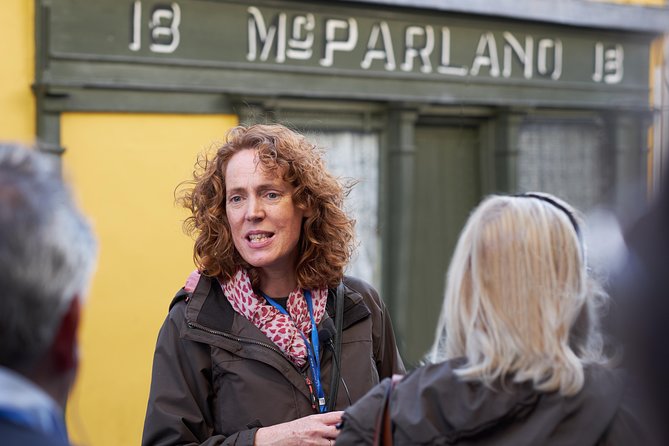
Jane’s manner matters here. The available feedback describes her as friendly and full of interesting stories about Ennis, a useful combination for a subject that could otherwise become grim or theatrical. You should expect the emphasis to be on storytelling and local atmosphere, not a formal lecture.
More Dark History Tours in Ireland:
- Galway: Dark History Guided City Walking Tour
★ 4.8 · 236 reviews - Kilkenny Haunted Dark Tours
★ 4.5 · 221 reviews - The Dark History Tour of Galway City
★ 5.0 · 146 reviews
Beginning at the haunted Old Ground Hotel
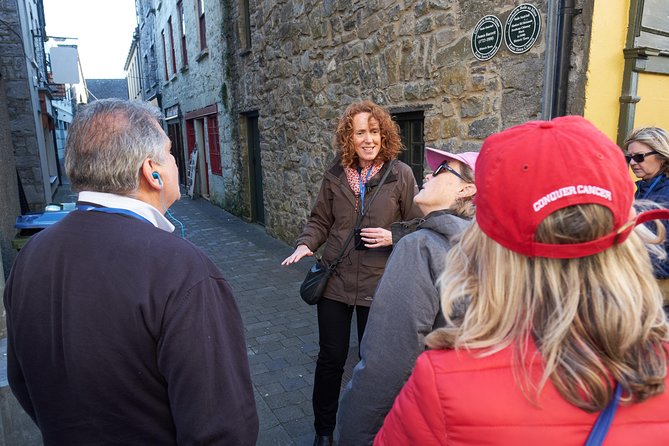
The walk starts at the Old Ground Hotel on Station Road. This is more than a convenient meeting point. The building incorporates a medieval towerhouse dating to the 1500s and is described as one of Ennis’s oldest and most haunted buildings.
That opening sets the tone at once. You get architecture, local history, and ghost lore in the same place. The towerhouse gives the story a physical anchor, so you are not simply hearing an unconnected tale before walking away.
The meeting point is easy to identify, and the route begins near public transportation. You should still allow a little time to arrive, since the tour has a fixed start and the group is private. There is no admission charge for this stop or the others listed on the route.
Barrack Street and the old Gallows Green
At Barrack Street, the walk turns to the old Gallows Green. Hanging was one of the punishments used in Ennis, and this stop brings the justice system of the old town into view.
The value here is the change in mood. The first stop introduces a haunted building, while Barrack Street gives you a harder look at public punishment. Jane’s route makes clear that the town’s past was not only made of trade, religion, and handsome streets. It also included fear, judgment, and spectacle.
This is one of the briefest stops, so do not expect a long account of every case connected with the site. Think of it as a sharp historical marker that prepares you for the later stories of crime, poverty, and death.
The old graveyard and Ennis’s relationship with the dead
The third stop explores the site of an old Ennis graveyard. The location is supplied simply as the old graveyard site, so you should not expect a formal cemetery visit or a large preserved monument area.
What makes the stop useful is the way it shifts the tour from public punishment to private loss. Graveyards tell you how a town dealt with death, memory, and the remains of its residents. In a dark-history walk, that context gives the ghost stories more weight.
The stop lasts about five minutes. If you are interested in burial customs or religious architecture, you may wish it lasted longer. Still, it adds an important link between the gallows and the later visit to Ennis Friary.
More Private Ghost Tours in Ireland:
- Haunted Bog road tour. Galway. Private guided. 3 hours
★ 3.0 · 2 reviews - Lisbon: Private Dark History Walking Tour with Drinks
★ 4.8 · 387 reviews - Jack the Ripper Escape Room Game for Private Group
★ 5.0 · 253 reviews - The Ultimate Jack the Ripper Tour (Private Group Booking)
★ 5.0 · 199 reviews
Market Place and the market murders
The old Market Place brings a different kind of danger. Markets were centres of trade and social life, but they were not always peaceful. Jane explores the tensions that could lead to what were known as the market murders.
This is one of the route’s strongest ideas because it connects a familiar civic space with the pressures of daily life. People came to buy and sell, but crowds, arguments, money, and local rivalries could turn a public gathering into something much more serious.
You will not spend long studying market buildings here. The interest lies in the contrast between the ordinary purpose of the place and the violence attached to its past. It is a good example of the tour’s overall method: take a location you might otherwise pass quickly, then give it a darker second layer.
Parnell Street, poverty, famine, and haunted bow-ways
On Parnell Street, the route moves into one of Ennis’s bow-ways. These narrow passages help you picture the physical town of the past, while Jane discusses poverty and famine and the spirits said to haunt the old lanes.
This may be the most emotionally serious part of the walk. Famine-era stories are not simply spooky material. They point to hunger, hardship, and the way collective suffering can remain attached to particular places in local memory.
The lane setting also matters. Narrow streets and older passageways can make the past feel close without any need for elaborate staging. You are looking at the actual shape of the town while hearing how poverty affected people who lived and worked there.
Because the route is short, Jane cannot provide a full social history of the famine. But the stop gives you a meaningful reason to notice Ennis’s lanes rather than treating them as shortcuts between bigger sights.
Chapel Lane brings old Ennis back to life
Chapel Lane continues the focus on the town’s older streets and shopfronts. Jane recreates the sights and smells of old Ennis through the narrow lane, helping you picture how the area once looked and felt.
This is a sensory stop, at least in storytelling terms. The details of old shops and everyday smells can make the past more accessible than a list of dates. You start to imagine the town as a working place, not simply a collection of old buildings.
The wording here is important: Jane brings those details to life through description, not through a museum display or a staged reenactment. If you want authentic town context and spoken stories, that suits you. If you want rooms, objects, or formal exhibits, this walk will feel lighter on physical interpretation.
The Daniel O’Connell Monument and Biddy Early
The Daniel O’Connell Monument is now a busy heart of Ennis, but it also carries the story of Biddy Early, described as the infamous wise woman of Clare. Jane explains how this area was once linked with her witchcraft trial.
This stop adds one of the tour’s most distinctive subjects. Biddy Early belongs to the borderland between folk belief, healing, accusation, and formal judgment. Her story shows how a person known locally as a wise woman could become tied to fears about witchcraft.
The setting creates a strong contrast. You are standing in a central urban spot, likely thinking of it as a normal meeting place, while hearing about a trial connected with older beliefs. That is exactly the sort of change in viewpoint this tour offers.
The walk eventually ends near the monument, but you visit it here as one of the central story stops too. Pay attention to the route details when booking, since the finish is described as being beside the O’Connell Monument at the top of Abbey Street.
Arthur’s Row and the old orphanage
Arthur’s Row introduces a tragic story from the old Ennis orphanage and industrial school. This is another point where the tour leaves behind folklore and deals with the treatment of vulnerable children.
The subject may be difficult, but it gives the walk moral and social depth. A tour built only around ghosts can become light entertainment. By including the orphanage and industrial school, Jane shows that the darkest parts of Ennis’s past are not always supernatural.
You should approach this stop with some care if you are travelling with children. The tour allows children when accompanied by an adult, but the suitability of this particular story depends on the child’s age and temperament. The short visit means the story will be selective rather than a full account of the institutions involved.
Francis Street and Irish folklore
At Francis Street, the route follows the old causeway, once associated with sightings of a banshee and a death coach. These figures belong to Irish folklore and mythology, beliefs that remained strong in Ennis into the 20th century.
This stop is likely to appeal to anyone interested in how folklore survives alongside modern life. The banshee is tied to warnings of death, while the death coach carries its own sense of approaching loss. Here, the stories are not presented as isolated fantasy. They show how people interpreted frightening events and uncertainty within their own culture.
The old causeway also gives the tale a clear setting. You are not hearing folklore in an anonymous room. You are standing along the route where the sighting was said to occur, which makes the story easier to remember.
Ennis Friary and the town’s foundations
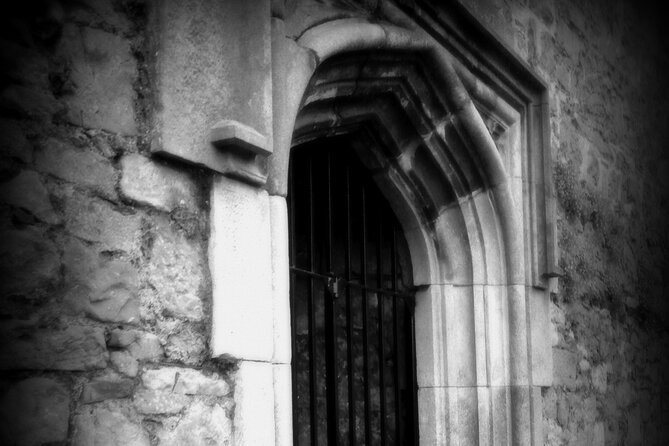
The Ennis Friary is the most substantial historical site on the route. The 13th-century Ennis Abbey forms part of the town’s foundations and is also associated with many former residents, including a local ghost.
This stop brings several strands together. The religious site connects to burial and memory. Its age places Ennis within a much longer story than the famine and industrial-school era. The ghost story then returns you to the tour’s central theme without making the whole walk depend on supernatural claims.
You should see the friary stop as a chance to understand why Ennis developed where it did and why the old religious centre still matters to the town. With only about five minutes assigned to the stop, there is not time for a full architectural tour. The focus stays on the site’s role in Ennis and its connection to the dead.
Finishing on Abbey Street
The walk ends at the top of Abbey Street, beside the O’Connell Monument, in the centre of town. This is a practical finish because you are left in a central area rather than returned to the starting hotel.
The end point also gives the route a circular feeling in its storytelling. You have moved through punishment, death, hunger, folklore, institutional tragedy, and religious memory, then finish in the heart of modern Ennis. You can continue exploring town from here, find a meal, or head back to your accommodation.
Since the tour is only about 70 minutes, you do not need to build a whole evening around it. I would place it before dinner or after a daytime visit to Ennis. The short format works well when you want atmosphere and local context without committing to a long walking excursion.
Is $270.66 good value for a private group?
The price is $270.66 for up to six people, not per person. With six participants, that works out to about $45.11 each. For a couple, the per-person cost is much higher, at about $135.33 each, so the tour makes the most financial sense for a family or group of friends filling most of the places.
Every listed stop has free admission, so you are paying for Jane’s time, route planning, local stories, and the privacy of having the guide to yourselves. That is the right way to judge the price. You are not buying entry to a major monument. You are paying for interpretation and a focused walk through places you could otherwise pass without knowing their significance.
The private setup also gives you more control than a large group tour. You can hear the guide clearly, keep your own pace within the short schedule, and ask questions relevant to your group. The tradeoff is that the fixed price feels steep for one or two people.
The tour is booked, on average, well ahead of time, around 66 days in advance. That suggests you should not leave it until the last minute if the date matters to your plans.
Who will enjoy this Ennis walk?
I would choose this tour if you like local history told through streets rather than displayed behind glass. It suits people who enjoy folklore, old buildings, social history, and the uneasy border between documented events and supernatural belief.
It is also a good fit for a private family group or friends who want one shared activity. Most people can take part, service animals are allowed, and the route is near public transportation. Children must be accompanied by an adult, and I would think carefully about the darker stories before bringing younger children.
You may want something else if you prefer a slow architectural tour, a long museum visit, or a clearly dated account of Ennis’s political history. The quick stops favour memorable stories over detailed examination. Some subjects, particularly famine, orphanages, punishment, and death, may feel heavy for a casual sightseeing outing.
The mobile ticket makes access simple, and confirmation is provided at booking. Free cancellation is available if you cancel at least 24 hours before the local start time. Changes or cancellations inside that window are not accepted for a refund.
Should you book Dr Jane O’Brien’s Ennis Dark History Tour?
Book it if you want to see Ennis through its less polished stories and you have at least four people to share the private-group price. Jane O’Brien’s friendly, story-led approach is suited to a walk that depends on atmosphere, local memory, and clear connections between places.
I would be especially keen to book it early in an Ennis stay. The route can help you read the town differently afterward, giving the old lanes, market area, friary, and central monument more meaning. Just keep your expectations in check: this is a brisk 70-minute introduction, not a full historical seminar.
If your group prefers gentle sightseeing or has young children sensitive to grim subjects, choose a lighter town walk instead. For anyone drawn to ghosts, folklore, famine stories, old punishment, and the human troubles behind historic streets, this private tour offers a focused and memorable way to meet Ennis.
FAQ
How long does the Ennis Dark History Tour last?
The tour lasts approximately 1 hour and 10 minutes.
How many people can join the private tour?
The tour is private for a group of 1 to 6 people. Only your group participates.
Who leads the tour?
The tour is led by Jane O’Brien.
Where does the tour start?
The meeting point is the Old Ground Hotel on Station Road, Clonroad Beg, Ennis, County Clare.
Where does the tour finish?
The tour ends in central Ennis at the Daniel O’Connell Monument, at the top of Abbey Street.
Are children allowed to join?
Yes. Children can participate, but they must be accompanied by an adult.
Can I cancel for a full refund?
Yes, if you cancel at least 24 hours before the experience start time. Cancellations or changes made less than 24 hours before the start are not refunded or accepted.
Ghost walks heavy on history around Ireland
- Dublin’s Haunted History Walking Tour
★ 4.3 · 345 reviews - Hidden Dublin: Haunted History Walking Tour v2.0 2026
★ 4.5 · 188 reviews - Savannah History and Haunts Candlelit Ghost Walking Tour
★ 5.0 · 3,235 reviews - Stockholm: Ghost Walk and Historical Tour
★ 4.7 · 2,685 reviews
Freshly reviewed haunts around Ireland
- Kilkenny Haunted Dark Tours★ 4.5 · 221 reviews
- The Dark History Tour of Galway City★ 5.0 · 146 reviews
- Macabre, Ghostly & Bloody Walking Tour★ 5.0 · 15 reviews
- North Quay Ghost Walk Tour★ 4.5 · 91 reviews
- Dublin Ghost Hunt Exploration Game and Tour★ 4.0 · 34 reviews
- Legends, Ghosts and Ghouls Walking Tour Dublin★ 4.5 · 16 reviews
- Hidden Dublin: Haunted History Walking Tour v2.0 2026★ 4.5 · 188 reviews
- Haunted Bog road tour. Galway. Private guided. 3 hours★ 3.0 · 2 reviews
Ireland Ghost Tours, compared.



Hidden Dublin: Haunted History Walking Tour v2.0 2026
Read our review →
Browse the lists this tour appears in