

Review · SEATTLE
Historic Tucson Walking Tour
Downtown Tucson’s story is unusually layered: Native communities built irrigation systems here more than 4,000 years ago, Spain built a fort in 1775, and the city later became known for ghosts, bank robbers, murals, and food. This one-hour walking tour brings those threads together, beginning at the historic courthouse where the Dillinger gang was held.
I like the mix of serious history and odd local tales, especially the stop at haunted Hotel Congress. I also like that a James Beard competition-winning chef leads the walk, adding a food angle to a city named UNESCO’s first City of Gastronomy. The main drawback is the short length: one hour gives you a lively introduction, but not time for a slow, detailed look at every stop. The supplied location also says Washington, while every meeting and tour detail points to Tucson, Arizona, so confirm the destination before booking.
Key Points
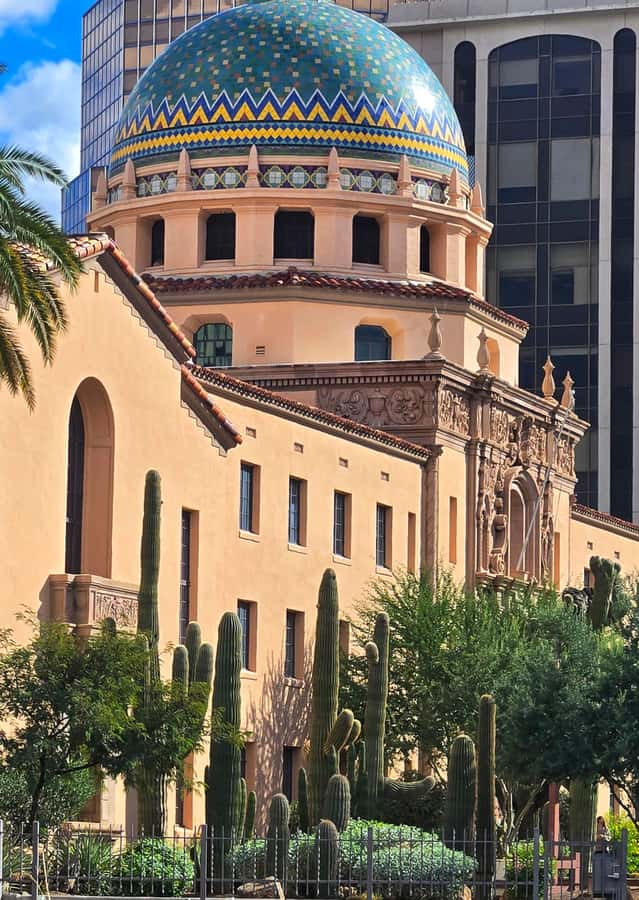
- Start at the Pima Historic Courthouse: Meet by the fountain and begin with Tucson’s courthouse and its connection to the Dillinger gang.
- Hear stories at haunted Hotel Congress: This famous downtown stop brings ghosts and crime tales into the walk.
- See Tucson’s custom murals: The tour points out some of the city’s best examples among more than 1,000 mural-covered buildings.
- Visit a rebuilt Spanish fort: Learn how Spain’s 1775 fort shaped the city and how Mormons briefly occupied it in the 1850s.
- Taste a small local snack: Your guide is a James Beard competition-winning chef, and the snack gives the food-focused tour a practical touch.
- Plan for the weather: This is an outdoor walk that runs rain or shine, so wear comfortable shoes and bring rain gear.
Tucson’s Story Starts at the Courthouse
The tour meets at the fountain in front of the Pima Historic Courthouse. A parking garage is available nearby, which helps if you are arriving by car and want a clear starting point in the middle of downtown.
This is a good place to begin because the courthouse is not just a meeting marker. It introduces Tucson as a place where law, crime, politics, and local character have crossed paths. The tour connects the site with the Dillinger gang, giving you an immediate story rather than a dry architectural introduction.
I like this opening because it gives the hour a clear shape. You are not simply wandering from one attractive building to another. You begin with a specific Tucson tale, then move through earlier chapters of the city’s story, from Native irrigation to Spanish settlement and later downtown life.
The historic context reaches well beyond the courthouse. Native tribes installed irrigation for crops more than 4,000 years ago, a reminder that Tucson’s story began long before Spanish arrival. That detail matters because it places the city in a much older timeline than the surviving downtown buildings might suggest.
More Ghost Walking Tours in the USA
- New Orleans Premier Ghost, Voodoo and Vampire Walking Tour
★ 4.5 · 12,856 reviews - Chicago: Gangsters and Ghosts Walking Tour
★ 5.0 · 7,155 reviews - Savannah History and Haunts Candlelit Ghost Walking Tour
★ 5.0 · 3,235 reviews
From Irrigation Channels to a Spanish Fort
Tucson’s Spanish chapter began with the construction of a fort in 1775. The tour visits a rebuilt version of that Spanish fort, giving you a physical point of reference for a period that can otherwise feel distant and abstract.
A rebuilt site cannot offer the same thing as an untouched structure, but it can help you picture the military presence that shaped early Tucson. You also hear about the fort’s later connection with Mormon settlers, who occupied it briefly in the 1850s. That quick change in ownership gives the story some movement. Tucson was not shaped by one group alone.
The fort stop should appeal to you if you like history presented through places rather than dates alone. You get a sense of how Tucson’s location and defenses mattered, while the guide connects the site to the city that grew around it.
The short duration is the tradeoff. This is an introduction, not a full historical study. You will get several useful time periods in one hour, but the guide has to keep moving. If you want long conversations about military architecture or the details of every settlement period, you will need more time elsewhere.
Hotel Congress Adds Ghosts and Bank Robbers

Hotel Congress supplies the tour’s strongest dose of atmosphere. It is known here as a haunted place, and the walk uses it to tell stories of ghosts and crime, including the wider world of bank robbers connected with Tucson’s past.
That blend is one reason this tour sounds more appealing than a standard downtown architecture walk. You get history, but you also get the kind of local stories that help you remember a place. A courthouse can tell you about law. A haunted hotel can make the same city feel personal, strange, and a little theatrical.
I would pay close attention at this stop if you enjoy old hotels, crime stories, or tales that sit between documented history and local legend. The information provided does not promise a ghost encounter, so think of the haunted Hotel Congress reference as storytelling and atmosphere rather than a paranormal attraction.
Hotel Congress also gives the tour a useful contrast. The fort represents Tucson’s Spanish and military past. The hotel points toward the city’s modern downtown identity, where historic buildings continue to shape the way people experience the center.
Custom Murals Turn Downtown Into an Open-Air Gallery
Tucson has more than 1,000 buildings with custom murals, and the tour visits some of the best examples. That number alone tells you that murals are not a minor decoration here. They are part of how the city presents itself.
The mural portion should be especially useful if you have already spent time around downtown or a market area. A booking comment noted that the walk revealed several places missed during a full day of market exploring. That is a helpful clue: the tour may show you details that are easy to pass when you are moving on your own.
I like the way murals add a present-day layer to the tour. The courthouse, fort, and hotel connect you to earlier Tucson. The painted buildings show how the city expresses itself now. You can look at the art, hear why particular places matter, and keep moving without the formality of a museum visit.
The exact mural route is not specified, so you should not expect a fixed art itinerary with every work named in advance. The guide chooses some of the best examples, and the selection may depend on timing and conditions. That flexibility is reasonable for a walking tour, but it means you should not book it solely to see one particular mural.
Same old streets, another story to hear:
- Adults-Only New Orleans Ghost, Crime, Voodoo, and Vampire Tour
★ 5.0 · 6,545 reviews - Salem’s Best Ghost Tour
★ 4.5 · 4,186 reviews - Haunted Evening Horse and Carriage Tour of Charleston
★ 4.5 · 3,678 reviews - New Orleans Adults-Only Ghost, Voodoo and Vampire Tour
★ 5.0 · 3,291 reviews
A Chef’s View of Tucson’s Food Identity
Your guide is a James Beard competition-winning chef, which gives this walk a point of difference. The tour is not only about buildings and old stories. It also places Tucson in the context of food, irrigation, agriculture, and the city’s status as the first UNESCO City of Gastronomy.
That connection makes sense. Irrigation supported crops here thousands of years ago, so food is tied to Tucson’s earliest known communities, not just its modern restaurants. The chef-led format can help connect those broad ideas to the city you see on foot.
A snack is included, while drinks are not. That is a modest but welcome addition on a one-hour walk. I would bring water, especially in warm weather, since the tour is outdoors and the price does not include a drink.
The snack should not be the main reason you book. At $32 per person, the value comes from having a guide connect the courthouse, hotel, murals, fort, and food culture in a compact route. The snack is a small extra, not a meal or tasting tour.
Is $32 Fair for One Hour?
At $32 per person, this is priced as a short guided introduction rather than a long sightseeing tour. You are paying for a live English-speaking guide, local stories, a planned route, and a snack. Drinks cost extra, and there is no transportation included.
I think the price is reasonable if you have only a short time in downtown Tucson and want a quick orientation. It also makes sense early in a visit, when you can use the walk to decide which buildings, murals, or historic places deserve a longer return visit.
The value is less clear if you already know downtown Tucson well or prefer to explore at your own pace. One hour moves quickly. You may leave with a good sense of the city’s character, but not with every historical detail or enough time to linger at each stop.
The guide’s reputation is a key part of the price. A James Beard competition-winning chef brings a special angle that a general sightseeing guide may not provide. Still, the experience is best understood as a short story-filled walk, not a full food tour or an in-depth architectural course.
Timing, Shoes, and Weather Matter

The tour lasts one hour and is offered at set starting times, so check availability for the day you want. One piece of practical feedback is worth noting: downtown businesses may close earlier than expected, and a later tour can limit what you see open along the route. If you want to combine the walk with shops, markets, or other indoor stops, an earlier start is the safer choice.
The tour takes place rain or shine. Wear comfortable shoes, and bring rain gear even if the forecast looks harmless. The route is outdoors, so heat, rain, and hard pavement can affect your comfort more than they would on an indoor history tour.
The experience is wheelchair accessible, which is useful information when planning with a mixed-mobility group. Since the walk is outdoors, you may still want to confirm current route conditions if a particular accessibility need is important to your plans.
The meeting point is the fountain in front of the Pima Historic Courthouse. If you are driving, the nearby parking garage gives you a practical option. Arrive with enough time to find the fountain rather than assuming the courthouse entrance itself is the meeting spot.
Who Will Enjoy This Walk Most?
I would recommend this tour to first-time Tucson visitors who want a compact introduction with several different themes. It suits you if you like old buildings, crime stories, ghost tales, public art, and food culture, but do not want a long academic tour.
It is also a good fit for people who have already explored a market or downtown area and want more context. The mural stops may reveal places you passed without noticing, while the courthouse and fort add historical depth to an otherwise casual walk.
Families and mixed-age groups may appreciate the changing subject matter. A child may respond to ghosts and bank robbers, while adults can follow the longer story of Native irrigation, Spanish settlement, Mormon occupation, and Tucson’s food identity.
I would hesitate to recommend it as your only Tucson history experience if you want detail. The one-hour format is designed for breadth. You will hear about many periods and places, but each receives only a short portion of the tour.
What the Tour Does Best
The strongest feature is its range. In one hour, you move from a historic courthouse to a haunted hotel, then to murals and a rebuilt Spanish fort. Few short walks cover such different parts of Tucson’s identity.
The guide’s food background is another clear strength. Tucson’s UNESCO food designation does not appear as a random modern label. The tour links it to ancient irrigation and local agriculture, giving the food discussion a historical base.
The tone also sounds playful without losing the city’s older story. Descriptions such as fun, quirky, and informative fit the route: there is enough oddness to keep the walk lively, but enough history to make it worthwhile.
The most common praise centers on the guide and the combination of information with fun. That is exactly what you should expect here. You are not booking a silent stroll past buildings. You are booking a narrated hour with strong personality and a mix of fact, legend, art, and food.
A Few Limits to Keep in Mind
The tour’s brevity is the main limitation. One hour is enough to see highlights, but not enough to explore each site at length. If you take photos slowly or ask many questions, the route may feel even faster.
The outdoor format creates another limit. Rain does not cancel the experience automatically, and the tour runs in all weather. Comfortable footwear and rain gear are listed for good reason.
You also need to check the location carefully. The supplied information labels the location as Washington, but the meeting point, Pima Historic Courthouse, Hotel Congress, Spanish fort, and all historical references identify Tucson. Confirm that your booking shows the Tucson meeting point before you pay.
Finally, drinks are not included. Bring or buy one if you need it, especially in warm conditions.
Should You Book the Historic Tucson Walking Tour?
Book it if you want a short, lively first look at downtown Tucson and enjoy stories that mix Native history, Spanish settlement, crime, ghosts, murals, and food. The $32 price is fair when you value a live guide and a focused route, and the included snack adds a small bonus.
Skip it if you want a long museum-style explanation, a full meal, or a relaxed visit inside every historic building. For the best experience, choose an earlier start if you want to see more of downtown while businesses are open, wear good walking shoes, bring rain gear, and verify the Tucson meeting point.
FAQ
Where does the Historic Tucson Walking Tour meet?
The tour meets at the fountain in front of the Pima Historic Courthouse. A parking garage is available nearby.
How long does the tour last?
The walking tour lasts one hour.
What language is the tour offered in?
The live tour guide conducts the experience in English.
Is the tour wheelchair accessible?
Yes, the activity is listed as wheelchair accessible.
What should I bring?
Bring comfortable shoes and rain gear. The tour takes place outdoors in rain or shine.
Is food included?
A snack is included. Drinks are not included.
Can I cancel the tour for a refund?
You can cancel up to 24 hours in advance for a full refund. You can also reserve now and pay later, according to the booking terms.
Ghost walks heavy on history around the USA
- New Orleans Small-Group Haunted History Carriage Tour
★ 4.5 · 2,289 reviews - New Orleans Haunted History Ghost Tour
★ 4.5 · 2,084 reviews - Genteel and Bard’s Savannah Dark History and Ghost Encounter Walking Tour
★ 5.0 · 1,546 reviews - The Historic Galveston Ghost Tour
★ 5.0 · 1,524 reviews
Freshly reviewed haunts around the USA
- New Orleans French Quarter Dark History, Haunts, and Laughs Tour★ 5.0 · 30 reviews
- New Orleans’ Finest Haunted Pub Tour★ 4.5 · 38 reviews
- Cheers New Orleans! Cocktails, History, Voodoo & Paranormal Tour★ 4.0 · 4 reviews
- Haunted Drunken History Tour from New Orleans★ 5.0 · 135 reviews
- Destrehan Plantation Haunted Night Tour★ 4.5 · 100 reviews
- The Original Asbury Park Ghost Tour★ 4.5 · 29 reviews
- Adults-Only True Crime, Mafia, Dark History Tour★ 5.0 · 22 reviews
- New Haven’s Ghost Walk★ 3.5 · 69 reviews
Seattle Ghost Tours, compared.

Haunted Seattle Booze and Boos Ghost Walking Tour
Read our review →
Sinister Sins, Scandal, and Shadows: Seattle Ghost Tour
Read our review →
Seattle: Terrors and Ghosts Guided Walking Tour
Read our review →Scandals, Ghosts & Oddities at Pike Place Market
Read our review →
Seattle Terrors: Spirits & Spirits Haunted Pub Crawl
Read our review →Browse the lists this tour appears in